Teen's Failed Malaria Cure Accidentally Launched Fashion
In 1856, an 18-year-old student tried to cure malaria and created the world's first synthetic dye instead. His purple accident democratized fashion and sparked the modern chemical industry.
A teenager trying to save lives from malaria accidentally changed what the world wears instead.
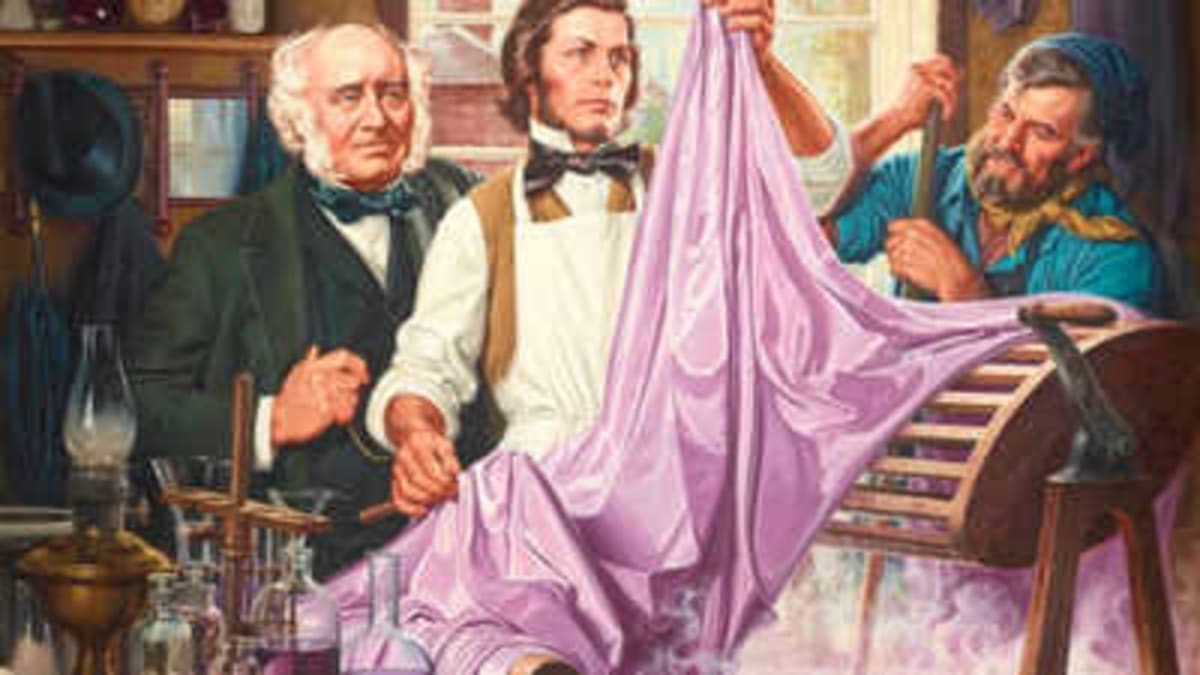
William Henry Perkin was only 18 in 1856 when he worked late in his London laboratory, desperately trying to create synthetic quinine. Malaria was killing thousands, and quinine was the only treatment available.
His experiment failed spectacularly, leaving behind a black, gooey mess in his beaker. Most students would have dumped it and started over.
But Perkin got curious. When he poured alcohol into the mixture to clean up, a brilliant purple burst out of the darkness, staining everything it touched.
That purple changed everything. Before Perkin's discovery, purple clothing required crushing thousands of Mediterranean sea snails to dye a single royal robe. Only emperors, queens, and high priests could afford it.
Perkin recognized gold in his beaker. He patented mauveine before his 19th birthday and opened a factory with his family's help.
The fashion world went absolutely wild. "Mauve Mania" swept across Europe as people rushed to buy something previously reserved for royalty. When Queen Victoria wore a mauve dress to the Royal Exhibition in 1862, the trend exploded even further.
Perkin had turned coal tar, literally a waste product from making gas lamps, into vibrant, permanent color. Suddenly, bold fashion became affordable for everyday people.
The Ripple Effect
Perkin's accidental discovery sparked a revolution far beyond pretty dresses. Scientists worldwide rushed to experiment with synthetic dyes, launching the entire modern chemical industry almost overnight.
That boom in organic chemistry paved the way for breakthroughs in medicine, photography, plastics, and countless other fields. The same principles Perkin stumbled upon now help create life-saving drugs and materials we use every day.
Today, nearly every colored item you own uses synthetic dyes. The textile industry depends almost entirely on laboratory-created colors because they're more reliable, vibrant, and versatile than anything nature provides alone.
Britain honored Perkin as one of its greatest chemists, and his name lives on through the Perkin Medal, awarded for major achievements in applied chemistry. Not bad for someone who "failed" his original experiment.
His story reminds us that breakthrough moments often arrive wrapped in disappointment, and sometimes the best discoveries happen when we stay curious about our mistakes.
More Images



Based on reporting by Times of India - Good News
This story was written by BrightWire based on verified news reports.
Spread the positivity!
Share this good news with someone who needs it