Teens Win Scholarships for Mind-Reading Tech That Helps Disabled
Three high school students turned empathy into innovation, creating affordable devices that help people with disabilities control wheelchairs with their tongues, walk with their thoughts, and navigate rough terrain. Their inventions earned them IEEE's top scholarships at the world's largest teen science fair.
Imagine controlling a wheelchair with just your tongue or walking again by simply thinking about it. Three teenagers just turned those dreams into reality, and they're being celebrated for it.
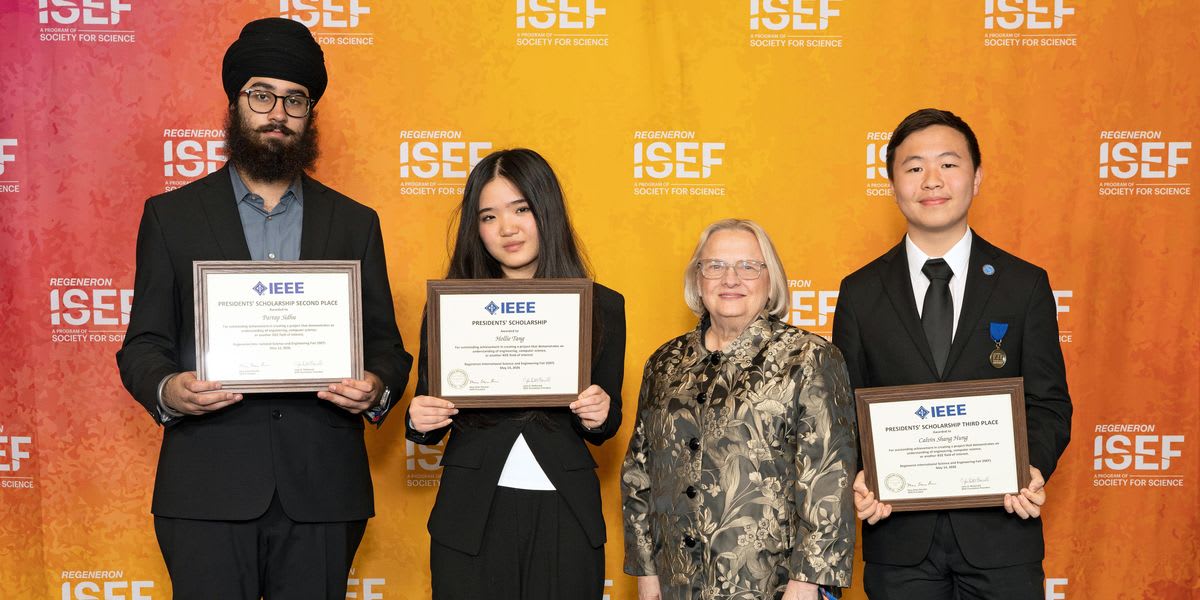
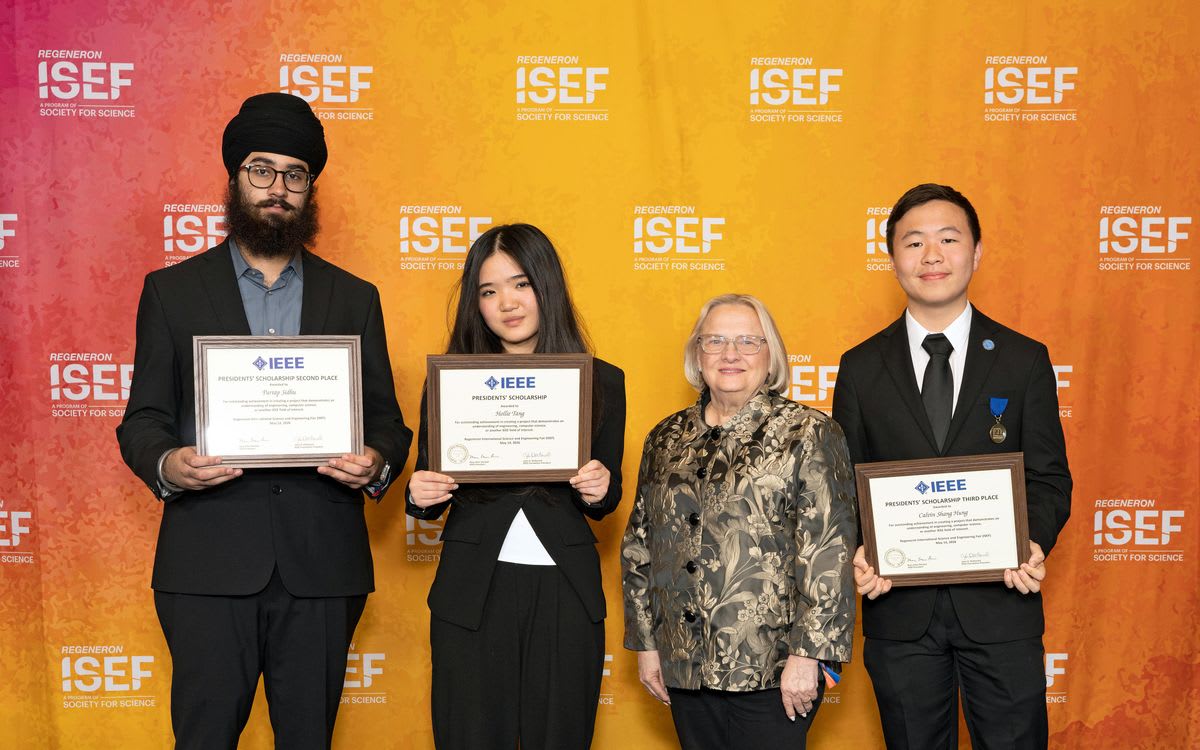
Holly Tang, Partap Sidhu, and Calvin Shang Hung won this year's IEEE Presidents' Scholarship awards for creating assistive technologies that could change millions of lives. They showcased their projects at the International Science and Engineering Fair in Phoenix this May, competing against the world's brightest young minds.
Tang, a sophomore from Wilson High School in California, took home the top prize of $10,000 for Tonguage. Her system lets people control computers and wheelchairs using only tongue movements and eye blinks, all through a standard laptop camera. The tongue acts like a mouse cursor while eye blinks serve as clicks.
What makes her invention special is its price tag. Tang deliberately designed Tonguage to work with affordable cameras instead of expensive specialized equipment. She wanted everyone to have access, regardless of income.
"Mobility conditions don't discriminate," Tang says. "They can affect anyone of any income, gender, and socioeconomic status." She even made sure the system includes gaming controls, believing people with disabilities deserve entertainment and fun, not just basic tasks.
Sidhu's second-place project might sound like science fiction. The New York junior built NeuroGait, an exoskeleton that reads your brain waves before you even consciously think about moving. The system detects electrical patterns that appear one to two seconds before you decide to take a step.
The results are stunning. His brain-reading technology achieves 99.9 percent accuracy in detecting intended movements. The full system, from brain signal to actual movement, works at 95.2 percent accuracy. He tested it 500 times to be sure.
Here's the kicker: Sidhu built the entire exoskeleton for just $276. Commercial versions cost between $40,000 and $100,000. He used 3D-printed parts and pneumatic artificial muscles that mimic real human anatomy, making the suit gentle and adaptable to each person's body.
His inspiration came from volunteering at a community center without elevators. Watching people struggle up three flights of stairs made him determined to help. Now he plans to bring NeuroGait back to that same center.
Third-place winner Calvin Shang Hung earned $400 for his rough-terrain robot, designed to help people navigate challenging environments.
Why This Inspires
These students didn't just build impressive technology in their garages. They spent time with people who actually need these devices, learning what truly matters. Tang visited rehabilitation centers. Sidhu worked directly with people facing mobility challenges.
That empathy drove them to focus on affordability and accessibility, not just innovation. They understood that brilliant technology means nothing if only wealthy people can access it. More than 1 billion people worldwide live with disabilities that affect movement and independence. These teens saw that number and refused to accept it as unchangeable.
All three students also received complimentary IEEE memberships and a special President's coin, which they said was a highlight of their experience. Tang plans to study biomedical engineering, carrying forward the lesson she learned firsthand: including empathy in technological solutions changes everything.
The future of assistive technology just got brighter, more affordable, and infinitely more compassionate.
More Images
Based on reporting by Google News - Scholarship Awarded
This story was written by BrightWire based on verified news reports.
Spread the positivity!
Share this good news with someone who needs it