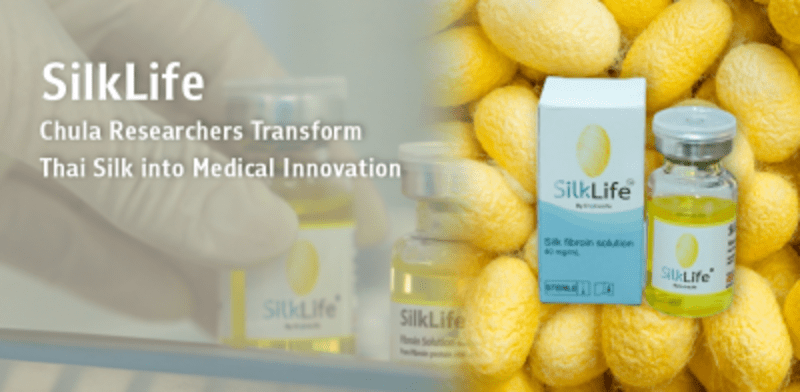
Thai Silk Becomes Medical Marvel Thanks to Chula Engineers
Thai silk, long celebrated for its golden beauty, is now saving lives as medical-grade patches, artificial tissue, and joint treatments. Engineers at Chulalongkorn University are transforming this cultural treasure into FDA-registered innovations that help patients while boosting farmer incomes.
What if the silk famous for elegant fabrics could also heal your body? Researchers at Chulalongkorn University in Bangkok are making that vision real, turning Thai silk protein into pain-relief patches, artificial tissues, and injectable joint treatments that meet international medical standards.
Associate Professor Dr. Juthamas Ratanavaraporn leads the Silklife project, which tackles a pressing problem in Thailand's growing medical industry. The country still relies heavily on imported materials like collagen and hyaluronic acid for medical products, costing money and limiting local innovation.
Dr. Juthamas and her team discovered that Thai silk possesses unique properties that set it apart from Italian or Japanese varieties. It's the only silk in the world with a natural golden hue and a molecular structure that binds perfectly with certain medications, making it ideal for drug delivery systems.
The secret lies in fibroin, the protein that forms silk fibers. Silkworms create this incredibly strong protein to protect themselves during metamorphosis, giving it tensile strength similar to spider silk. When fibroin breaks down in the body, it becomes harmless amino acids that the body easily eliminates.
Animal studies in mice, rabbits, and dogs showed silk protein causes fewer immune reactions than traditional collagen implants. This biocompatibility makes it safer for patients who need long-term medical devices or tissue regeneration.
The Ripple Effect extends far beyond hospital walls. The Silklife team established Thailand's first organic silkworm farm in Ratchaburi Province, certified under national organic standards. They built closed-system facilities with year-round temperature and humidity control, ensuring consistent quality regardless of season.
Contract farmers receive specialized training and follow strict protocols, including wearing lab coats and gloves throughout production. This attention to detail elevates their products to medical-grade quality, opening new income streams for rural communities who traditionally earned money only from textile silk.
The project required three to four years of upgrades across the entire supply chain. From contamination-free soil and organic fertilizers in mulberry fields to ISO-certified manufacturing plants, every step meets international medical standards including ISO 13485 for quality control and ISO 10993 for safety testing.
The innovations are already making real-world impact. The team has secured patents and FDA registration for their products, which include dental biomaterials, sleep-aid patches, and injectable joint gels. These treatments reduce Thailand's dependence on expensive imports while giving patients effective, locally-produced options.
Dr. Juthamas emphasizes that research shouldn't end with academic papers. By considering every dimension from farm to patient, her team proves that cultural heritage and cutting-edge medicine can work together to create sustainable solutions that benefit everyone in the chain.
Thailand's golden silk is now healing bodies and strengthening communities, one medical breakthrough at a time.
Based on reporting by Regional: thailand innovation (TH)
This story was written by BrightWire based on verified news reports.
Spread the positivity!
Share this good news with someone who needs it