Thai Village Turns 10kg of Plastic Into 8 Liters of Fuel
A small community in Thailand is teaching residents how to transform household plastic waste into usable fuel using an affordable device they can build themselves for under $140. As fuel prices soar, this chemical-free process is helping families cut costs while cleaning up their neighborhoods.
Imagine turning yesterday's shampoo bottles and grocery bags into enough fuel to power your lawn mower today. That's exactly what residents of Phon Phek in Thailand's Khon Kaen province are learning to do.
Local officials recently launched a pilot program teaching villagers how to convert plastic waste into diesel, petrol, and cooking gas right at home. The timing couldn't be better as fuel prices continue to squeeze family budgets across the region.
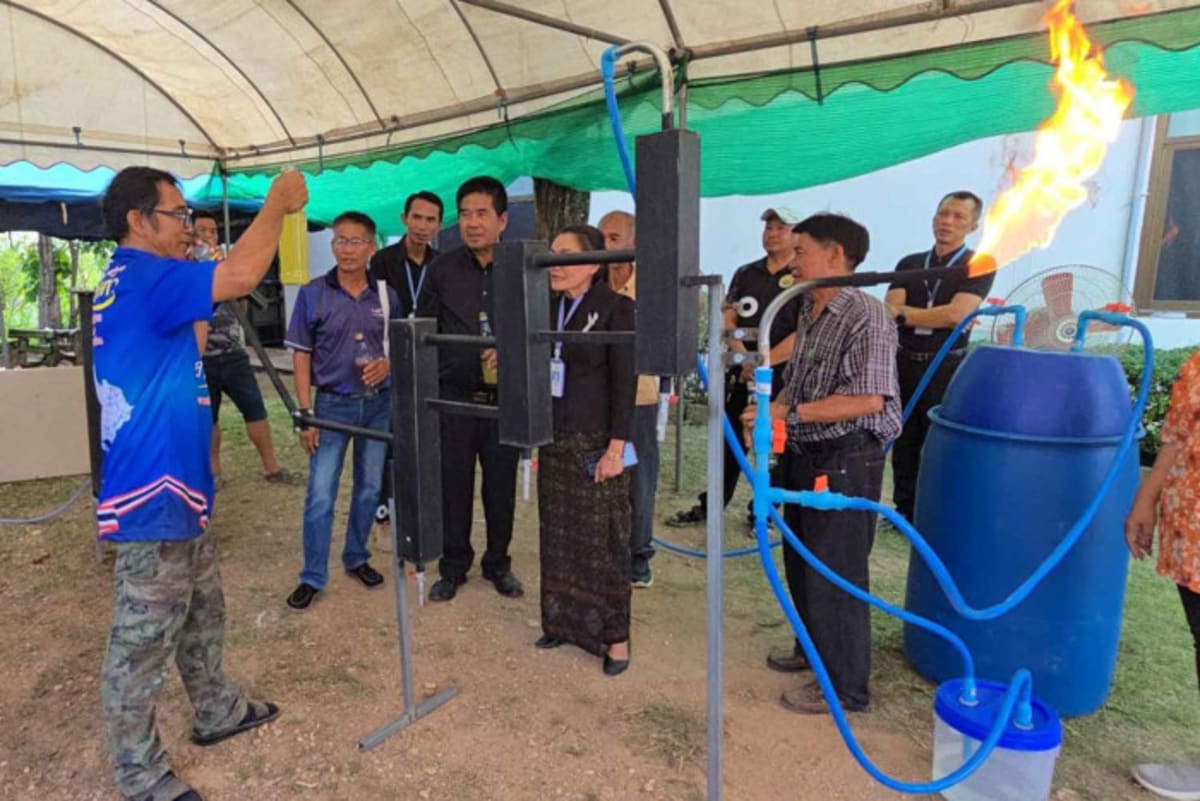
The process is surprisingly simple. Using a technique called pyrolysis, ordinary plastic gets heated in an oxygen-free chamber until it vaporizes, then condenses back into liquid fuel. No burning means no toxic fumes or pollution.
Decha Chansri, who heads the Innovation Centre Network for Plastic-to-Fuel Conversion, demonstrated how 10 kilograms of mixed plastics produces between 4 and 8 liters of fuel in just five hours. The equipment costs less than $140 to build, and anyone with basic mechanical skills can assemble it with local training.
The fuel quality actually exceeds government standards. Diesel created from plastic bottles, grocery bags, straws, and styrofoam containers achieves a cetane rating of 65%, beating the Energy Ministry's 50% benchmark. Pure foam containers can produce petrol with octane levels reaching 100%, suitable for any engine.
The Ripple Effect
This initiative solves two problems at once. Communities get cheaper fuel while dramatically reducing the plastic waste that would otherwise sit in landfills for centuries. Local officials plan to establish a central extraction facility serving all 15 villages in the area, creating both a learning hub and a potential income source for residents.
Rawistha Thesiha, a 38-year-old resident, is already evangelizing the program to his neighbors. "The plastic waste we throw away every day in large quantities can be converted into fuel," he said. "Producing fuel from waste for our own use is especially useful during this period of high fuel prices."
The program also encourages systematic waste collection across participating villages. Instead of seeing plastic as trash, residents now view it as a valuable resource worth gathering and processing together.
What started as a cost-saving measure is becoming something bigger: a model for communities worldwide struggling with both plastic pollution and energy costs. One village's trash is literally becoming its treasure, proving that simple solutions often work best.
More Images

Based on reporting by Bangkok Post
This story was written by BrightWire based on verified news reports.
Spread the positivity!
Share this good news with someone who needs it