Thailand Cuts 3.8 Million Tonnes CO₂ With Green Cement
Thailand has slashed 3.8 million tonnes of carbon emissions since 2019 by switching to low-carbon cement, beating its climate targets years ahead of schedule. The success story shows how government and industry working together can make massive environmental wins happen fast.
Thailand just proved that fighting climate change doesn't have to move at a snail's pace. The country has cut more than 3.8 million tonnes of carbon dioxide since 2019 by switching its construction industry to low-carbon cement, delivering results nine years ahead of its national climate roadmap.
The secret weapon is something called hydraulic cement. It uses less clinker, the carbon-heavy ingredient that makes traditional cement one of the planet's biggest polluters, while still being strong enough to build bridges, schools, and skyscrapers.
What started as an alternative material is now the go-to cement across Thailand. Today it's being poured into infrastructure projects, government buildings, factories, and homes nationwide, proving you can build a modern country without cooking the planet.
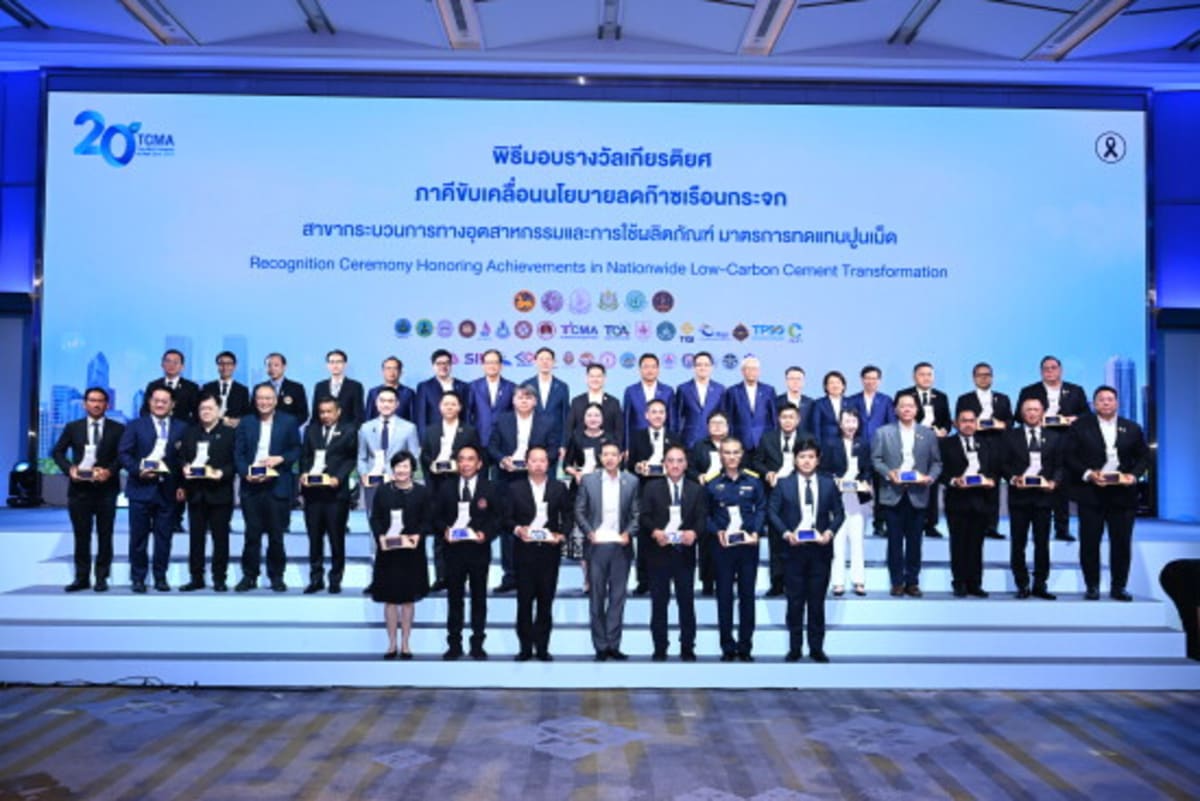
Thailand's Industry Minister Varawut Silpa-archa celebrated the achievement at a ceremony honoring 34 organizations that made it happen. Six government ministries worked alongside cement makers, researchers, and construction professionals to turn policy into reality.
The results speak for themselves. In 2021 alone, the cement switch prevented over 300,000 tonnes of CO₂ from entering the atmosphere. Between 2022 and 2023, that number jumped to more than 1 million tonnes.
Surachai Nimla-or, Chairman of the Thai Cement Manufacturers Association, emphasized that no single group could have pulled this off alone. The coordination between researchers developing better formulas, officials writing new standards, and builders actually using the material on job sites created a system where everyone moved forward together.
The Ripple Effect
Thailand's cement transformation is creating waves far beyond its borders. Other countries struggling to reduce industrial emissions now have a proven playbook they can follow, showing that heavy industry and climate action aren't enemies.
The model demonstrates how public-private partnerships can tackle seemingly impossible problems. When government sets clear goals and industry commits real resources, years can be shaved off timelines that once seemed set in stone.
Thailand is eyeing Net Zero emissions by 2050, and this cement success proves the timeline isn't just wishful thinking. The country has turned its construction sector from a climate problem into a climate solution, and they're sharing what they learned so others can do the same.
One industrial sector down, and a template for decarbonizing the rest of the economy now exists.
More Images


Based on reporting by Google News - Emissions Reduction
This story was written by BrightWire based on verified news reports.
Spread the positivity!
Share this good news with someone who needs it