Thailand Rewilding Program Grows From 6 to 71 Elephants
A baby elephant born at Thailand's Sap Langka Wildlife Sanctuary marks the sixth successful birth for a formerly domesticated mother, proving that rescued elephants can thrive in the wild. Since 2004, the sanctuary's population has grown from six elephants to 71.
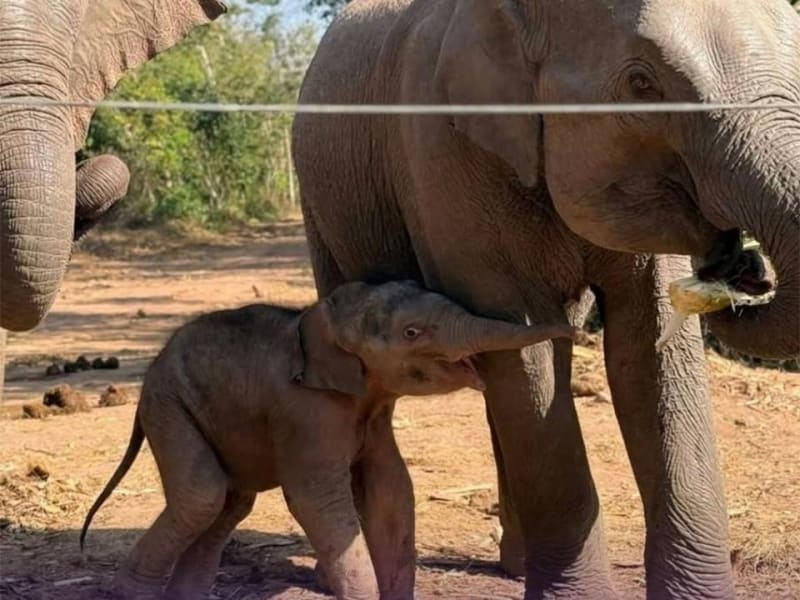
Seven-day-old Nong Kumpa is more than just an adorable baby elephant. She represents two decades of conservation success that's quietly transforming how Thailand protects its most iconic animal.
The female calf was born at Sap Langka Wildlife Sanctuary in Lopburi province to Mae Ple, a formerly domesticated elephant who was released into the wild years ago. This marks Mae Ple's sixth successful birth since returning to nature, and caregivers report both mother and daughter are healthy and thriving in their forest home.
The numbers tell an extraordinary story. When the Return Elephants to Nature Project launched in 2004, just six domesticated elephants took their first uncertain steps back into protected wilderness. Today, that small beginning has blossomed into a population of 71 elephants living naturally in the sanctuary.
The program operates under royal guidance from Her Majesty Queen Sirikit The Queen Mother. It partners the Return Elephants to Nature Foundation with Thailand's Department of National Parks, Wildlife and Plant Conservation to help domesticated elephants transition into protected areas.
What makes this achievement special isn't just the growing numbers. It's the proof that elephants like Mae Ple can successfully readapt to wild living after spending years in captivity. Each birth in the sanctuary demonstrates that these reintroduced elephants aren't just surviving but truly thriving and reproducing naturally.
The Ripple Effect
Thailand's success is creating a blueprint for elephant conservation across Asia. The steady population growth at Sap Langka shows that rewilding programs can work when given proper support, protected habitat, and time. As more calves like Nong Kumpa are born in the wild, they grow up knowing only forest life, never experiencing captivity at all.
The program also demonstrates how sustainable forest management and wildlife conservation can work hand in hand. Protecting habitat for elephants means preserving entire ecosystems that benefit countless other species.
Other countries facing similar challenges with captive elephant populations are now watching Thailand's model closely. The question isn't whether rewilding works anymore, but how to replicate this success elsewhere.
Twenty years of patient conservation work has transformed six elephants into a thriving wild population, and little Nong Kumpa is living proof that hope for Thailand's elephants is growing stronger every day.
More Images




Based on reporting by Google News - Conservation Success
This story was written by BrightWire based on verified news reports.
Spread the positivity!
Share this good news with someone who needs it