The Dark Doodad: Cloud Named During Comet Hunt in 1986
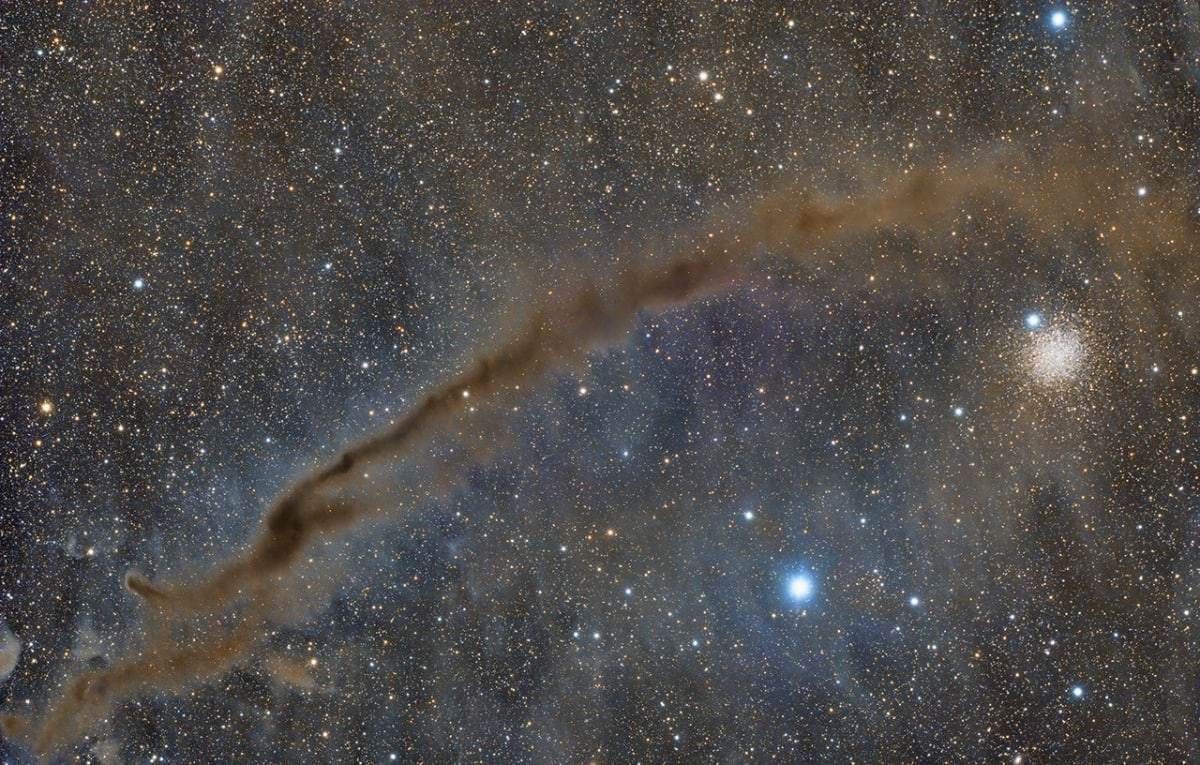
A whimsically named cosmic cloud drifting through southern skies reminds us that even professional astronomers find joy in playful naming. The Dark Doodad Nebula got its delightful name from an astronomer chasing Halley's Comet in the Australian outback nearly 40 years ago.
Sometimes the most serious scientists give the cosmos the most delightful names, and the Dark Doodad Nebula proves that wonder and whimsy belong together in space exploration.
This dusty interstellar cloud stretches across southern skies near the constellation Musca, also known as The Fly. The nebula spans about 30 light-years and floats roughly 700 light-years from Earth, part of a molecular cloud that could one day birth new stars.
The name itself has a charming origin story. Astronomer and writer Dennis di Cicco coined the alliterative moniker in 1986 while observing Comet Halley from the Australian outback. While tracking one of history's most famous comets, he spotted this dark silhouette against the starry background and gave it a name that stuck for decades.
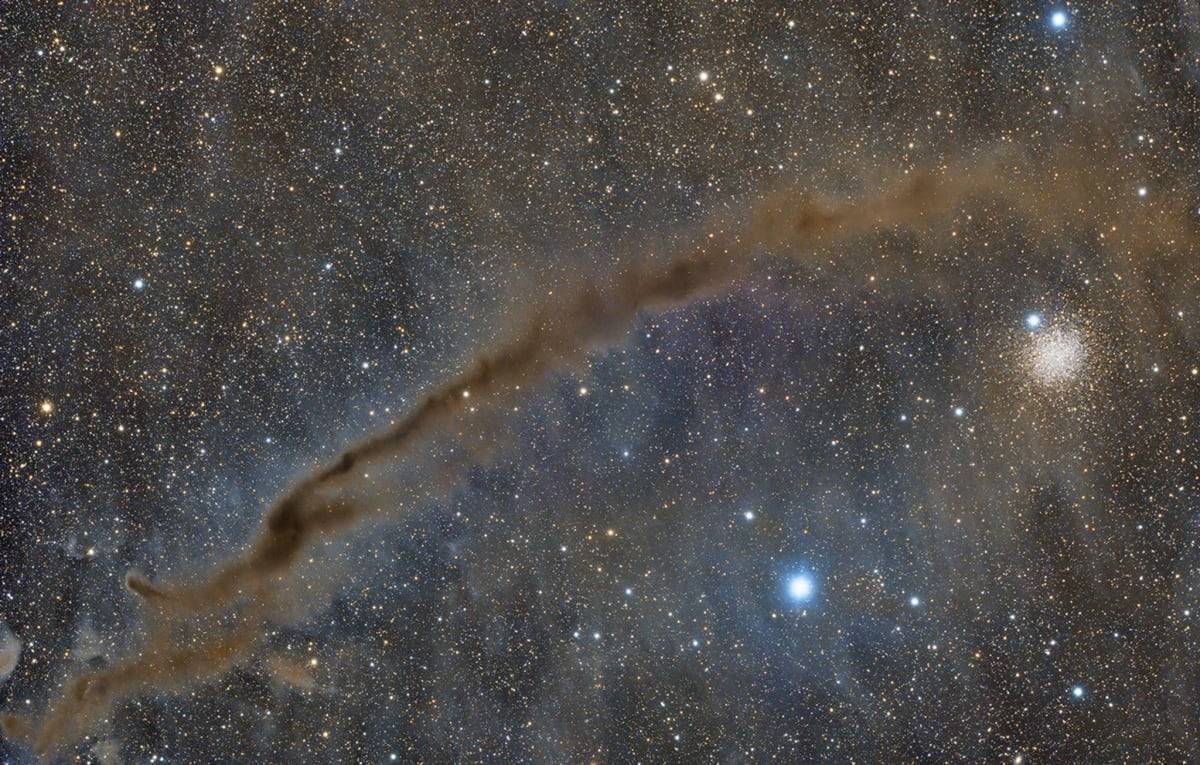
The Dark Doodad appears as a dark streak because it's actually a dense cloud of dust blocking light from stars behind it. Near its southern edge, it lines up by chance with the yellowish globular star cluster NGC 4372, which sits much farther away at 20,000 light-years in our Milky Way's outer halo.
Backyard astronomers with binoculars can spot the Dark Doodad from southern locations, making it an accessible target for stargazers. It drifts just south of two more famous deep-sky objects: the Coalsack Nebula and the Southern Cross constellation.
Why This Inspires
The Dark Doodad reminds us that science doesn't have to be stuffy or overly formal. Professional astronomers balance rigorous research with genuine joy and creativity, giving cosmic objects names that make people smile while sparking curiosity about the universe.
This playful naming tradition helps make astronomy more approachable for everyone. When a dusty molecular cloud gets called a "doodad" instead of just a catalog number, it invites people to look up and wonder.
The cloud belongs to a region that could eventually form new stars, meaning this whimsically named object plays a real role in the ongoing story of stellar birth throughout our galaxy.
More Images
Based on reporting by NASA
This story was written by BrightWire based on verified news reports.
Spread the positivity!
Share this good news with someone who needs it