Astronomers Detect First Possible Moon Beyond Our Solar System
Scientists in Chile may have spotted the first moon orbiting beyond our solar system, though this cosmic giant is so unusual it's breaking all the naming rules. The discovery opens a new chapter in our understanding of what's possible in the universe.
Astronomers using Chile's Very Large Telescope have detected what could be the first exomoon ever found, a moon-sized object orbiting in a distant star system 500 light-years away.
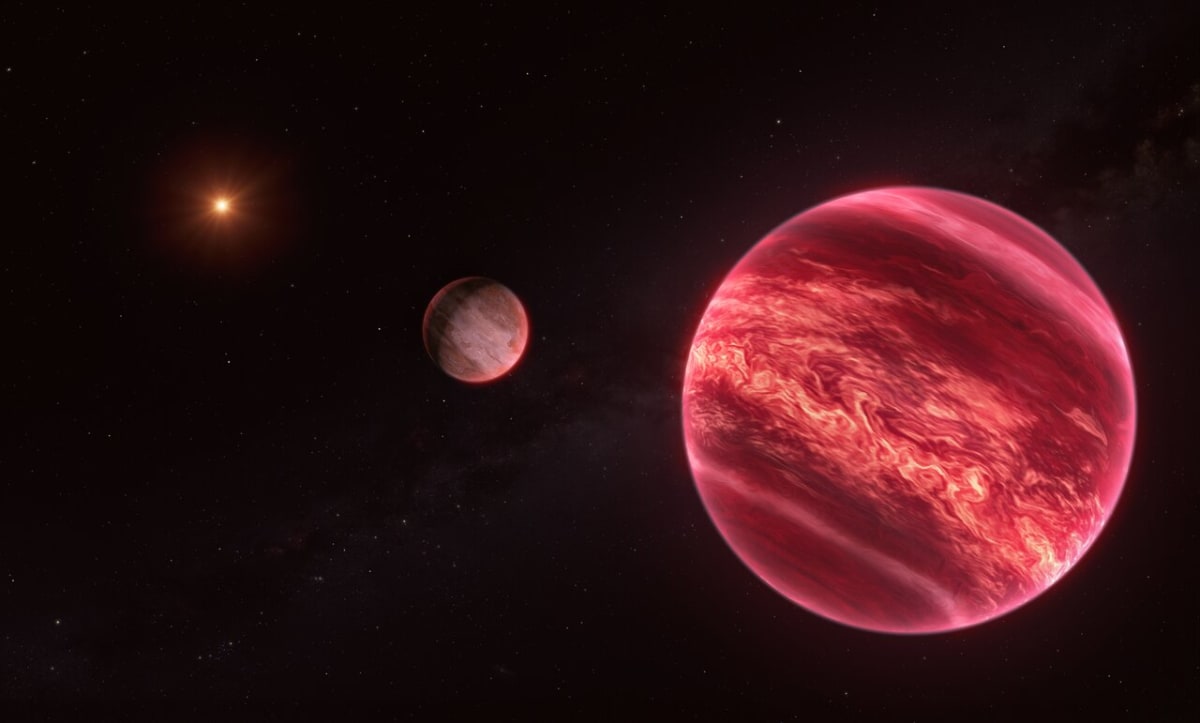
The discovery, announced by the European Southern Observatory in July, reveals a giant gaseous body at least as massive as Jupiter. But here's where it gets interesting: this potential moon doesn't orbit a planet like our own Moon does.
Instead, it circles a brown dwarf, an object too heavy to be a planet but too light to become a star. That brown dwarf orbits a star called CD-35 2722. It's a cosmic Russian nesting doll that has scientists scrambling to figure out what to even call it.
Kevin Hoy, an ESO student who led the research, used cutting-edge technology to spot tiny wobbles in the brown dwarf's motion. This same technique helped discover the first planet around a sun-like star back in 1995. Now it's revealing entirely new types of systems we never knew existed.
Alice Zurlo, who collaborated on the study, explains the naming puzzle. "The satellite we report is a giant gaseous body orbiting a highly massive companion, itself several times the mass of Jupiter," she says. Traditional words like "planet" and "moon" don't quite fit.
Why This Inspires
This discovery matters because it shows us the universe is far more diverse and creative than our solar system suggested. More than 6,000 planets beyond our solar system have been confirmed, but moons have remained elusive.
The detection method favors finding large objects first, which is why this first potential exomoon is a gas giant rather than a rocky world like Europa. But ESO's Extremely Large Telescope, currently under construction with its 39-meter mirror, will soon be able to spot smaller moons and provide even clearer views of distant worlds.
Every new discovery expands what we know is possible out there among the stars.
More Images


Based on reporting by Google News - Science
This story was written by BrightWire based on verified news reports.
Spread the positivity!
Share this good news with someone who needs it