Theatre Legend's 40-Year Legacy Transforms Indian Stage
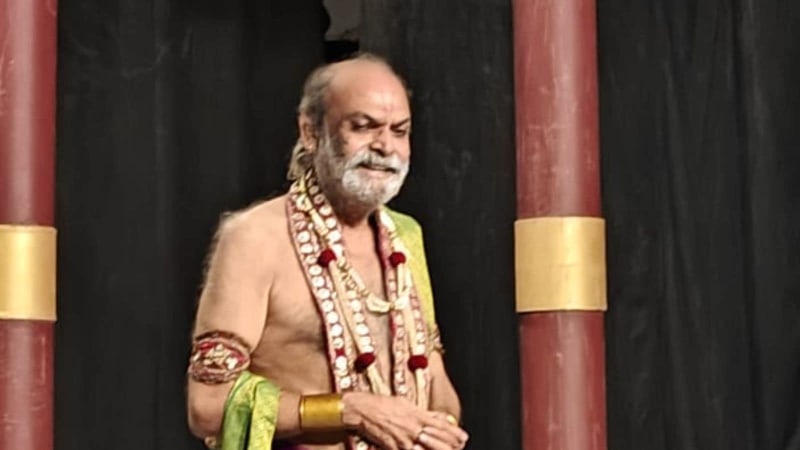
Rajoo Barot spent four decades revolutionizing Gujarati theatre, training generations of actors and playwrights while proving that regional stage work could tackle society's toughest questions. His recent passing has sparked renewed celebration of how one artist's commitment to collective creativity changed an entire art form.
For 40 years, Rajoo Barot believed theatre could change how people think about justice, identity, and community. The Gujarati theatre director who recently passed away leaves behind proof he was right.
Born in Vadodara, Barot trained at India's National School of Drama under legendary director Ebrahim Alkazi in 1977. But his real education came from traveling across north India, learning from folk performers and traditional Nautanki theatre troupes who taught him that powerful stories don't need fancy sets.
When Barot returned to Ahmedabad in the late 1970s, he found Gujarati theatre stuck in predictable formulas. He co-founded the Ahmedabad Theatre Group to prove regional theatre could be both artistically serious and widely accessible.
His approach was radical in its simplicity. He refused to build productions around star actors, instead creating ensembles where every performer mattered equally. Audiences noticed the difference immediately.
Over four decades, Barot directed productions tackling communal violence, gender justice, and personal responsibility. Plays like "Sanak" and "Ha, Hu Tane Chahu Chhu Jindagi" toured Gujarat, Mumbai, Delhi, and international stages, proving that regional language theatre could speak to universal questions.
The Ripple Effect
Barot's greatest legacy might be the artists he nurtured. He actively sought out new playwrights like Abhijat Joshi and Saumya Joshi, giving them platforms to write about contemporary realities. Many became leading voices in Gujarati literature.
He also preserved endangered folk traditions by weaving them into modern performances. His musical theatre initiatives kept centuries-old Gujarati songs and water ballads alive for new generations who might never have encountered them otherwise.
Even during the pandemic when stages went dark, Barot continued adapting plays and experimenting with minimal performance forms. His last workshops trained rural and urban actors side by side, maintaining his belief that theatre belonged to everyone.
The National School of Drama honored him with the prestigious B.V. Karanth Memorial Award in 2016, but colleagues say awards never drove him. He measured success by whether a production asked difficult questions honestly and treated audiences with respect.
Barot's students and collaborators now teach across India, carrying forward his conviction that theatre is a moral act requiring collective commitment. His method of building ensembles over ego has become the standard for serious regional theatre groups.
Theatre communities across India are celebrating how one artist's quiet perseverance proved that regional stages could rival any metropolitan production in craft, relevance, and impact.
Based on reporting by Indian Express
This story was written by BrightWire based on verified news reports.
Spread the positivity!
Share this good news with someone who needs it