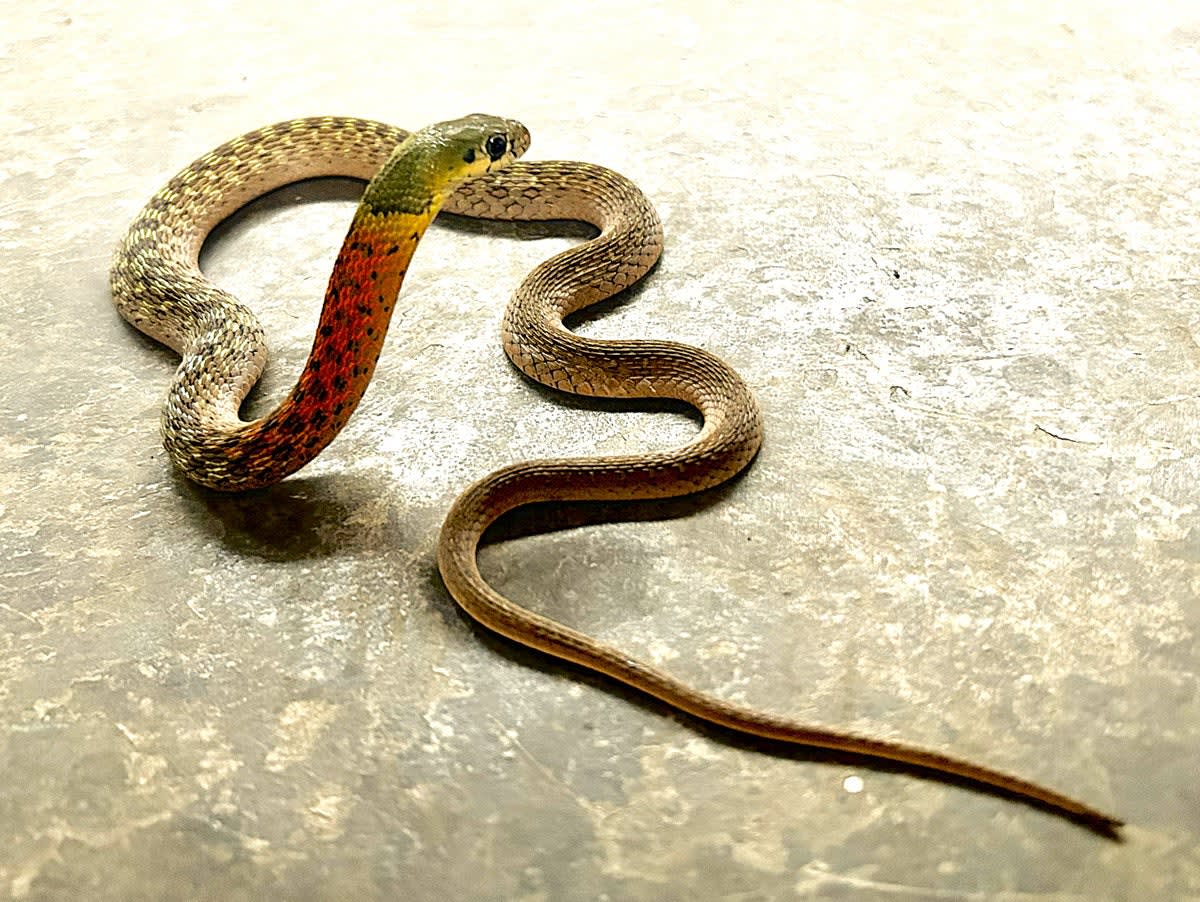
These Snakes Bluff Predators Using Memory, Not Sensors
Red-necked keelback snakes steal toxins from toads and act fearless toward predators. New research reveals they remember what they ate last instead of sensing their actual poison levels.
Scientists just discovered that some of the world's most toxic snakes might be nature's greatest bluffers.
Red-necked keelback snakes don't make their own poison. Instead, they steal it from the toxic toads they eat, storing the venom in special neck glands that can blind and kill predators in minutes.
When these snakes are loaded with toxins, they're incredibly bold. They rise up and jut their necks at mongooses and other threats as if daring them to attack.
But when they've been eating non-toxic prey like frogs or fish, they usually slither away quickly. Scientists assumed the snakes could somehow sense how much poison they had stored, similar to how rattlesnakes monitor their venom supplies.
Tomonori Kodama, a behavioral ecologist at Nagoya University in Japan, decided to test this theory. He fed 23 wild red-necked keelbacks a mix of toxic toads and non-toxic frogs, then simulated mongoose attacks using a foam-coated hook.
Here's where it gets interesting. A few days later, Kodama's team squeezed the snakes' poison glands completely empty using forceps, then staged another fake attack.
The snakes responded with the same bold, neck-showcasing attitude as before. They had no idea their poison reserves were gone.
The results, published in the journal Ethology, suggest these snakes aren't monitoring their toxin levels at all. Instead, they seem to remember what type of prey they ate most recently and base their defensive behavior on that memory alone.
Why This Inspires
This discovery reveals something fascinating about how animals make survival decisions. These snakes are essentially playing poker with predators, relying on memory rather than real-time data.
It's a reminder that nature doesn't always use the most sophisticated solution. Sometimes a simple memory system works well enough, especially if snakes in the wild eat toxic toads often enough that their bluff is usually backed up by real poison.
The research also shows how much we still have to learn about animal behavior, even in species scientists have studied for years.
Nature's con artists are teaching us that confidence can matter just as much as actual firepower.
More Images



Based on reporting by Scientific American
This story was written by BrightWire based on verified news reports.
Spread the positivity!
Share this good news with someone who needs it