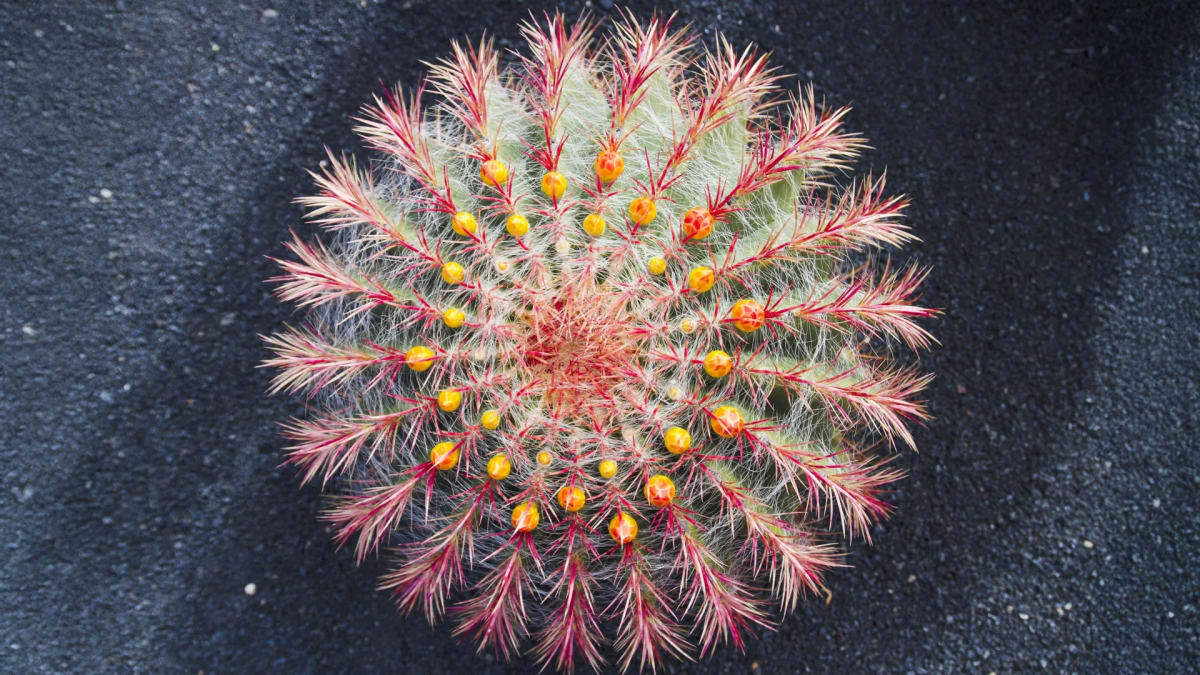
Cacti Evolve Faster Than Expected, Scientists Discover Why
Desert cacti are creating new species at lightning speed, and scientists just discovered the surprising reason why. The answer challenges what we've believed since Darwin's time.
Cacti might look like slow-growing survivors stuck in the same form for centuries, but scientists just discovered these spiky plants are actually evolution speed demons.
Researchers at the University of Reading studied more than 750 cactus species and found something remarkable. These desert plants form new species surprisingly quickly, revealing that harsh desert environments are actually hotbeds of rapid change.
For decades, scientists believed that specialized flowers and specific pollinators drove the creation of new plant species. Darwin himself championed this idea after studying orchids. But cacti tell a completely different story.
The research team found that flower size doesn't matter much at all. Some cactus blooms measure just 2mm while others reach 37cm, a 185-fold difference. Yet this enormous variation had almost no connection to how quickly new species emerged.
What actually drives cactus evolution is the speed at which flowers change shape over time. Species whose flowers evolved rapidly were far more likely to branch off into entirely new species. This pattern held true across both recent and ancient evolutionary history.
"People may think of cacti as tough, slow-growing plants, but our research shows that the cactus family is one of the fastest-evolving plant groups on Earth," said lead author Jamie Thompson. His team's findings appeared in Biology Letters.
The discovery reveals deserts as surprisingly dynamic places where evolution happens fast. With roughly 1,850 known cactus species spread throughout the Americas over the last 20 to 35 million years, cacti rank among the fastest-diversifying plant groups on the planet.
Why This Inspires
This research could reshape how we protect threatened plants. Nearly one-third of cactus species currently face extinction, but understanding evolutionary speed gives conservationists a new tool.
Rather than focusing only on specific traits like flower size or pollinator relationships, scientists can now look at how quickly a species is evolving. Faster-evolving cacti might handle environmental changes differently than slower ones, helping researchers predict which species need the most urgent protection.
The team also created CactEcoDB, a free database combining seven years of research on cactus traits, habitats, and evolutionary relationships. Scientists worldwide can now use this resource to better understand how these remarkable plants might respond to climate change.
Deserts aren't the unchanging wastelands they might appear to be, and the humble cactus proves nature's ability to adapt and thrive even in the harshest places on Earth.
Based on reporting by Science Daily
This story was written by BrightWire based on verified news reports.
Spread the positivity!
Share this good news with someone who needs it