This Robot Helps Dementia Patients Live Independently at Home
A couple in New Hampshire found freedom when a home care robot named Robbie helped manage the husband's traumatic brain injury and dementia. The wheeled assistant reminds him to eat, guides workouts, and gives his wife precious time back.
After their second service dog passed away, Brenda and Brian Marquis needed help with daily tasks that had become overwhelming since Brian's 2012 car crash left him with a traumatic brain injury and dementia. They found an unexpected solution in Robbie, a wheeled robot that changed their lives.
Several times a day, Robbie rolls into their Durham, New Hampshire living room with reminders to exercise, eat lunch, or drink water. The robot's digital screen guides Brian through workouts and prompts him to wash up after entering the bathroom. For a 59-year-old who struggled to remember basic hygiene, this simple assistance feels like liberation.
"I was never into technology," Brian said. "Then I realized I can't remember to wash my face and my armpits. So, it just really kind of set me free almost."
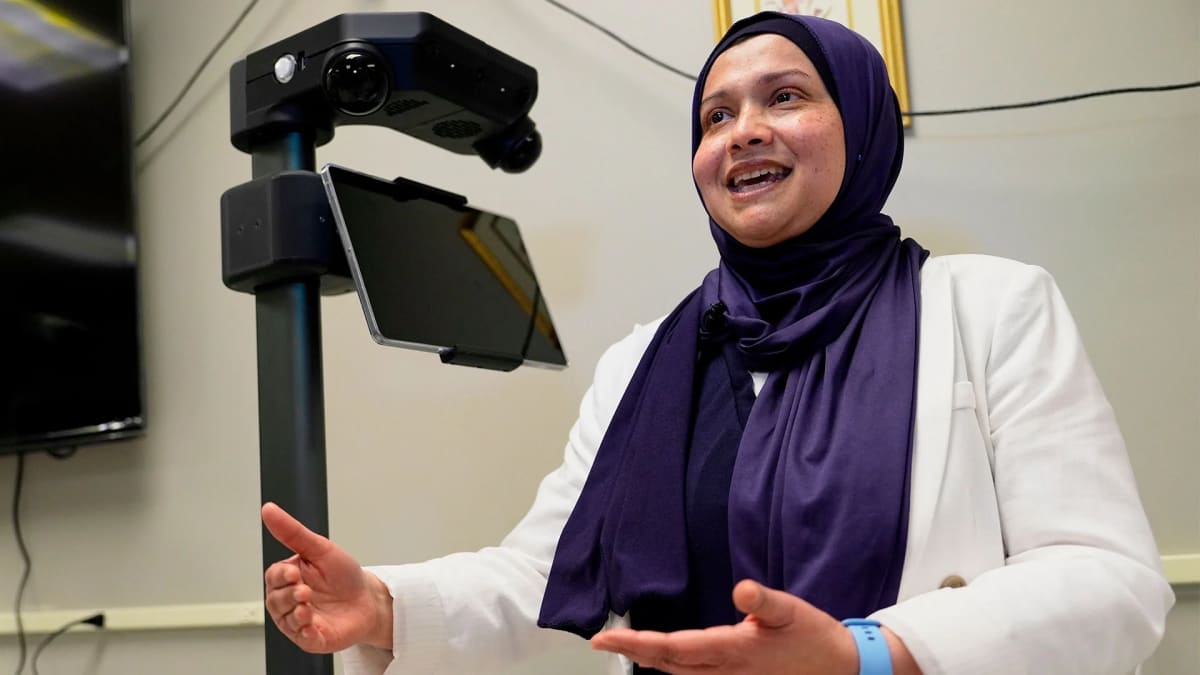
The robot, officially called Stretch 4, emerged from a University of New Hampshire lab funded by the National Institute of Aging. Computer science professor Momotaz Begum spent years testing socially assistive robots for people with Alzheimer's and dementia. While focus groups initially compared Stretch to a coat hanger, Begum discovered appearance mattered less than function.
Brenda Marquis reached out to the lab after struggling to find reliable home care support in New Hampshire. As someone who uses a motorized wheelchair and manages her own disabilities while caring for Brian, she needed practical help. The shortage of home care aides driven by low wages and high turnover left few options.
Stretch 4 costs nearly $30,000 and includes a telescoping gripper that can retrieve water bottles and read prescription labels. Made by Hello Robot in Martinez, California, the device uses cameras and sensors to navigate homes and recognize who's in the room.
The Ripple Effect
The robot freed Brenda from hours of daily caregiving work and reduced expenses. She used to order groceries through Instacart because she feared leaving Brian alone too long. Now she shops in person and even plays mahjong with friends while Robbie watches over her husband.
As America's oldest baby boomers turn 80 this year, the caregiver shortage will only deepen. Humanoid robots remain impractical and potentially dangerous for people with limited mobility. But simple, functional robots like Stretch offer realistic solutions for families facing impossible choices between independence and safety.
For the Marquis family, Robbie isn't just a helpful device. It's the difference between isolation and freedom, between constant worry and peaceful nights, between feeling trapped and living life again.
Based on reporting by Fast Company - Innovation
This story was written by BrightWire based on verified news reports.
Spread the positivity!
Share this good news with someone who needs it