Three Ebola Vaccines Fast-Tracked to Fight Africa Outbreak
Global health leaders just unlocked $62 million to speed three promising Ebola vaccines toward trials as Central Africa battles a dangerous outbreak. The coordinated push brings hope for containing the current crisis and preventing future ones.
When a deadly disease has no vaccine, scientists and health leaders must race against time to protect millions of lives.
That's exactly what's happening now as the Coalition for Epidemic Preparedness Innovations announced urgent funding for three experimental vaccines targeting the Bundibugyo strain of Ebola. The virus has already caused 282 confirmed cases in the Democratic Republic of Congo and Uganda, with about 1,000 more suspected.
The $62 million investment represents a coordinated global effort to accelerate solutions. Moderna will receive up to $50 million to advance its mRNA vaccine candidate, the same breakthrough technology that proved life-saving during COVID-19. The University of Oxford partnered with India's Serum Institute will get $8.6 million, while the International AIDS Vaccine Initiative secured $3.2 million for their candidate.
The World Health Organization identified these three as the most promising options currently under development. Each builds on proven technology platforms that have already shown safety and effectiveness against related viruses like the Zaire and Sudan strains of Ebola.
"With Bundibugyo virus spreading rapidly and no licensed vaccines, every day counts in the race against this deadly disease," said Dr. Richard Hatchett, CEPI's chief executive officer. His organization exists specifically to speed vaccine development for emerging infectious diseases before they become pandemics.
The Ripple Effect
This investment does more than address an immediate health crisis. It strengthens Africa's ability to respond to future outbreaks by building sustainable research and vaccine manufacturing capacity on the continent itself.
Dr. Jean Kaseya, head of the Africa Centres for Disease Prevention and Control, called the funding "both timely and critical to Africa's health as well as economic security." When communities can produce their own vaccines, they gain independence and speed in protecting their people.
The collaboration brings together public health agencies, universities, private companies, and manufacturers across multiple continents. This is the model that works when epidemics strike: diverse expertise moving fast with shared purpose.
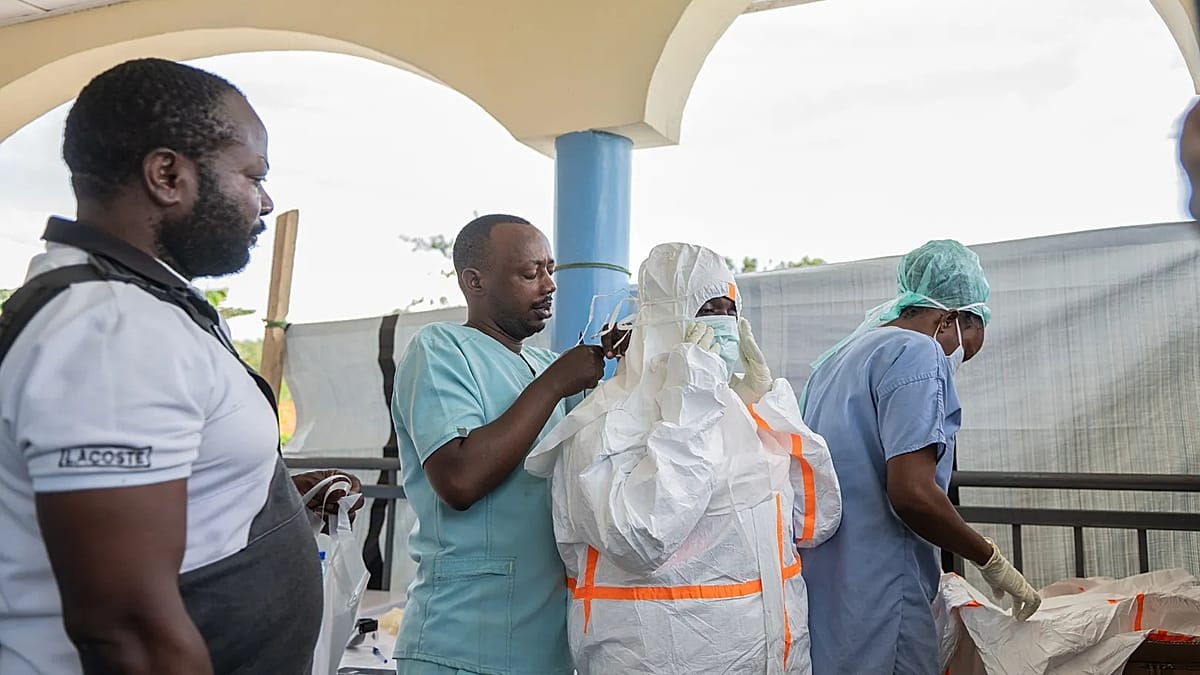
While scientists advance these vaccine candidates through testing, frontline health workers continue using proven strategies to stop transmission. Disease surveillance, rapid testing, contact tracing, patient care, and community engagement remain essential tools that have controlled Ebola outbreaks for decades.
These three vaccines offer real hope for ending the current outbreak and preventing the next one.
More Images


Based on reporting by Euronews
This story was written by BrightWire based on verified news reports.
Spread the positivity!
Share this good news with someone who needs it