Three Stars Make Summer Skies Easy for Everyone
The Summer Triangle transforms confusing night skies into an accessible roadmap for stargazers of all levels. These three bright stars, visible even through light pollution, unlock the secrets of the Milky Way and teach anyone how to navigate the cosmos.
Looking up at the night sky doesn't have to feel overwhelming anymore.
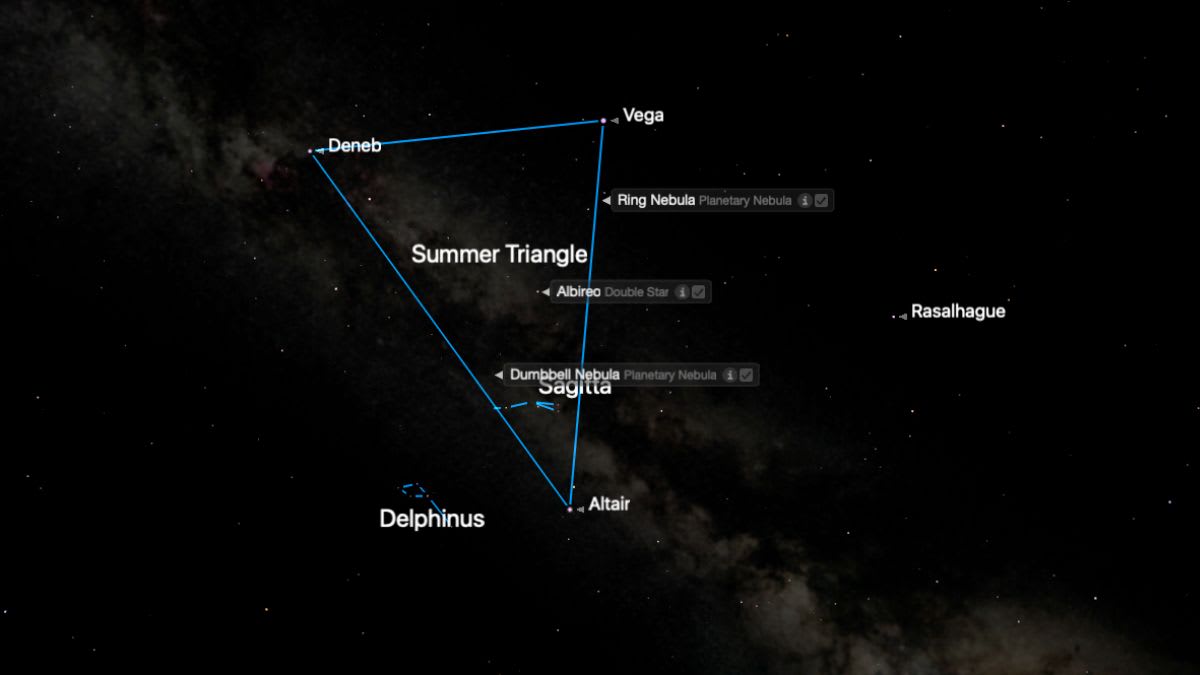
Three bright stars forming the Summer Triangle are giving people across the Northern Hemisphere a simple way to understand the universe above them. Visible from July through October, this massive pattern cuts through twilight and city lights, serving as a celestial roadmap that turns random dots into recognizable landmarks.
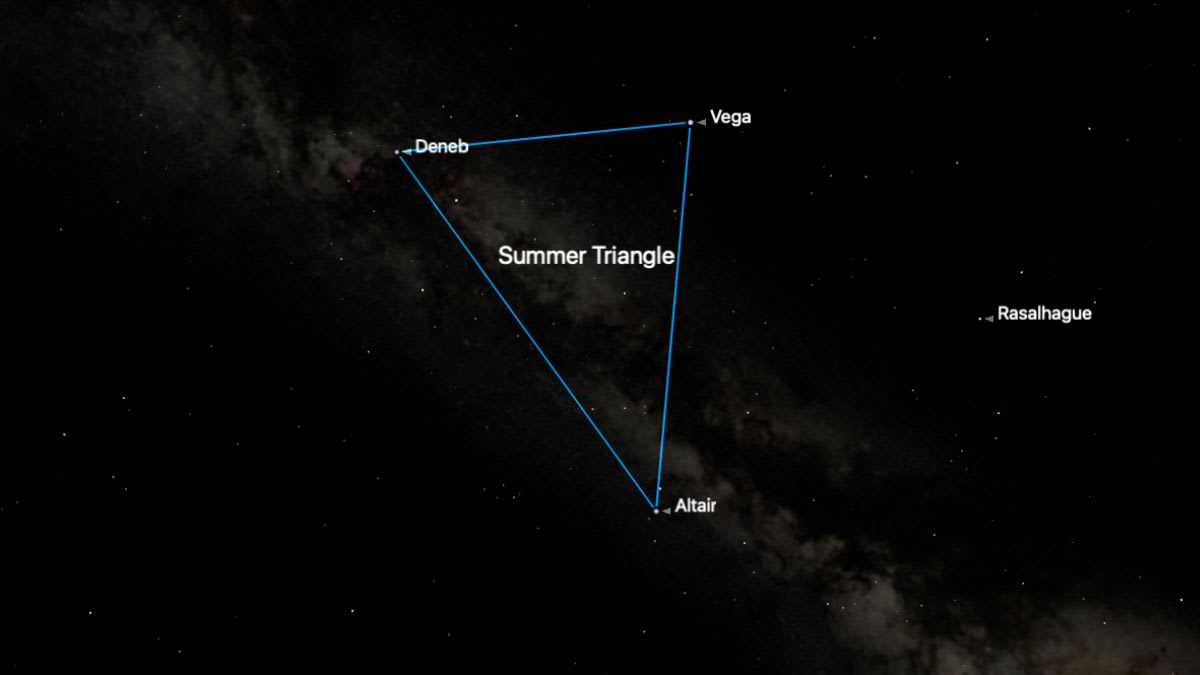
The triangle consists of Vega, Deneb, and Altair. Each appears roughly the same brightness to our eyes, but their distances tell an astonishing story about how we see space.
Vega sits about 25 light-years away, while Altair is even closer at 17 light-years. These are our cosmic neighbors, with light from both stars reaching us from just this century.
Then there's Deneb, positioned roughly 2,600 light-years away. The light we see tonight left that star while the Roman Empire still thrived.
The fact that Deneb appears as bright as its much closer companions reveals something wonderful. It's a supergiant radiating tens of thousands of times more energy than our sun, so luminous that it shines brilliantly across incomprehensible distances.
Why This Inspires
This simple triangle teaches us to see depth in the night sky, not just a flat backdrop of twinkling lights. When you look at these three stars, you're seeing different layers of the universe at once, like windows opening into near, middle, and far distances simultaneously.
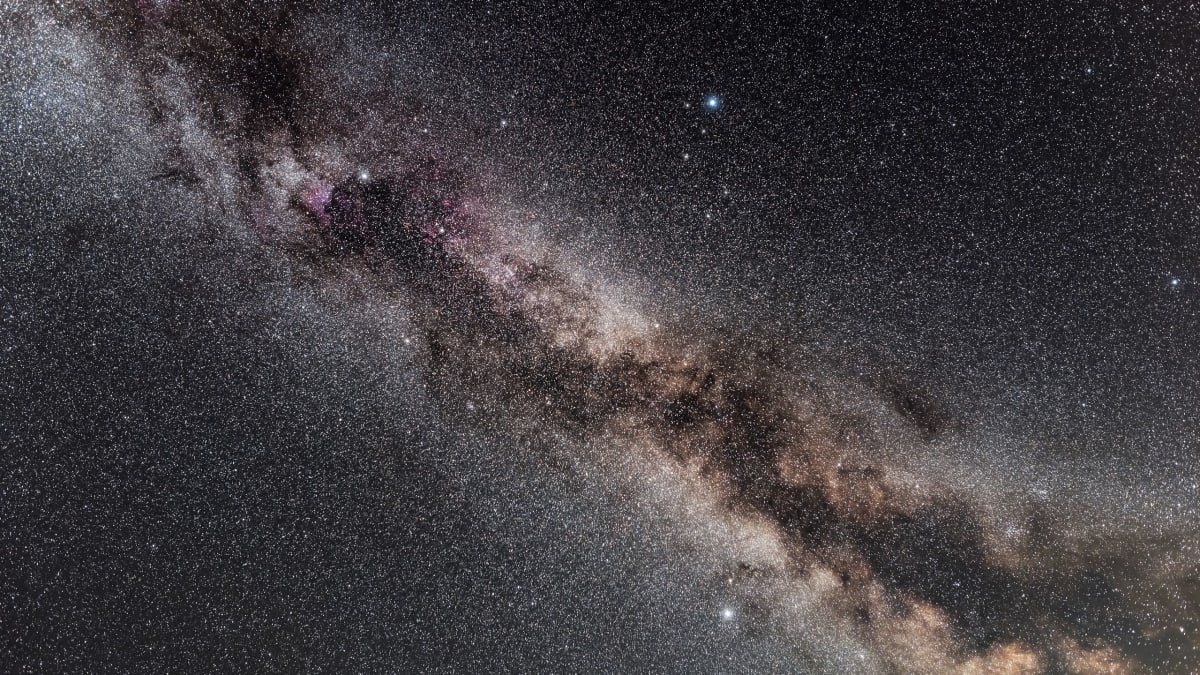
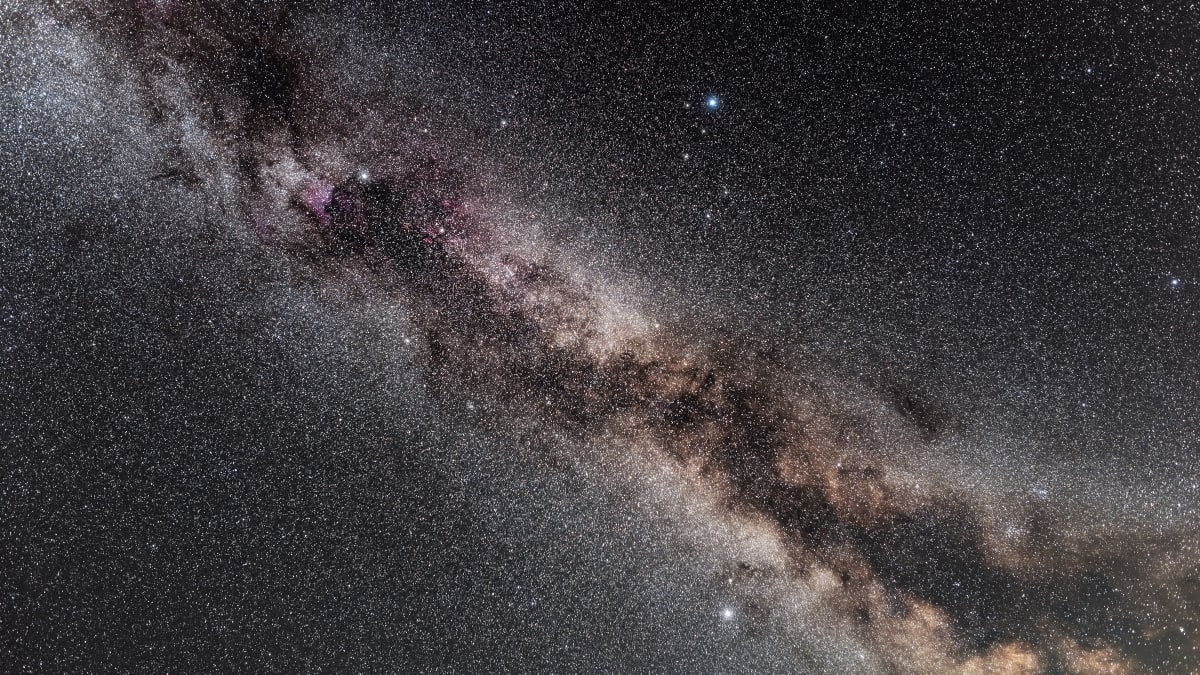
The Summer Triangle also guides viewers to the Milky Way itself. Between Deneb and Altair, dense star clouds spill into view, revealing our galaxy's spiral arm where our solar system lives.
Finding it is remarkably easy. Around 11 p.m. at mid-northern latitudes, look high in the southeast for brilliant Vega first, then spot Deneb to its lower left and Altair farther south.
Inside and around the triangle, smaller constellations like Delphinus the Dolphin and Sagitta the Arrow nestle quietly. Beautiful sights like the colorful double star Albireo wait for anyone with binoculars to discover them.
The best part? The Summer Triangle teaches that astronomy isn't about memorizing everything at once. It's about finding a few familiar anchors and exploring outward from there, letting curiosity guide you through regions of wonder rather than hunting individual objects.
One look upward transforms confusion into clarity, showing that the universe is more accessible than we ever imagined.
More Images
Based on reporting by Space.com
This story was written by BrightWire based on verified news reports.
Spread the positivity!
Share this good news with someone who needs it