Tiger Couple Brings India's Kheoni Sanctuary Back to Life
Two tigers transformed a forgotten forest corridor into a thriving sanctuary by settling down and raising three cubs. Their story shows how landscapes once written off can recover when given consistent protection.
A tiger couple has turned a struggling wildlife corridor into a flourishing ecosystem in western Madhya Pradesh.
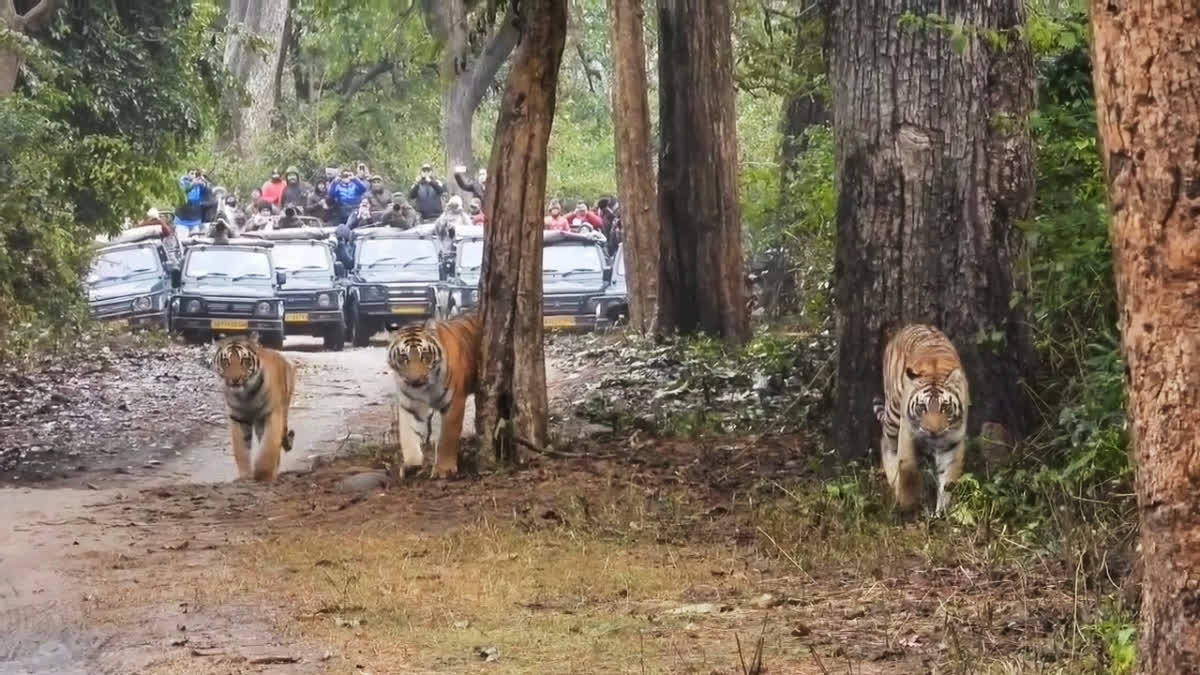
Yuvraj and Meera, two tigers who chose Kheoni Wildlife Sanctuary as their permanent home, recently welcomed three cubs. The birth marks a turning point for a forest that experts once considered too small and exposed to sustain resident tigers.
For decades, Kheoni served as a quiet passage between larger reserves like Ratapani and Melghat. Tigers moved through but rarely stayed. The 134.7 square kilometer sanctuary seemed destined to remain a stopover rather than a destination.
But Yuvraj and Meera changed that calculation. They claimed territory, hunted successfully, and ultimately bred. Last month, forest department cameras confirmed what officials had suspected: Meera had given birth to three healthy cubs.
Superintendent Vikash Mahorey reported that Meera stayed hidden during the early weeks, protecting her vulnerable newborns. Now, at just a few months old, the cubs are beginning to explore, padding across clearings under their mother's watchful eye.
The tiger family represents the visible peak of a broader ecological recovery. Recent surveys confirm wild dogs have returned to Kheoni, operating in coordinated packs that require substantial prey populations. Leopards, hyenas, jackals, and sloth bears now share the forest alongside rare four-horned antelope.
Forest department data places Kheoni's tiger population at around twelve individuals. Sightings that were once rare and exciting have become routine. The sanctuary crossed a threshold where prey density, territory, and safety aligned enough to support breeding.
The Ripple Effect
Part of this success traces back to a 1982 decision to expand Kheoni's boundaries to include forest tracts in neighboring Sehore district. What seemed like a bureaucratic adjustment at the time gave prey populations room to grow and movement corridors space to stabilize.
Now Madhya Pradesh is planning to develop Omkareshwar Wildlife Sanctuary to strengthen the corridor network linking central Madhya Pradesh with Maharashtra. The goal is ensuring that dispersing tigers, including Meera's cubs, have safe paths to new territories as they mature.
Kheoni's transformation demonstrates how landscapes dismissed as secondary can become central when protected consistently. A breeding tigress doesn't choose uncertainty. She selects terrain that can sustain the risk of raising cubs through their vulnerable first months.
The sanctuary that once could barely hold tigers now nurtures the next generation.
More Images
%2B(1).png)
%2Fenglish-betterindia%2Fmedia%2Fmedia_files%2F2026%2F04%2F15%2Fkheoni-tiger-2026-04-15-14-02-20.png)
%2Fenglish-betterindia%2Fmedia%2Fmedia_files%2F2025%2F11%2F20%2Fwild-at-heart-banner-image-microsite-banner-2025-11-20-16-17-04.jpg)

Based on reporting by The Better India
This story was written by BrightWire based on verified news reports.
Spread the positivity!
Share this good news with someone who needs it