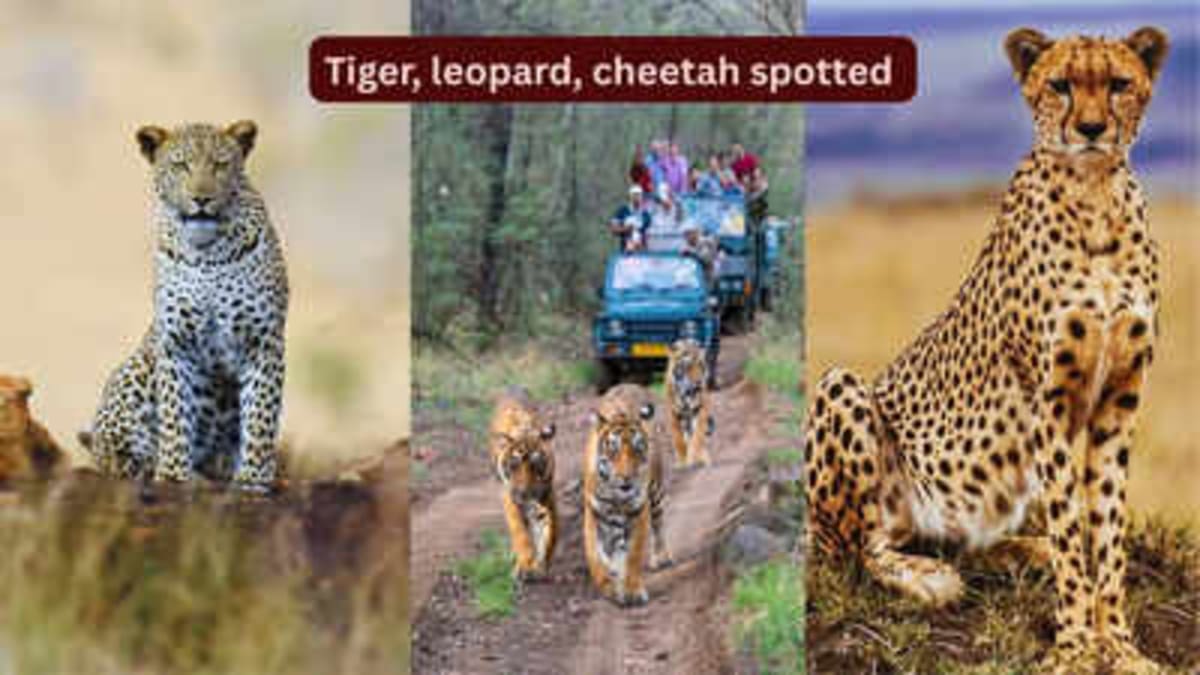
Tiger, Leopard, Cheetah Spotted Together in Rajasthan
Three apex predators appeared within two kilometers of each other at Ranthambore National Park, creating a once-in-a-lifetime wildlife moment. The rare sighting has conservationists buzzing about India's growing success in protecting big cats.
Visitors to Ranthambore National Park in Rajasthan witnessed something extraordinary: a Bengal tiger, an Indian leopard, and a cheetah all spotted within a two-kilometer stretch. These territorial predators rarely share space so closely, making this a moment that wildlife experts are calling historic.
The incredible sighting happened in Zone 9 of the reserve, a quieter area near the Chakal river. Tourists watched in awe as all three big cats moved through the same landscape on a single safari. The moment spread across social media within hours, with wildlife enthusiast Arijit Banerjee sharing the news that left even seasoned conservationists stunned.
What makes this even more special is the cheetah's presence. After disappearing from India decades ago, cheetahs were reintroduced at Kuno National Park as part of an ambitious conservation effort. This individual likely traveled hundreds of kilometers searching for new territory, proving the species is adapting to its ancestral home.
Ranthambore has long been celebrated for its tiger conservation success, with some residents achieving celebrity status among wildlife lovers. The 1,300-square-kilometer park gives predators the space they need to thrive. Now, with cheetahs joining the ecosystem, India's wildlife story is entering an exciting new chapter.
The Ripple Effect
This sighting represents more than just a lucky moment for tourists. It demonstrates that India's wildlife corridors are working, allowing animals to move safely across vast distances. The cheetah's journey from Kuno to Ranthambore shows that conservation investments are paying off in ways scientists hoped for but couldn't guarantee.
Summer visitors now have even more reason to explore Ranthambore, when animals gather around water sources and sightings increase. The park sits just 350 kilometers from New Delhi, accessible by a scenic six-hour drive, a quick four-hour train ride to Sawai Madhopur, or flights into Jaipur followed by a beautiful drive through Rajasthan.
For the tourists who witnessed this rare convergence, the experience offered something deeper than checking boxes on a wildlife list. They watched a living, breathing ecosystem prove that different species can coexist when given protected space. They saw firsthand that conservation efforts, though slow and demanding, create moments of pure wonder.
India's commitment to protecting its big cats is creating stories that seemed impossible just years ago, one remarkable sighting at a time.
More Images



Based on reporting by Times of India - Good News
This story was written by BrightWire based on verified news reports.
Spread the positivity!
Share this good news with someone who needs it