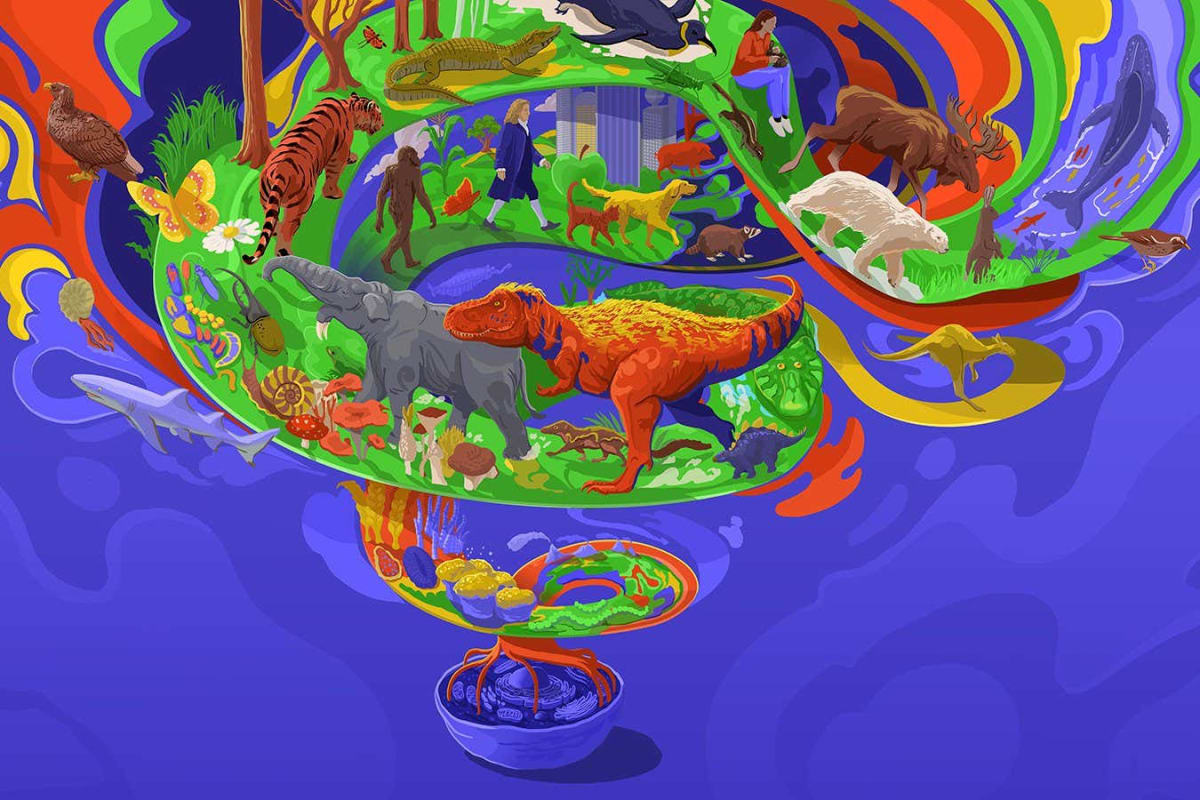
Tiny Cell Droplets May Hold the Secret to Life's Origins
Scientists discovered that microscopic liquid droplets in our cells, found only in 2009, might be ancient relics explaining how life first began on Earth. These mysterious blobs perform crucial jobs in every cell and could unlock biology's biggest mystery.
Swimming around in every one of your cells right now might be the answer to one of science's greatest mysteries: how life began.
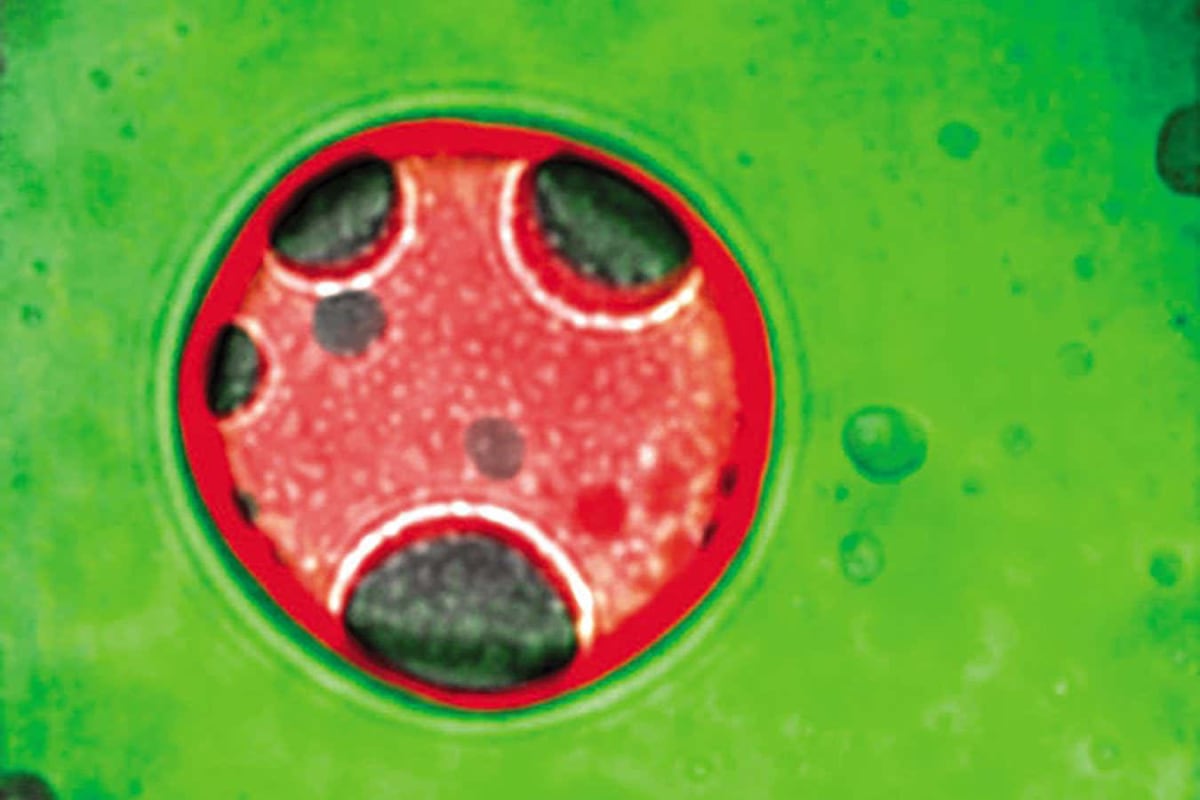
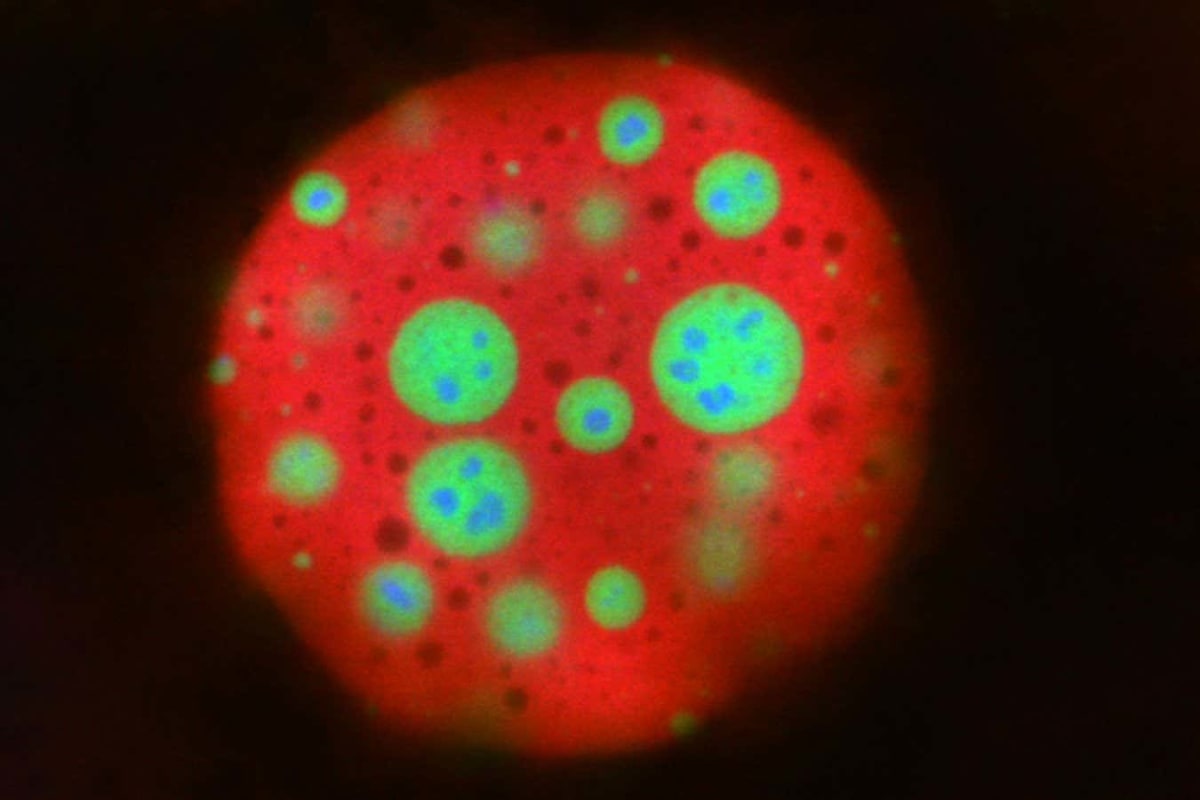
Researchers have discovered that tiny liquid droplets called condensates, hidden in plain sight inside our cells, could be the key to understanding life's origins. These microscopic blobs were only identified in 2009, but they perform essential jobs that keep us alive.
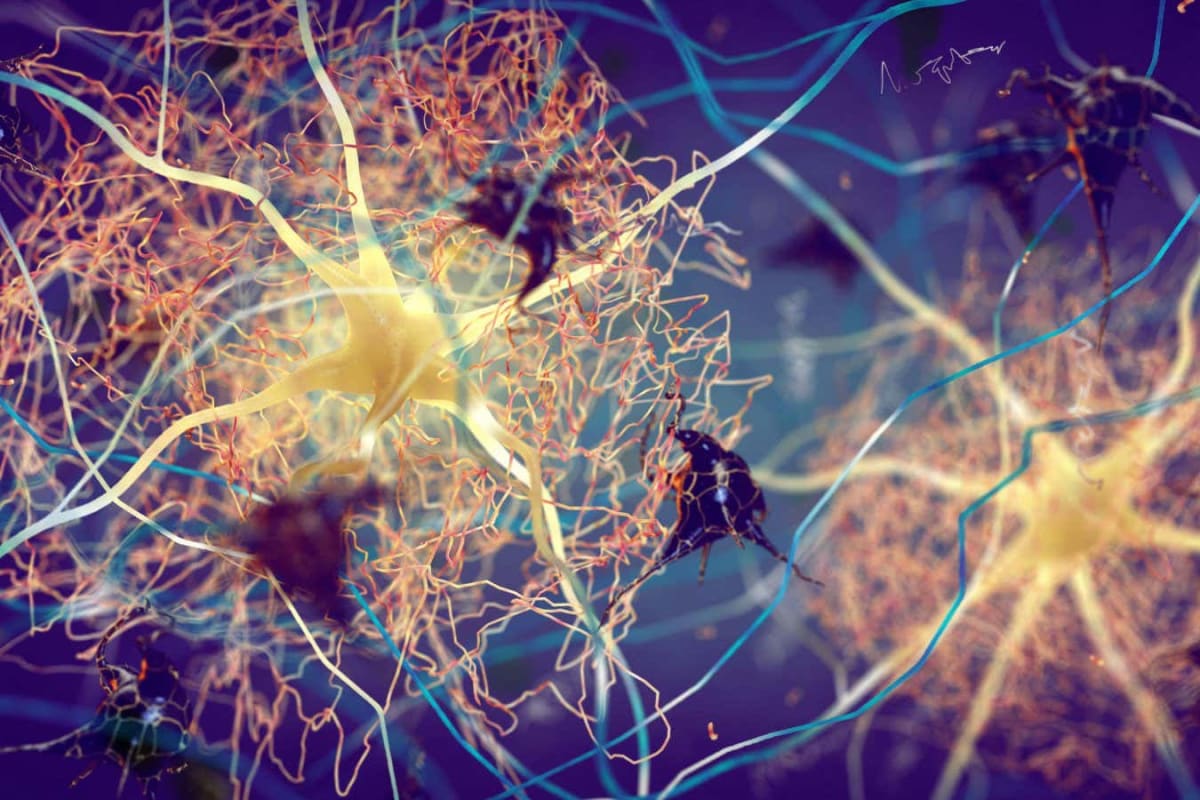
The droplets look like solid speckles under a microscope, but they're actually liquid. They float around inside cells, some still and some moving as if carried by invisible currents. When they malfunction in the brain, they may even contribute to Alzheimer's disease.
Here's where it gets exciting. Over the past decade, experiments have shown these droplets might have been crucial to the very first life on Earth.
The story goes back almost 100 years. In 1936, scientist Alexander Oparin proposed that similar droplets, called coacervates, formed naturally in Earth's early oceans. As rocks, minerals, and simple chemicals mixed in the water billions of years ago, some molecules clumped together into these liquid blobs.
Oparin suggested these coacervates were the precursors to cells. They weren't alive yet, but they were a crude first attempt at life. Unlike modern cells with their complex membranes, coacervates have no outer wall. Biophysicist Dora Tang compares their structure to overcooked spaghetti strands stuck together.
For decades, scientists ignored this idea. There was no proof these droplets still existed in living things. Instead, researchers focused on DNA, RNA, and how cell membranes formed.
Then came 2009. Scientists discovered condensates inside modern cells and realized Oparin might have been right all along. "Fundamentally, they're the same," says biophysicist Evan Spruijt, comparing the lab-made coacervates to the condensates in our cells.
Why This Inspires
This discovery bridges an enormous gap between chemistry and biology. It suggests that the same simple physical process that creates droplets in our cells today could have sparked the very first life billions of years ago.
The beauty lies in the simplicity. Life didn't need complex membranes or perfectly arranged molecules to get started. It just needed chemicals that naturally wanted to stick together in water.
What makes this truly inspiring is that we're literally carrying around pieces of ancient history. Every condensate in your body connects you to Earth's earliest days, when lifeless chemicals first organized themselves into something more.
Scientists are now running experiments to see if these droplets can perform basic life functions. The research could finally answer how non-living matter became living cells, solving a puzzle that has stumped humanity for centuries.
The answer to life's biggest question might have been hiding inside us all along.
More Images

Based on reporting by New Scientist
This story was written by BrightWire based on verified news reports.
Spread the positivity!
Share this good news with someone who needs it