Tiny Fish Steals Glowing Power From Its Prey to Survive
Scientists discovered a Pacific fish that can't produce its own bioluminescence, so it steals glowing proteins from the sea fireflies it eats. This remarkable survival trick helps the fish become invisible to predators lurking below.
📺 Watch the full story above
A tiny fish in the Pacific Ocean has pulled off one of nature's cleverest heists: stealing the power to glow from its dinner.
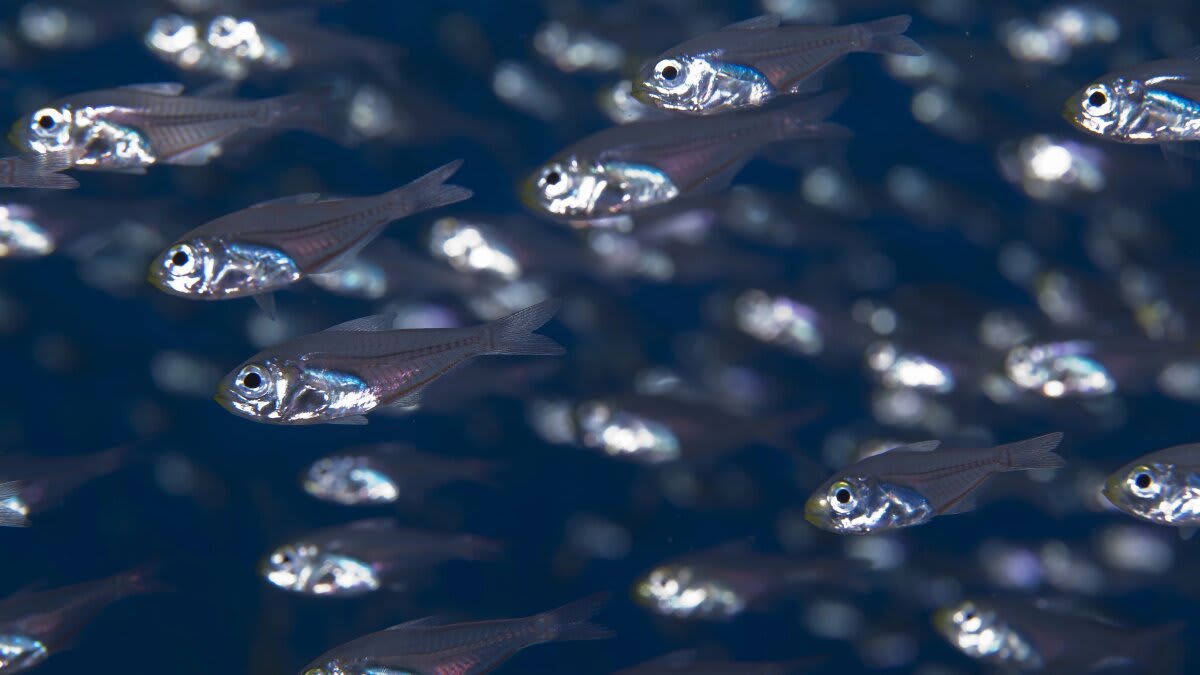
Japanese researchers at Tohoku University discovered that the golden sweeper fish lacks the gene needed to produce bioluminescence on its own. Instead, these seven-centimeter swimmers hunt sea fireflies, tiny glowing crustaceans, and extract their fully formed light-producing proteins.
The team used advanced genome sequencing to solve a mystery that had puzzled them for years. They found no evidence that the fish could make luciferase, the enzyme that creates the glow, nor had it borrowed the genetic instructions through horizontal gene transfer, where DNA occasionally jumps between unrelated species.
"These results provide compelling and conclusive evidence that this fish does not possess the genetic blueprint for bioluminescence," says Manabu Bessho-Uehara, an associate professor at Tohoku University. "Instead, it relies entirely on proteins obtained from its prey, representing a truly unique form of biological adaptation."
The fish transports the stolen proteins to its own light organs, where they create a soft blue glow. The effect isn't permanent; the fish must keep eating sea fireflies to maintain its luminescence, like recharging a battery with each meal.
This phenomenon, called kleptoproteinism, has never been documented in any other animal. The golden sweeper has essentially outsourced one of nature's most energy-intensive processes rather than maintaining the genetic machinery to do it themselves.
The Bright Side
The reason behind this molecular theft makes the story even more fascinating. These fish aren't glowing to attract mates or hunt prey; they're using it as an invisibility cloak.
In moonlit waters, predators swimming below can spot the dark silhouettes of fish above them. But the golden sweeper's stolen glow creates counterillumination, canceling out its shadow and making it virtually disappear against the dim light filtering down from above.
It's one of nature's most sophisticated camouflage techniques, achieved through a shortcut evolution that saves energy and protects an entire species. Rather than expending resources to produce bioluminescent machinery, the fish found a simpler solution: let someone else do the hard work.
The discovery shows how remarkably resourceful nature can be when species face survival challenges. The golden sweeper turned a limitation into an advantage, creating a sustainable solution that works as long as sea fireflies remain part of their ocean ecosystem.
Scientists say this genome sequence will help them understand how animals can acquire new functions without changing their DNA. Sometimes the best innovations come from working smarter, not harder, even in the deep blue sea.
More Images


Based on reporting by New Atlas
This story was written by BrightWire based on verified news reports.
Spread the positivity!
Share this good news with someone who needs it