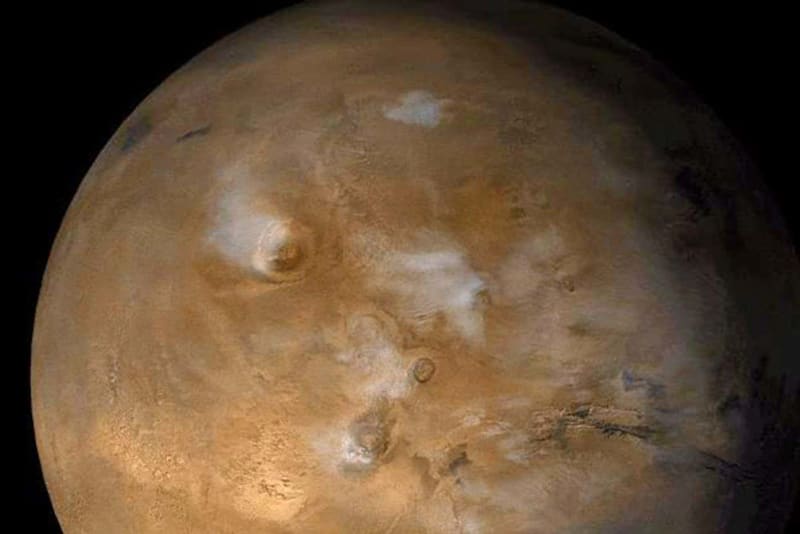
Tiny Mars Helps Prevent Extreme Ice Ages on Earth
Scientists discovered that Mars, despite being just one-tenth Earth's mass, plays a surprisingly important role in keeping our planet's climate cycles stable. This finding could change how we search for habitable worlds beyond our solar system.
A tiny neighbor might be protecting Earth from extreme ice ages, and scientists are just now understanding how.
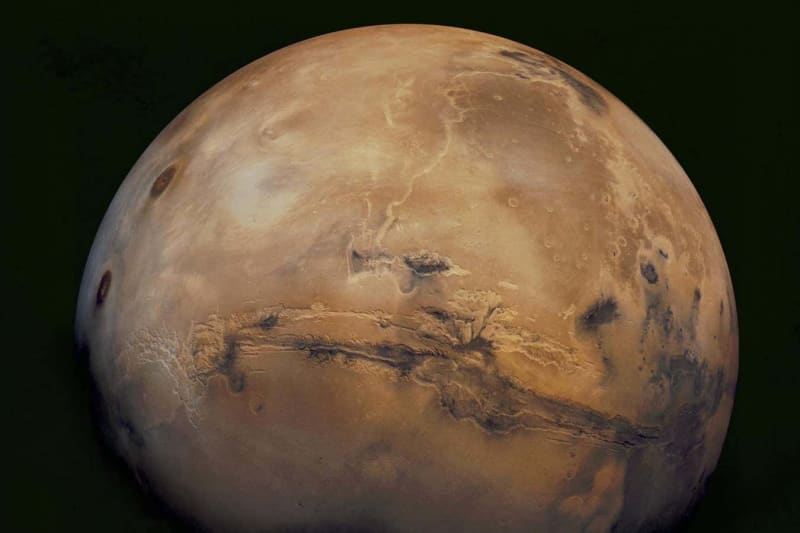
Mars, though only one-tenth the mass of our planet, significantly influences Earth's orbit and climate cycles. Researchers at the University of California, Riverside made this discovery by running simulations that adjusted Mars's mass from zero to 100 times its actual size.
Stephen Kane, the lead researcher, admits he started the project as a skeptic. "I had trouble believing that Mars, which is only a tenth the mass of Earth, could have such a profound effect on Earth's cycles," he explains.
The simulations revealed something remarkable. Despite its small size, Mars's gravitational pull helps stabilize Earth's orbital patterns, which directly affects our climate cycles and the timing of ice ages.
Without Mars or with a dramatically different Mars, Earth's climate patterns could look very different. The red planet acts like a cosmic anchor, helping to keep our world's climate variations within a manageable range.
Why This Inspires
This discovery reminds us that even small players can have outsized impacts. Mars, often considered Earth's lesser sibling, turns out to be an important guardian of our climate stability.
The findings also open new doors for discovering life beyond our solar system. When scientists evaluate whether distant planets could support life, they now know to consider the gravitational influence of nearby smaller planets, not just the star they orbit.
Understanding these planetary relationships helps us appreciate the delicate balance that makes Earth habitable. Our solar system isn't just a collection of isolated worlds but an interconnected system where even the smallest members play crucial roles.
The research transforms Mars from a distant curiosity into an active participant in Earth's story. Every planet in our cosmic neighborhood contributes to the conditions that allow life to flourish here.
This breakthrough shows that protecting Earth's climate means understanding the entire solar system, not just our own planet.
More Images



Based on reporting by New Scientist
This story was written by BrightWire based on verified news reports.
Spread the positivity!
Share this good news with someone who needs it