Tiny Microbes That Survive Extremes Now Fighting Climate Change
Scientists are harnessing Earth's toughest microorganisms to tackle climate change, create sustainable products, and even search for life on other planets. These remarkable extremophiles thrive in boiling springs and frozen glaciers, and their unique abilities are revolutionizing everything from medicine to manufacturing.
Microbes that survive in boiling hot springs and frozen glaciers are now helping scientists solve some of humanity's biggest challenges.
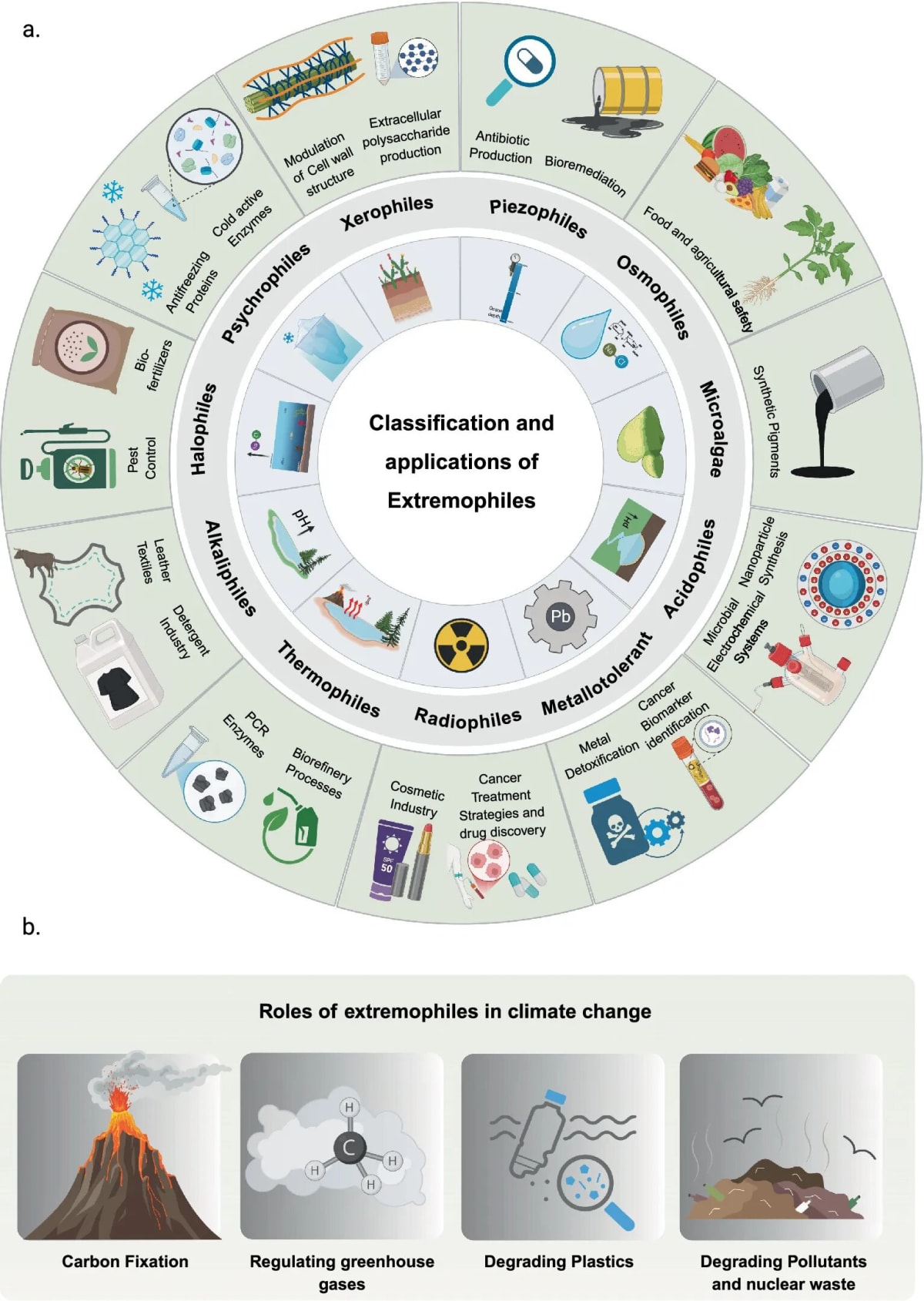
A groundbreaking review published in Frontiers in Microbiology reveals how extremophiles, organisms that thrive in the harshest conditions on Earth, are becoming powerful tools in fighting climate change and developing sustainable technologies. These tiny survivors were first studied in detail in Yellowstone National Park's scalding hot springs during the 1960s and have since been discovered in deep-sea vents and icy glaciers around the world.
Their secret weapon lies in their extremozymes, enzymes that remain stable in conditions that would destroy typical biological molecules. One heat-resistant enzyme from a Yellowstone microbe is now essential in PCR tests that diagnose diseases worldwide.
Salt-loving extremophiles are being developed for biofuel production, while alkali-loving microbes power laundry detergents that clean effectively in cold water, saving energy. Others are breaking down tough agricultural waste and transforming it into clean biofuels.
Some metal-tolerant microbes are cleaning up our contaminated soil and water by transforming or capturing heavy metals like mercury. These natural cleanup crews work in conditions too harsh for conventional methods.
The biggest challenge has been growing and studying these organisms in laboratories, since recreating extreme environments is difficult and expensive. Scientists are now using computer models called Genome-Scale Metabolic Models to simulate how extremophiles function without needing to recreate their harsh homes.
Researchers then use gene-editing tools like CRISPR to enhance the microbes' abilities or design new strains with specific capabilities. This combination of modeling and editing is opening doors to sustainable manufacturing processes that reduce environmental impact while improving efficiency.
The Ripple Effect
The applications extend far beyond Earth. These resilient lifeforms are guiding our search for life elsewhere in the universe, since the extreme environments they inhabit here mirror conditions on Mars and Jupiter's icy moons.
From cleaning polluted water to powering sustainable factories to potentially discovering extraterrestrial life, extremophiles prove that some of the smallest organisms can make the biggest difference. As scientists continue unlocking their secrets through advanced tools and techniques, these microscopic survivors are helping us build a more sustainable future while expanding our understanding of life's possibilities.
More Images

Based on reporting by Google News - Science
This story was written by BrightWire based on verified news reports.
Spread the positivity!
Share this good news with someone who needs it