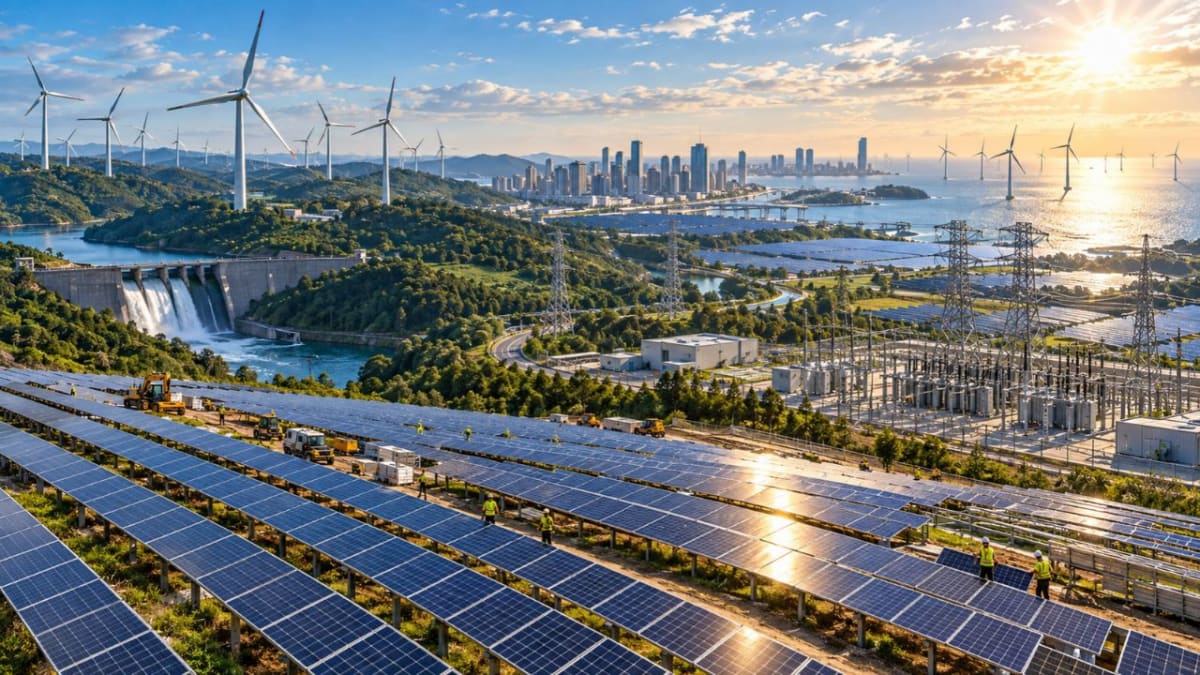
Africa Gets $20M Boost for Green Hydrogen Projects
The African Development Bank just launched a major funding program to accelerate clean hydrogen projects across the continent. Meanwhile, Europe registered 265 new hydrogen supply projects, signaling a global shift toward cleaner energy.
Clean energy is getting a powerful new ally in Africa, and the momentum is building across two continents.
The African Development Bank announced its Green Hydrogen Programme will provide up to $20 million in pre-investment financing for three to five private sector projects across Africa. The program, backed by Germany's government, offers reimbursable grants to help developers navigate the complex path from proposal to construction.
This matters because green hydrogen, made using renewable energy to split water, produces zero carbon emissions. It could power everything from cars to factories without warming the planet.
The program targets projects creating hydrogen and its derivatives, helping African nations leapfrog fossil fuels while building energy independence. Project developers will receive advisory support to reach final investment decisions and secure additional funding.
Across the Mediterranean, Europe is seeing its own hydrogen revolution take shape. The European Commission's first Hydrogen Mechanism registered 265 supply projects for renewable and low-carbon hydrogen, alongside 45 projects ready to purchase that hydrogen.
Germany hit a manufacturing milestone as RCT Hydrogen began producing pressurized alkaline electrolyzers domestically. The partnership with Brück GmbH creates 250 megawatts of annual production capacity, with the first German-made 5 megawatt stack ready by summer 2026.
French company Lhyfe is already proving the market works. The firm completed over 850 hydrogen deliveries across Europe in 2025 and now operates four production sites in France and Germany producing up to 8.5 metric tons daily.
Lhyfe just secured a major customer: BMW will use green hydrogen at its Austrian facility to mass-produce fuel cell systems for a new X5 model starting in 2028. Real cars, real timelines, real progress.
The Ripple Effect
This coordinated push across continents shows how clean hydrogen is moving from theory to reality. Africa gains funding to build clean energy infrastructure from scratch, while Europe converts industrial capacity to zero-emission production.
The African program particularly matters for countries rich in renewable resources like solar and wind. Converting that abundant energy into hydrogen creates exportable fuel, local jobs, and industrial development without the pollution that plagued earlier industrialization.
Germany's domestic electrolyzer manufacturing and BMW's commitment signal that major economies see hydrogen as essential, not experimental. When automakers plan production lines years ahead, they're betting on the technology's viability.
These aren't distant dreams but funded projects with clear timelines, showing the clean energy transition is happening now.
More Images


Based on reporting by PV Magazine
This story was written by BrightWire based on verified news reports.
Spread the positivity!
Share this good news with someone who needs it