China Adds More Solar and Wind Than US and India Combined
China now operates three times more renewable energy capacity than the United States and India together, reshaping the global clean energy landscape. The shift is cutting oil demand by over one million barrels daily and making Chinese green technology the fastest solution for energy-strapped nations.
China just became the world's largest clean energy powerhouse, and the numbers are staggering enough to change how we think about the global energy future.
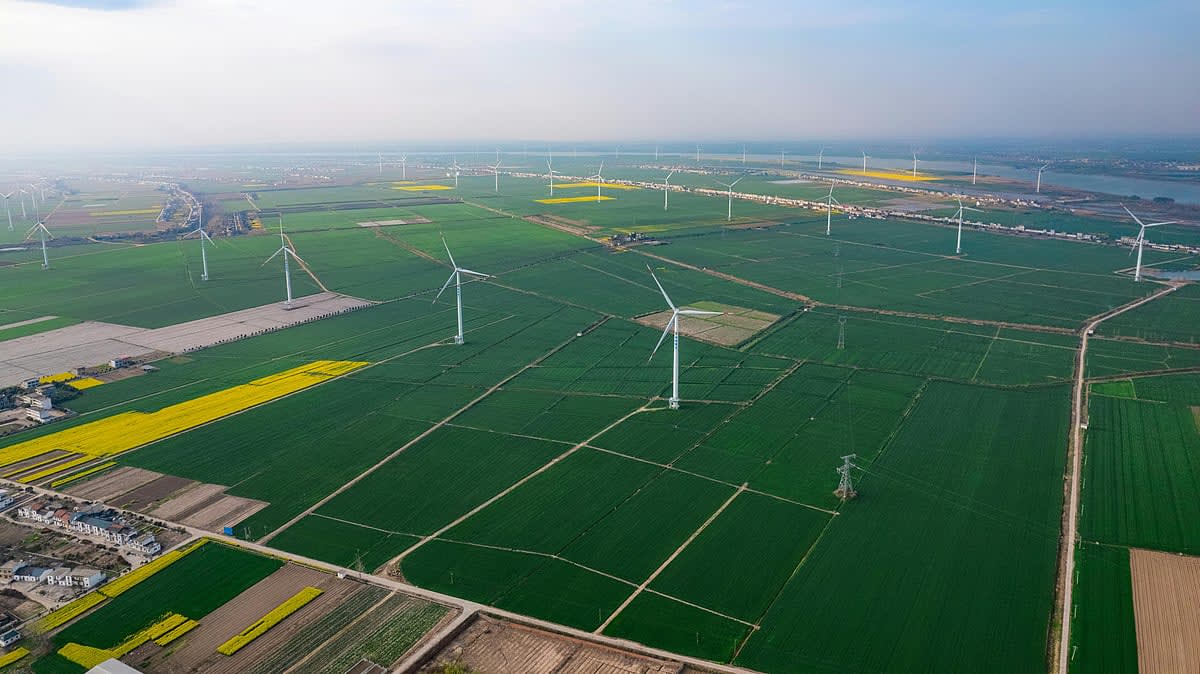
The country now runs three times more wind and solar capacity than the United States and India combined, according to Global Energy Monitor. Solar farms blanket the deserts of Inner Mongolia and float on lakes in Yunnan, while wind turbines line coastlines and highland plateaus at a scale never seen before.
The transformation started with national security, not climate goals. President Xi Jinping spent over a decade pushing energy independence, worried about relying on imported fuel that must pass through vulnerable maritime chokepoints like the Strait of Malacca.
That strategic bet is paying off in unexpected ways. Electric and hybrid vehicles now make up more than half of all new car sales in China, a shift that has already slashed the country's oil demand by over one million barrels per day, according to a 2025 Rhodium Group study.
The International Energy Agency predicts China's oil consumption will peak in 2027. Meanwhile, China stockpiled roughly 1.3 billion barrels of crude oil reserves as of March 2026, enough to weather three months of supply disruption while other nations scramble.
The clean energy boom is creating an export revolution too. In the first quarter of 2026, electric vehicle exports jumped 78 percent year over year, lithium battery sales surged 50 percent, and wind turbine goods rose 45 percent.
The Ripple Effect
Countries facing their own energy crises are now turning to Chinese technology as the fastest available answer. What Beijing built for security reasons is becoming a global lifeline, offering nations a proven path to reduce fossil fuel dependence.
Erica Downs of Columbia University's Center on Global Energy Policy calls China's strategy a vindication of two decades of investment. Lin Boqiang, dean of the China Institute for Energy Policy Studies at Xiamen University, said it plainly: without twenty years of building renewables and electric vehicles, China wouldn't have the resilience it has today.
China still imports 70 percent of its oil and 40 percent of its natural gas, and coal remains a backup power source. But the renewable share keeps expanding, with plans to eventually eclipse coal entirely.
The country that once symbolized pollution is now writing the playbook for how quickly a major economy can transform its energy system when it commits to the goal.
Based on reporting by Google: renewable energy record
This story was written by BrightWire based on verified news reports.
Spread the positivity!
Share this good news with someone who needs it