Tiny Shrimp Unlock Secret to Medical Robots in Your Body
Scientists discovered how small creatures swim efficiently in a "mesoscale" realm of physics, revealing the secret to building tiny robots that could deliver drugs directly to tumors. The breakthrough could transform medical treatment without harming the whole body.
Scientists just figured out how nature's tiniest swimmers could help save lives through microscopic robots delivering medicine inside your body.
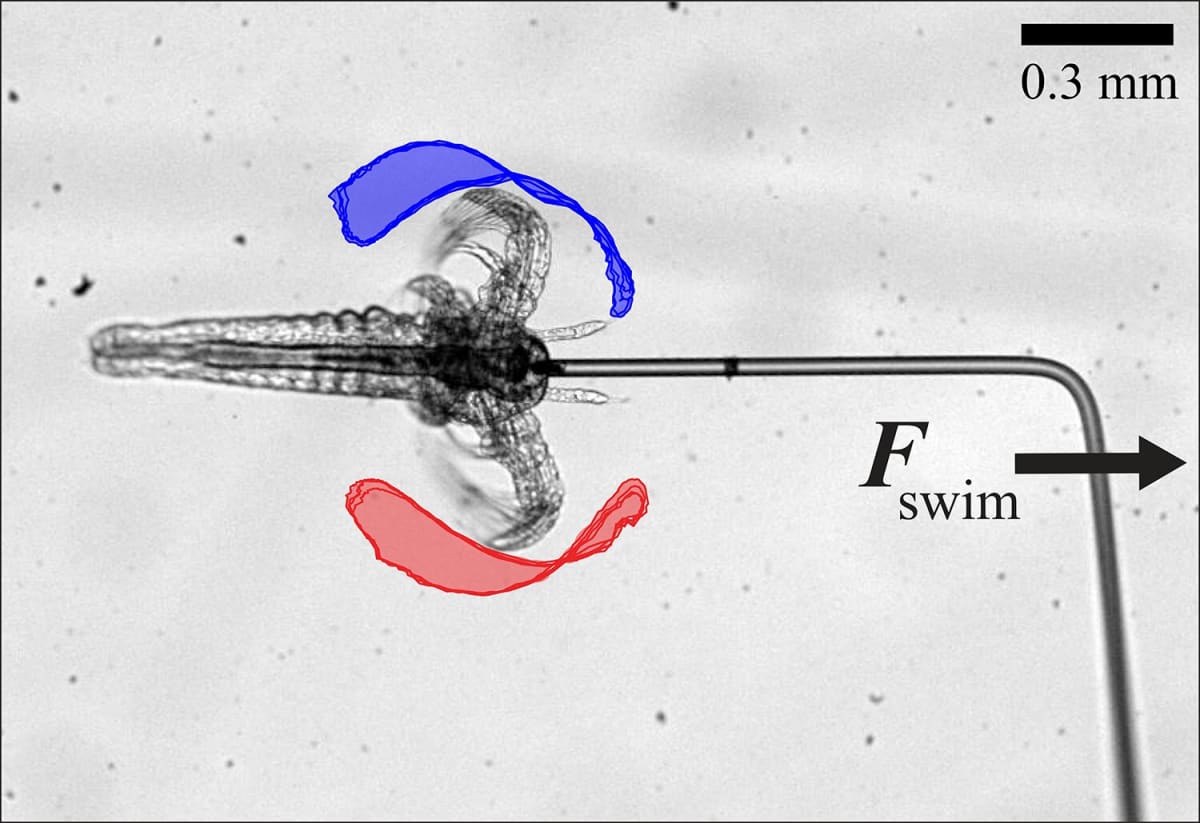
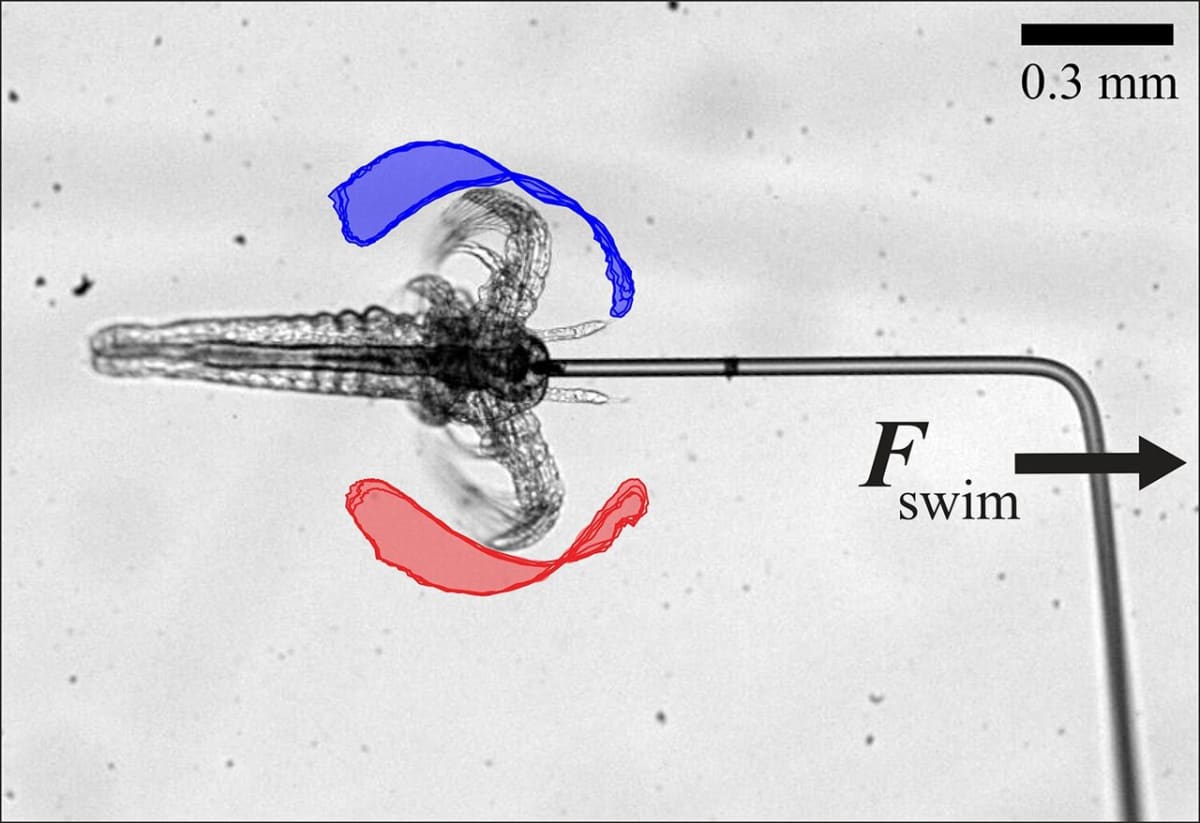
Researchers at Aalto University studied how small shrimp-like creatures called Artemia swim in what physicists call the "mesoscale." This strange realm exists between the microscopic world of bacteria and our everyday world, where normal physics rules get weird.
The team discovered that Artemia, barely visible to the naked eye at 400 to 1,500 micrometers long, trace a figure-eight pattern with their antennae when swimming. This special motion breaks what physicists call "time reversal symmetry," a fancy term meaning their swimming would look different if you played a video backward versus forward.
Here's why that matters: in the microscopic world, bacteria must break this symmetry to move forward at all. But at the mesoscale, organisms don't need to. Yet Artemia do it anyway, and the more they break this symmetry, the better they swim.
"We found that if Artemia breaks time reversal symmetry more, they also swim better and they have a higher propulsive force," explains doctoral researcher Sharadhi Nagaraja. "This is something no one has been able to directly measure for a living organism before."
The team used machine learning to analyze countless frames of swimming motion while measuring forces with a micropipette sensor. The device doesn't harm the creatures and captures their movements in real time.
Why This Inspires
This isn't just about understanding shrimp. Assistant Professor Matilda Backholm sees a future where "mesorobots" swim through our bodies to deliver medication directly where it's needed.
Imagine a tiny robot navigating to a tumor and delivering cancer-fighting drugs right to the source instead of poisoning your entire body through chemotherapy. These mesoscale robots could carry larger drug payloads than microscopic versions, making treatments more effective.
"Nature has figured this out already: through evolution over millions of years, organisms have developed into the most efficient swimmers," says Backholm. "Yet it's only now that engineers are starting to gain a deeper understanding."
The research, published in Communications Physics, fills a critical gap in physics knowledge. For years, scientists understood how things move in the microscopic world and in our everyday world, but the mesoscale remained mysterious.
Now engineers have a blueprint from nature itself. By copying how these tiny creatures swim so efficiently, they can design robots that navigate the complex fluids inside our bodies. The same forces that push Artemia through water could one day guide healing technology through your bloodstream.
Science is finally catching up to what evolution perfected millions of years ago, and the future of medicine is swimming into view.
More Images
Based on reporting by Phys.org
This story was written by BrightWire based on verified news reports.
Spread the positivity!
Share this good news with someone who needs it