Tolkien's 1938 Letter to Nazis Is Still Perfect Today
When Nazi publishers demanded proof that J.R.R. Tolkien wasn't Jewish in 1938, the author's response became a masterclass in dignity. His letter dismantled their logic with precision and pride.
📺 Watch the full story above
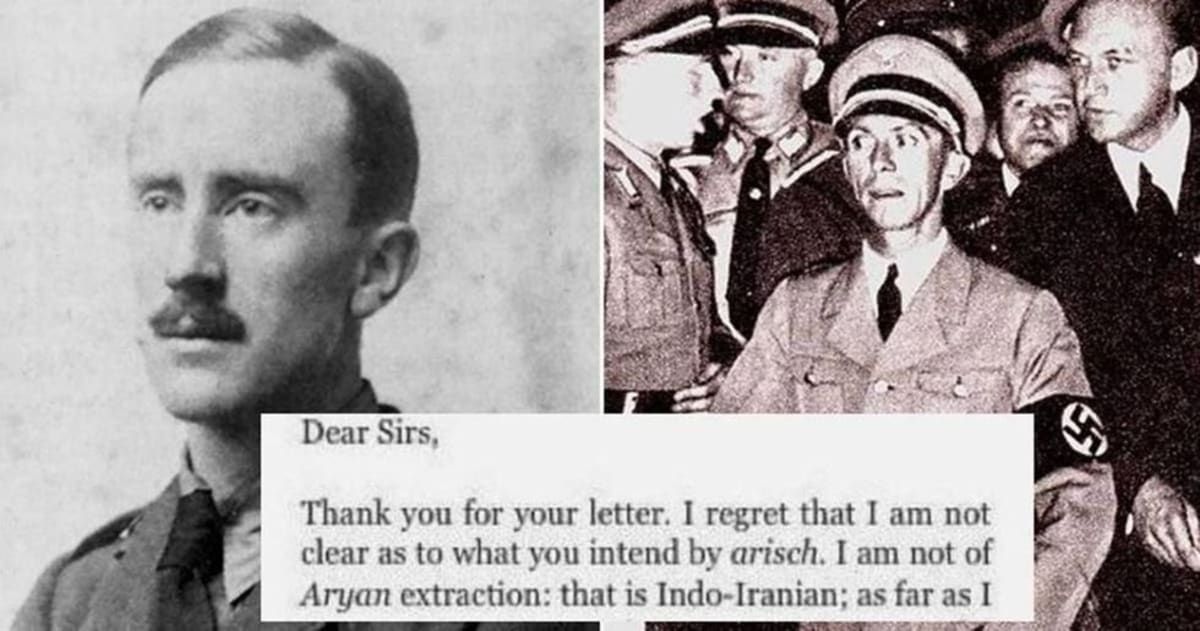
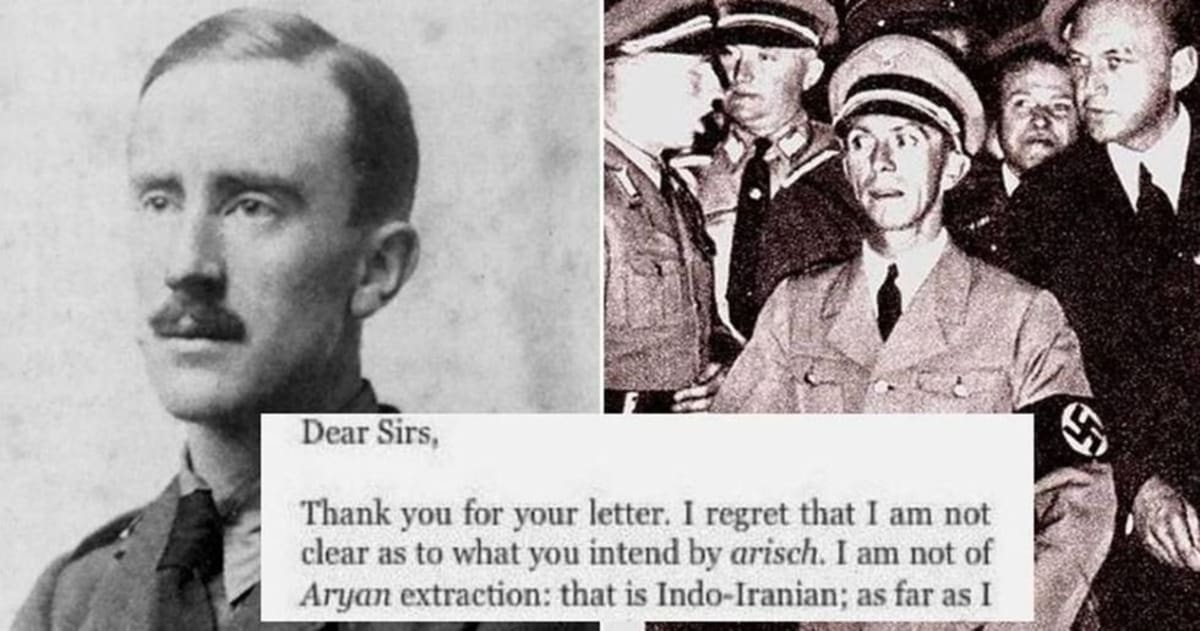
In 1938, J.R.R. Tolkien received a letter that would have intimidated most authors trying to get published in Germany. A Berlin publishing house wanted to translate "The Hobbit," but first they needed confirmation: Was he Jewish?
The request came from Rütten & Loening, following Nazi regulations that controlled who could participate in German cultural life. Joseph Goebbels had established these rules to purge anything not deemed "Aryan" from the country's artistic output.
Tolkien was furious. He privately told his British publisher Stanley Unwin that he found Nazi "race-doctrine" wholly pernicious and unscientific, and considered abandoning the German translation entirely. Instead, he crafted two responses.
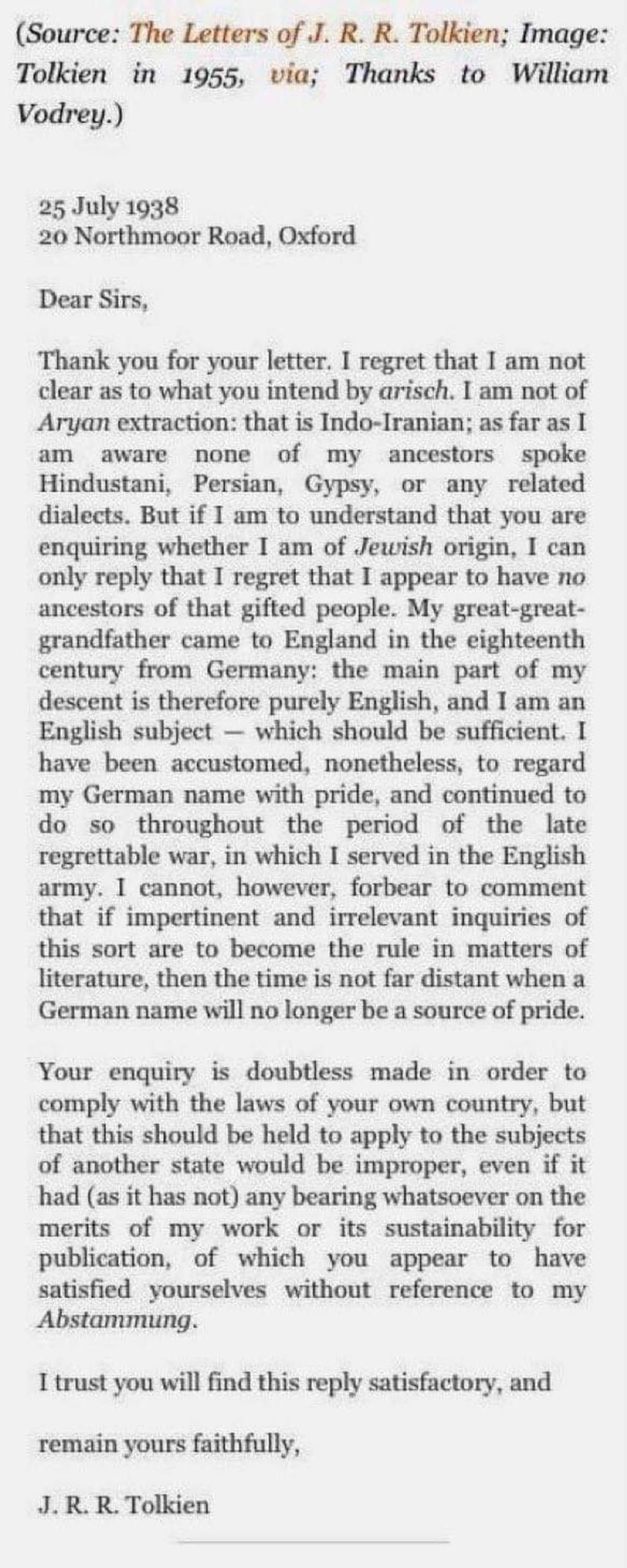
The more forceful draft, now widely celebrated, opened with a correction. "I am not of Aryan extraction: that is Indo-Iranian," Tolkien wrote, noting that true Aryans are of Indo-Iranian descent, not northern European as the Nazis falsely claimed.
Then came the line that still resonates. "If I am to understand that you are enquiring whether I am of Jewish origin, I can only reply that I regret that I appear to have no ancestors of that gifted people."
Tolkien didn't stop there. He acknowledged his German surname but added a stinging prediction: "If impertinent and irrelevant inquiries of this sort are to become the rule in matters of literature, then the time is not far distant when a German name will no longer be a source of pride."
The letter concluded by noting the absurdity of Germany's racial laws applying to British subjects, especially when they had no bearing on the merit of his work.
Why This Inspires
Tolkien didn't need to raise his voice to make his point. As a philologist who studied language for a living, he simply examined the Nazis' twisted definitions with precision and handed them back, completely dismantled.
The author chose dignity over silence and clarity over anger. He expressed both his contempt for hate and his admiration for Jewish people in sentences so carefully constructed they still teach us how to respond to bigotry today.
Nearly ninety years later, "The Hobbit" has sold hundreds of millions of copies in dozens of languages. The regime that demanded proof of Tolkien's bloodline collapsed within a decade of asking.
Sometimes the most powerful response to hatred is a well-placed sentence that refuses to take the question seriously in the first place.
More Images


Based on reporting by Upworthy
This story was written by BrightWire based on verified news reports.
Spread the positivity!
Share this good news with someone who needs it