Tony Hawk Funded 700 Skateparks Across All 50 States
Since 2002, skateboarding legend Tony Hawk has helped build nearly 700 public skateparks that give 17 million people a year access to action sports. His model has inspired grassroots skate communities from Gaza to Uganda to create safe spaces for youth in the world's most challenging places.
A concrete skatepark might not seem like much, but for millions of young people worldwide, it represents freedom, community, and hope.
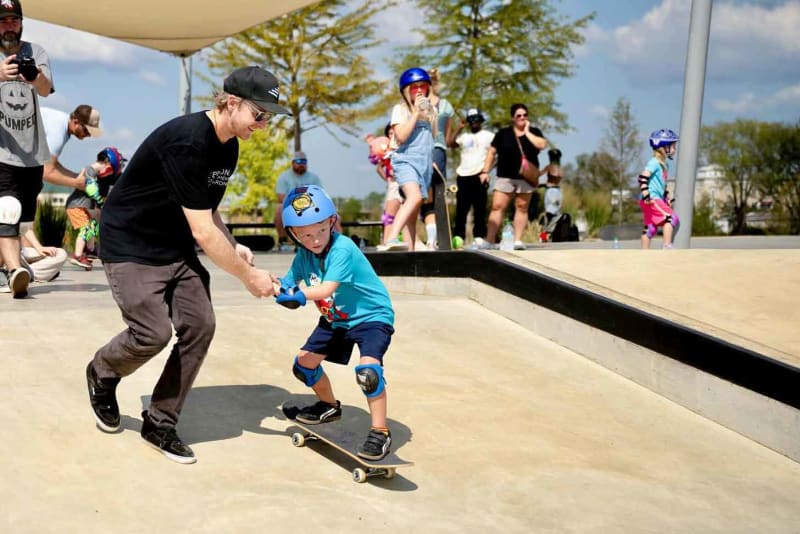
Since retiring from professional skateboarding, Tony Hawk has poured his energy into The Skatepark Project. Over 22 years, his nonprofit has awarded $13 million to build nearly 700 public skateparks across all 50 states. An estimated 17 million people use these parks annually.
But Hawk's vision goes beyond half-pipes and ramps. The organization trains young people to become advocates who can build and sustain skate spaces in their own communities. Through fellowships and advocacy programs, they're empowering the next generation to create gathering places where none existed before.
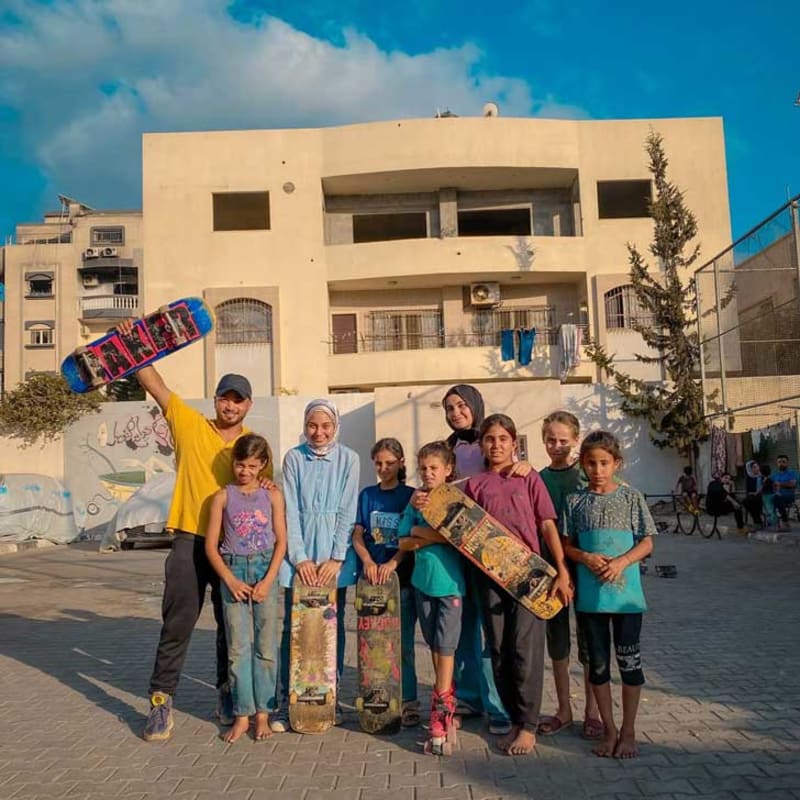
That same spirit has taken root in some of the world's most difficult places. In Gaza, SkatePal has built four skateparks over 11 years and runs free programs for Palestinian youth, including special sessions encouraging girls to join the sport. "Skateboarding is not for a specific type of person," says Malak, a local volunteer in Ramallah. "Skateboarding is for everyone, no matter what religion, color, or place."
Even as war devastates Gaza, SkatePal's Instagram shows kids practicing kickflips on miraculously standing structures. The organization now divides its resources between distributing skate gear and providing basic necessities to help people survive and rebuild.
"It's a tool to escape everything," says Mahmoud Kilani, 23-year-old founder of skateboarding.ps. "It's the feeling of freedom, having this board under your feet that you can do whatever you want with. Because we don't have freedom here."
The Ripple Effect
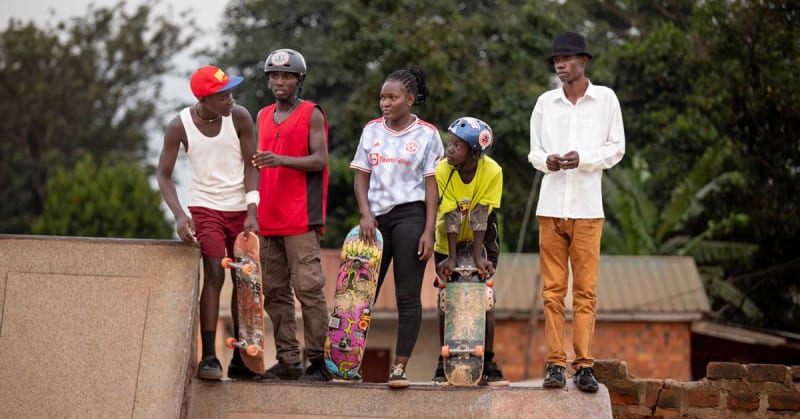
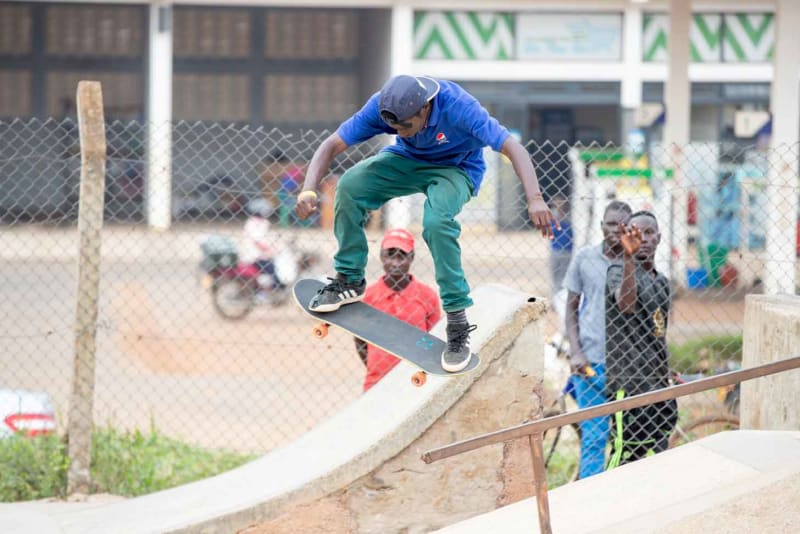
In Mukono, Uganda, teenager Gerald Gose saw the same potential. He co-founded Uganda Skateboard Society to bring skateboarding to impoverished neighborhoods through DIY skateparks, free lessons, and donated gear for hundreds of youth.
The community they built does more than teach tricks. When one skater couldn't afford school fees, the community fundraised to get him an education. The skatepark gives young people in a low-income neighborhood something positive to build together and a reason to stay away from criminal activity.
Gose, now head coach of Uganda's Olympic skateboarding team, has big dreams for what they've started. "I believe Ugandan skateboarders have the potential, and we have set goals for what we intend to achieve," he says.
From California to Palestine to East Africa, skateboarding is proving that sometimes the simplest tools create the most powerful connections.
More Images
Based on reporting by Good Good Good
This story was written by BrightWire based on verified news reports.
Spread the positivity!
Share this good news with someone who needs it