Toronto Builds Canada's Longest Car-Free Neighborhood
Toronto's new Ookwemin Minising neighborhood is replacing traditional streets with a half-mile car-free corridor lined with 400 trees. The innovative design reimagines urban infrastructure as living systems that manage stormwater, reduce heat, and create gathering spaces for 21,000 future residents.
Imagine a neighborhood where the main street is actually a park, stretching half a mile without a single car in sight.
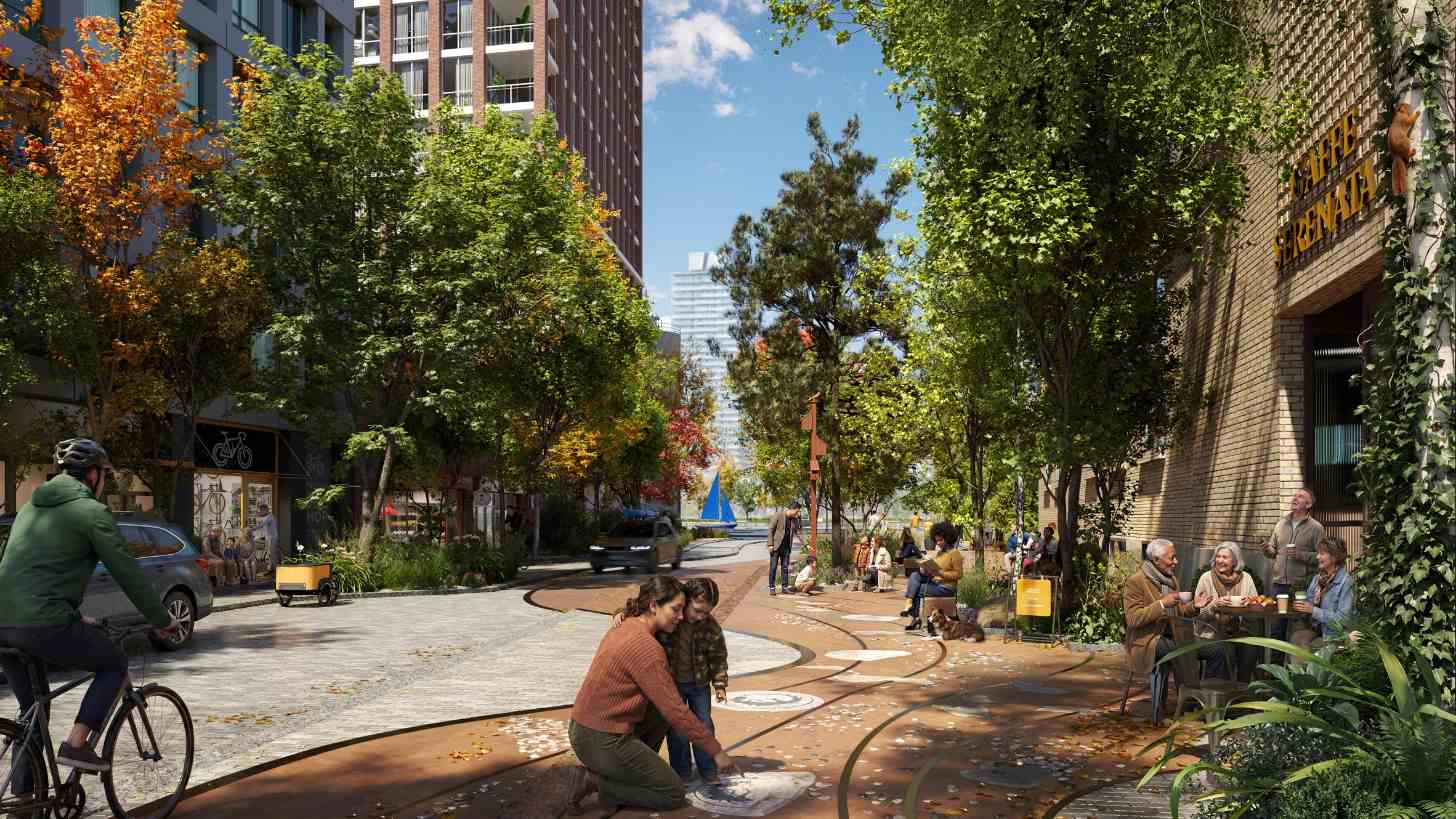
That's exactly what's coming to Toronto with Ookwemin Minising, a new development that's flipping traditional city planning upside down. Instead of designing around roads, planners started with green space and community gathering areas first.
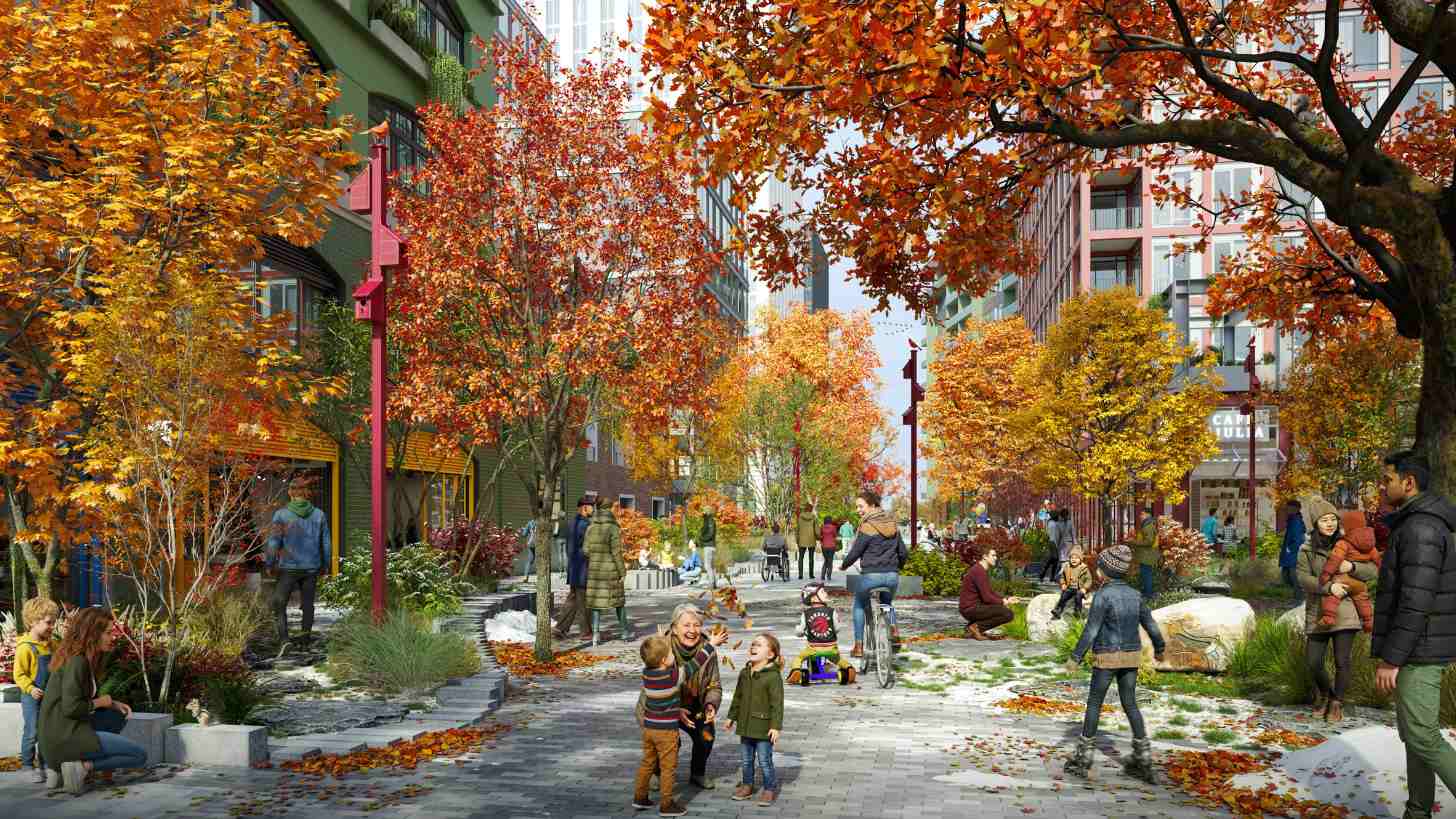
The centerpiece is Centre Commons, a car-free pedestrian route home to 400 trees that will become Canada's longest year-round car-free space. "The street is almost like a public courtyard, like a linear park," says Rasmus Astrup, design principal at SLA, the Denmark-based firm helping design the neighborhood.
The name honors the land's Indigenous history. Ookwemin Minising means "place of the black cherry tree" in Anishinaabemowin/Ojibwemowin, recognizing both the area's natural heritage and the community's commitment to environmental restoration.
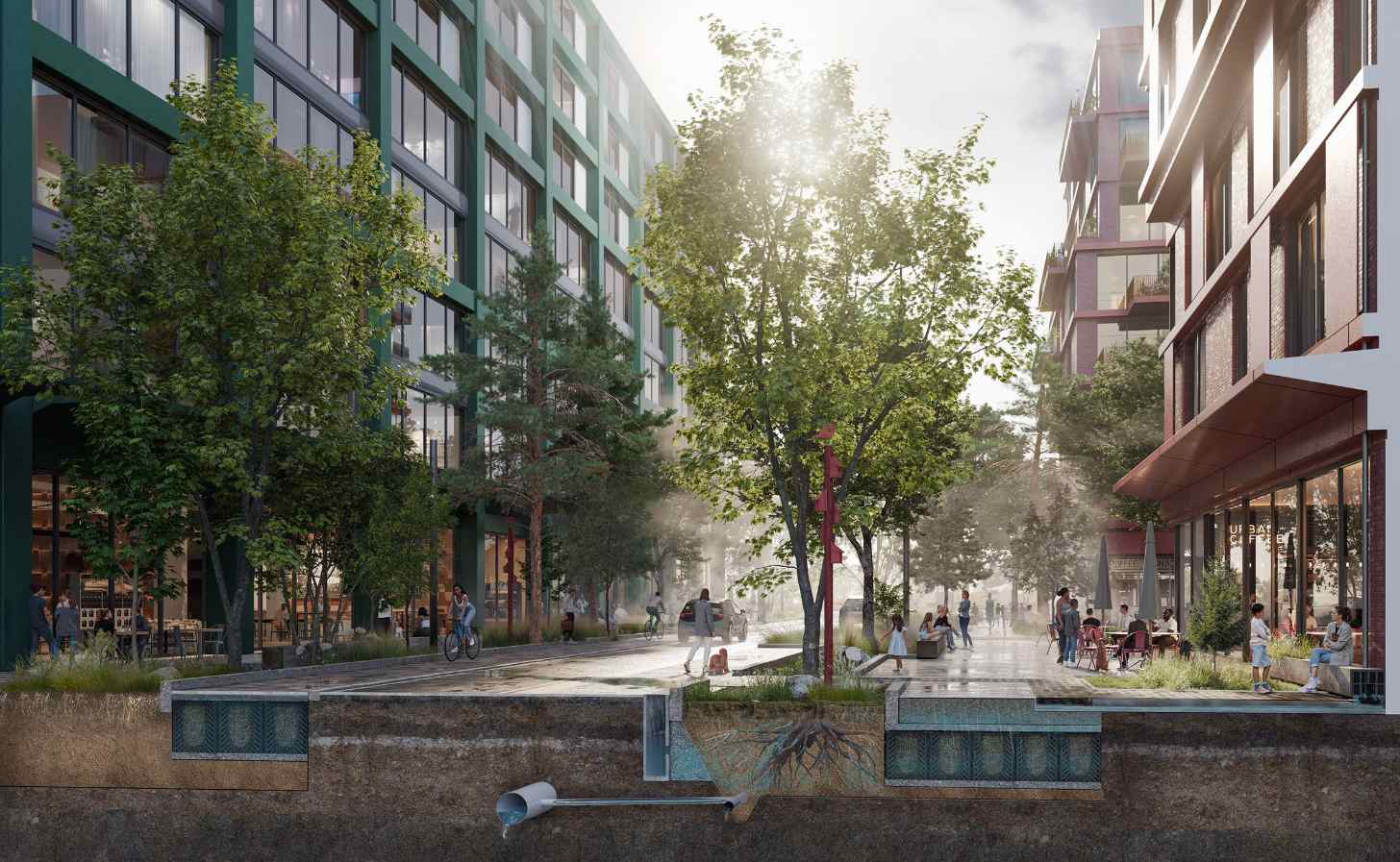
While some side streets will allow vehicles, they'll still prioritize massive green areas that serve double duty as climate infrastructure. The streets act like sponges, capturing and filtering rainwater, reducing urban heat, and creating habitats for local wildlife.
The Ripple Effect
This "Growing Streets" concept shows how cities can address housing needs without sacrificing livability. The neighborhood will support about 21,000 people and nearly 3,000 jobs when residents start moving in during the early 2030s.
The design team deliberately planned public spaces before buildings, creating what they call "dynamic, living systems" that evolve over time. Mixed-use spaces along the pedestrian corridors will host retail shops and cultural venues, making the car-free zones the heart of community life.
"By embedding climate resilience, water management, and low-carbon strategies directly into the streetscape, we're creating infrastructure that not only performs at a high level but also enhances everyday life," explains Chris Hunter, CEO of GHD Americas, another firm on the project.
The concept proves that urban density and natural beauty aren't opposites. By starting with the spaces between buildings rather than the buildings themselves, the design team created conditions where nature, culture, and daily life weave together seamlessly.
Toronto's bold experiment could reshape how North American cities think about growth, one tree-lined street at a time.
More Images

Based on reporting by Good Good Good
Play Today’s BrightWire Positive Mini Crossword & Word Game
Keep your mind sharp with our free 5-minute uplifting daily crossword and positivity word puzzle.
Share This Good News Story
Send a dose of constructive journalism to someone who needs it today.
More Good News