Twin Spacecraft Reveal Sun's Hidden Secrets in 5-Hour Eclipse
A groundbreaking space mission created an artificial eclipse lasting five hours, capturing three massive plasma eruptions from the sun that could solve one of our star's biggest mysteries. The stunning footage shows details scientists have never seen before.
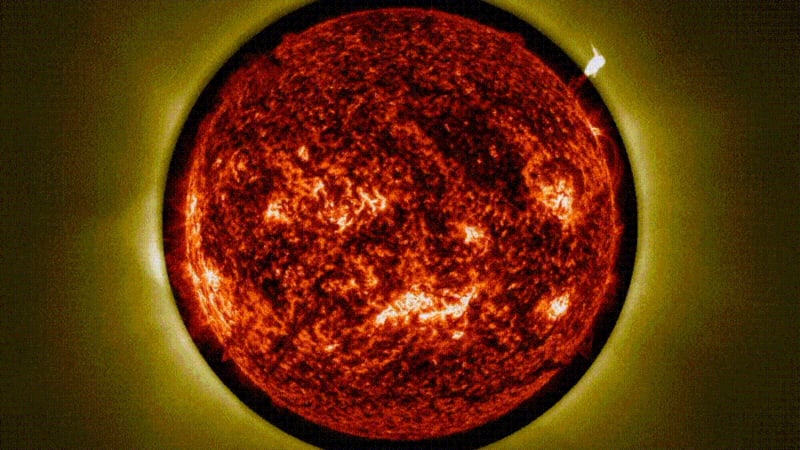
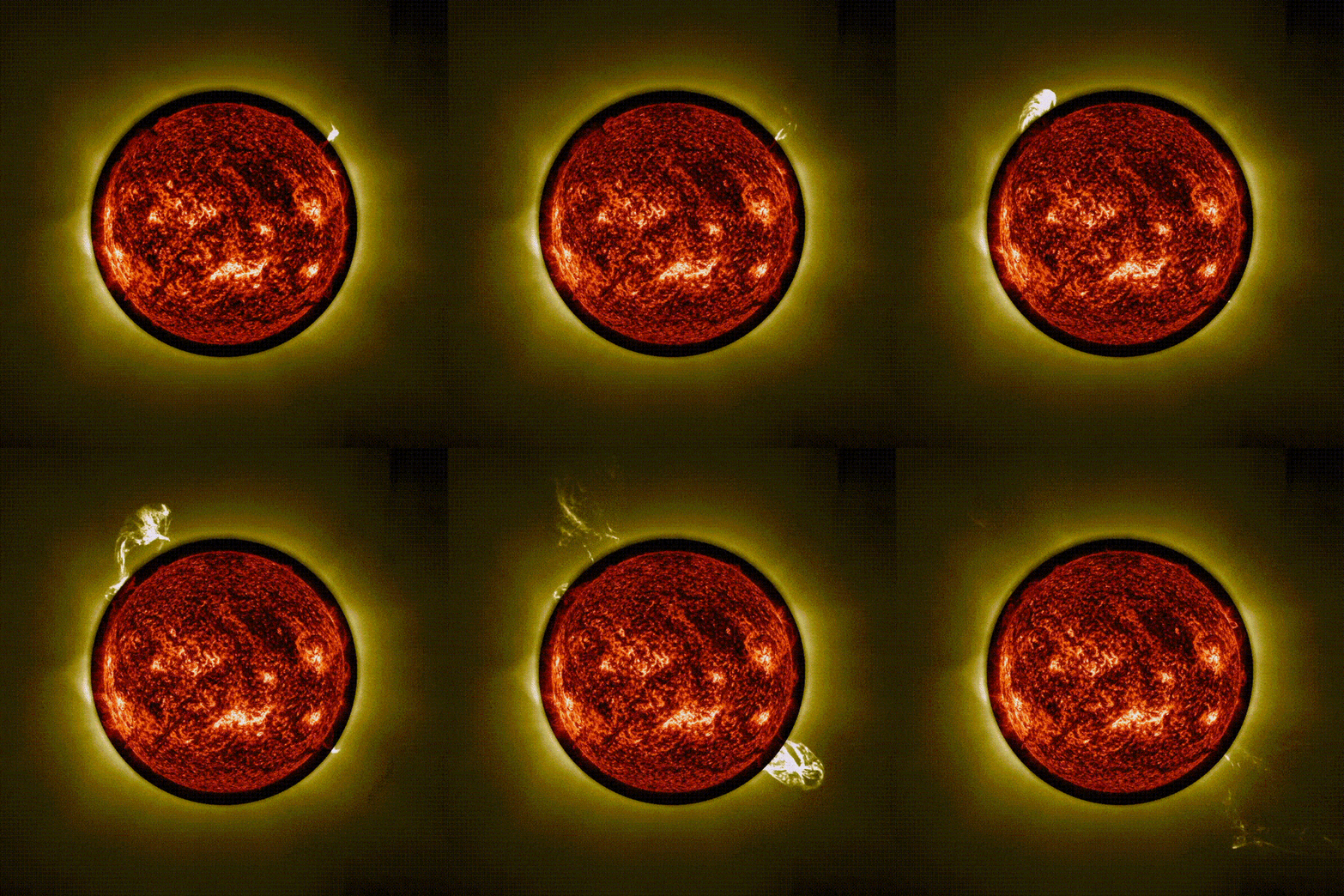
Scientists just witnessed something extraordinary: three giant plasma towers erupting from the sun's surface during a five-hour artificial eclipse created in space.
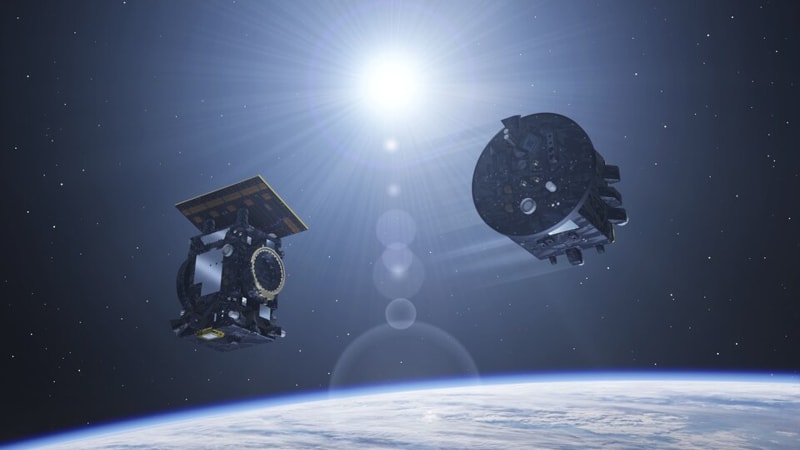
The European Space Agency's Proba-3 mission made it happen using two spacecraft that perfectly align to block the sun's bright center, like an eclipse on demand. Launched in December 2024, the twin probes can create these artificial eclipses more frequently and for longer periods than natural eclipses allow.
The newly released time-lapse compresses five hours of observations from January 2, 2025 into just four seconds of stunning footage. Scientists combined views from the Proba-3 coronagraph with images from NASA's Solar Dynamics Observatory to see both the sun's surface and its faint outer atmosphere, called the corona, interacting in unprecedented detail.
The three massive eruptions aren't solar flares, though they look similar at first glance. They're actually prominences: towering loops of plasma that overextend and snap, flinging ionized gas into space.
"Seeing so many prominence eruptions in such a short timeframe is rare," said Andrei Zhukov, principal investigator at Belgium's Royal Observatory. The bright glow of these eruptions is deceiving because they're actually much cooler than their surroundings, at only 10,000 degrees compared to the corona's million-degree temperature.
Why This Inspires
That temperature difference points to one of the sun's greatest unsolved mysteries. The corona somehow reaches temperatures 200 times hotter than the sun's surface itself, defying what scientists expect about how heat works.
Footage like this could finally crack the case. Proba-3 has already observed over 50 artificial eclipses in just seven months and will collect hundreds more in the coming years.
The mission joins an exciting wave of solar observation breakthroughs. NASA's CODEX telescope on the International Space Station recently revealed never-before-seen disturbances in the corona linked to solar wind. The Daniel K. Inouye Solar Telescope in Hawaii captured the most detailed photo ever of the sun's surface, while the Solar Orbiter snapped the first image of the sun's south pole.
These advances are happening during the sun's most active phase, when powerful solar storms are most likely. Understanding our star better could help protect Earth's technology and infrastructure from future space weather events.
Scientists are watching closer than ever before, and the sun is revealing secrets it's kept for billions of years.
More Images

Based on reporting by Live Science
This story was written by BrightWire based on verified news reports.
Spread the positivity!
Share this good news with someone who needs it