Twin Supernovas Found From Stars That Orbited Each Other
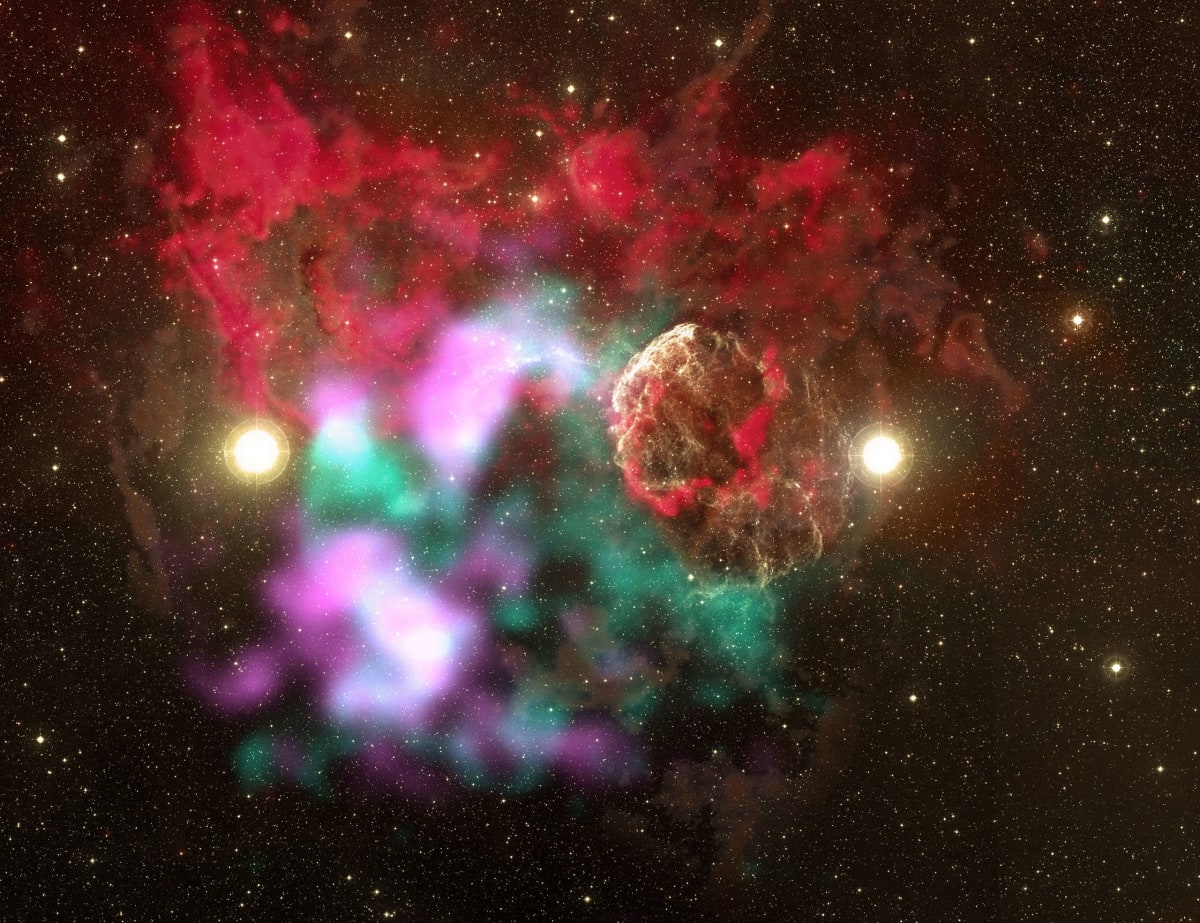
Astronomers just discovered the first known pair of supernova remnants that came from two stars that once danced around each other for millions of years. The cosmic siblings, hiding near the famous Jellyfish Nebula, are rewriting what we know about how massive star pairs live and die.
For the first time ever, astronomers have found two supernova remnants that came from stars that spent millions of years orbiting each other like cosmic partners.
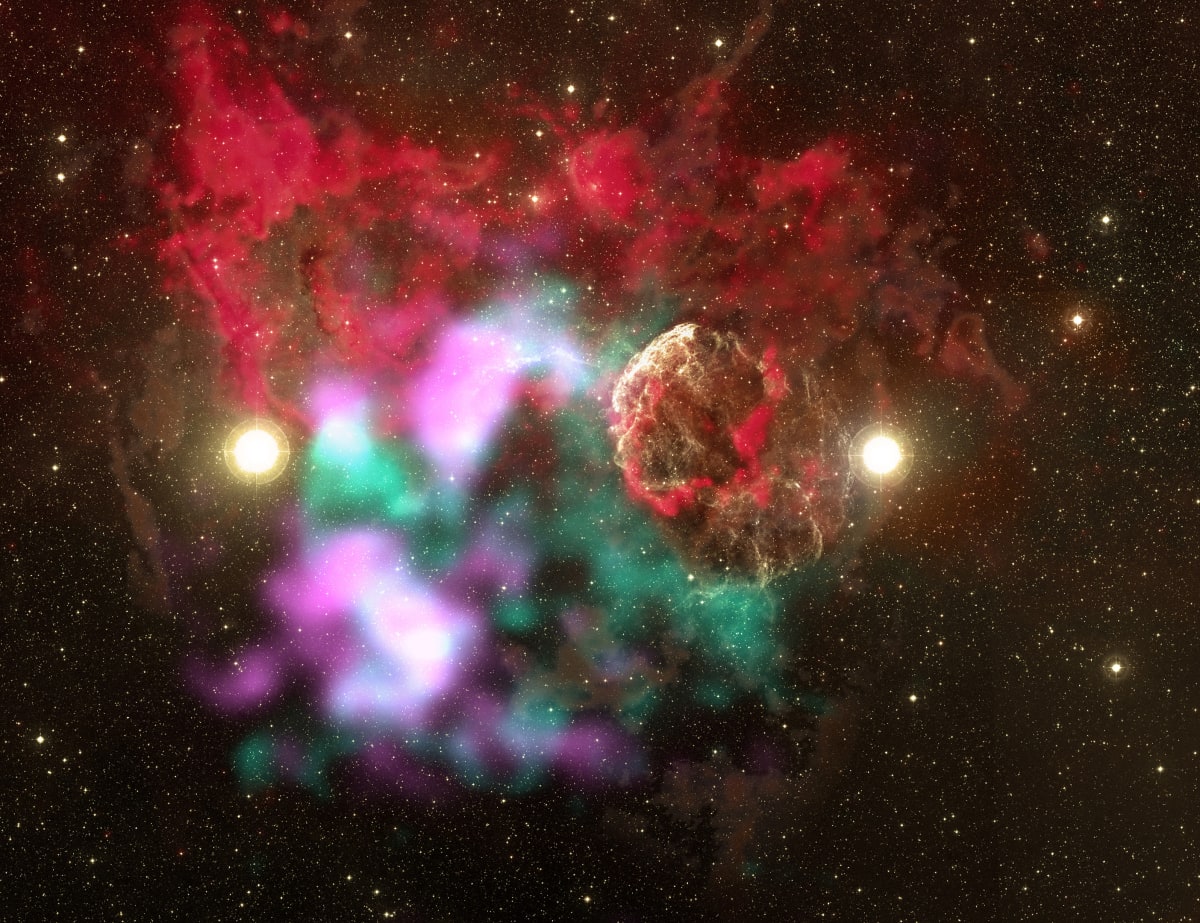
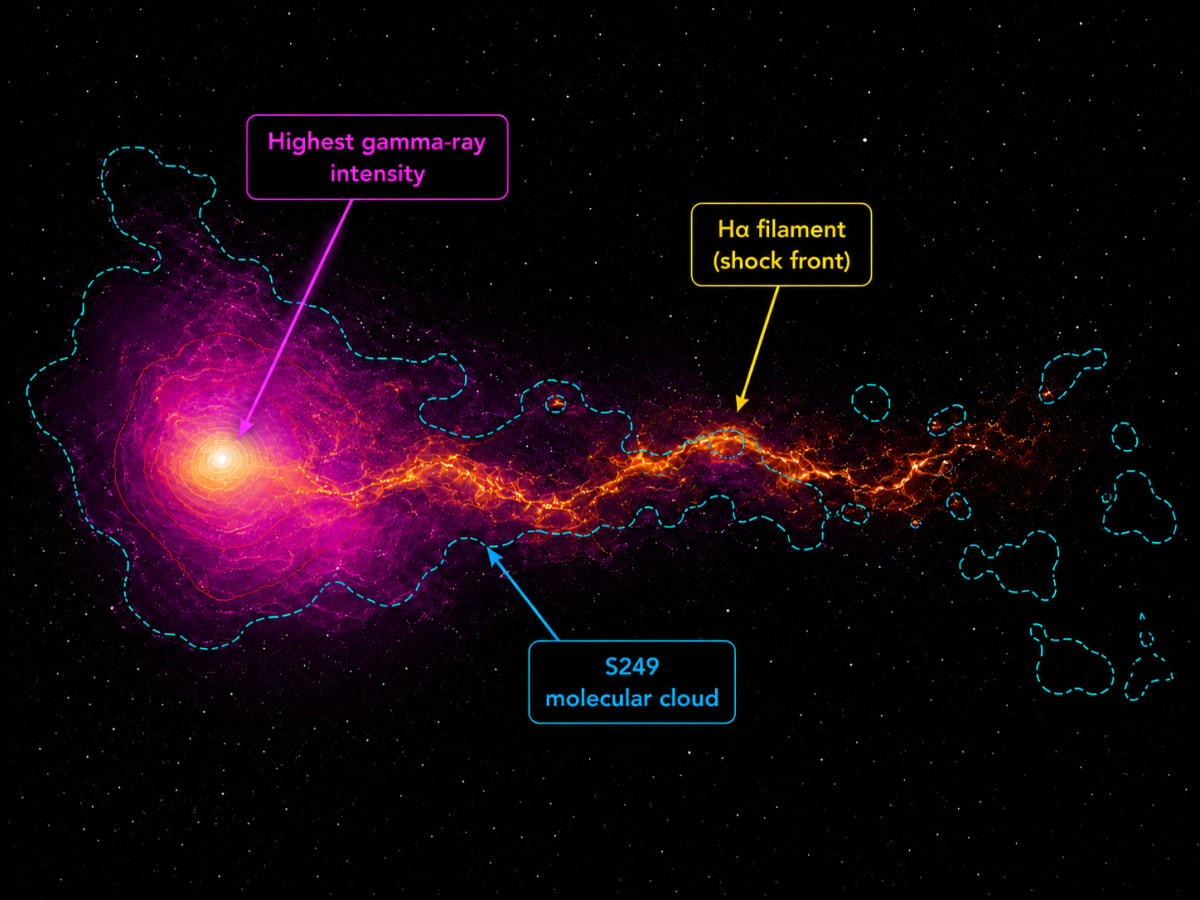
The discovery happened almost by accident. Scientists using NASA's Fermi Gamma-ray Space Telescope were studying a faint supernova remnant called G189.6+3.3, which sits right next to one of the Milky Way's most famous stellar explosions, the Jellyfish Nebula (IC 443). What they found changed everything.
"We weren't really looking for a binary supernova remnant," said Miltiadis Michailidis, an astrophysicist at Stanford University who led the study. The team originally just wanted to learn more about the overlooked G189.6+3.3, which had always been overshadowed by its brighter neighbor.
After combining 16 years of gamma-ray data with observations from X-ray, radio, ultraviolet and optical telescopes, the researchers noticed something strange. The northern half of G189.6+3.3 glowed differently than the southern half, creating a clean split never seen before in a single remnant.
The northern edge was pressing against a dense cloud of hydrogen gas, creating the perfect conditions for fast-moving protons to collide and produce gamma rays. The southern half, without that dense material, showed a completely different pattern driven by electrons instead.
Here's where it gets exciting. Earlier research had already shown that the Jellyfish Nebula interacts with that same hydrogen cloud, meaning both remnants sit roughly the same distance from Earth.
To check if this was just coincidence, the team ran simulations of one million hypothetical binary star systems. The odds that two unrelated supernovas would end up this close together purely by chance? Somewhere between 1 in 1,000 and 1 in 100.
The researchers estimate the two explosions happened tens of thousands of years apart. That timing fits perfectly with how binary star pairs work: one star goes supernova first, and its companion follows suit much later.
Why This Inspires
For decades, astronomers have built computer models to understand how massive binary stars live, interact and eventually explode. Now they have a real-world laboratory to test those theories.
The discovery opens a door to measurements that were previously impossible. By measuring the distance between two remnants' explosion centers, scientists can finally calculate how much energy a supernova actually releases instead of just estimating from theory.
"Now we can actually test it," Michailidis said.
The team is already searching for similar binary remnant pairs elsewhere in the galaxy to understand why this system remained hidden for so long. Every new discovery will help unlock more secrets about the most powerful explosions in the universe.
Two stars that once danced together in the cosmos are still teaching us new things millions of years after they died.
More Images

Based on reporting by Live Science
This story was written by BrightWire based on verified news reports.
Spread the positivity!
Share this good news with someone who needs it