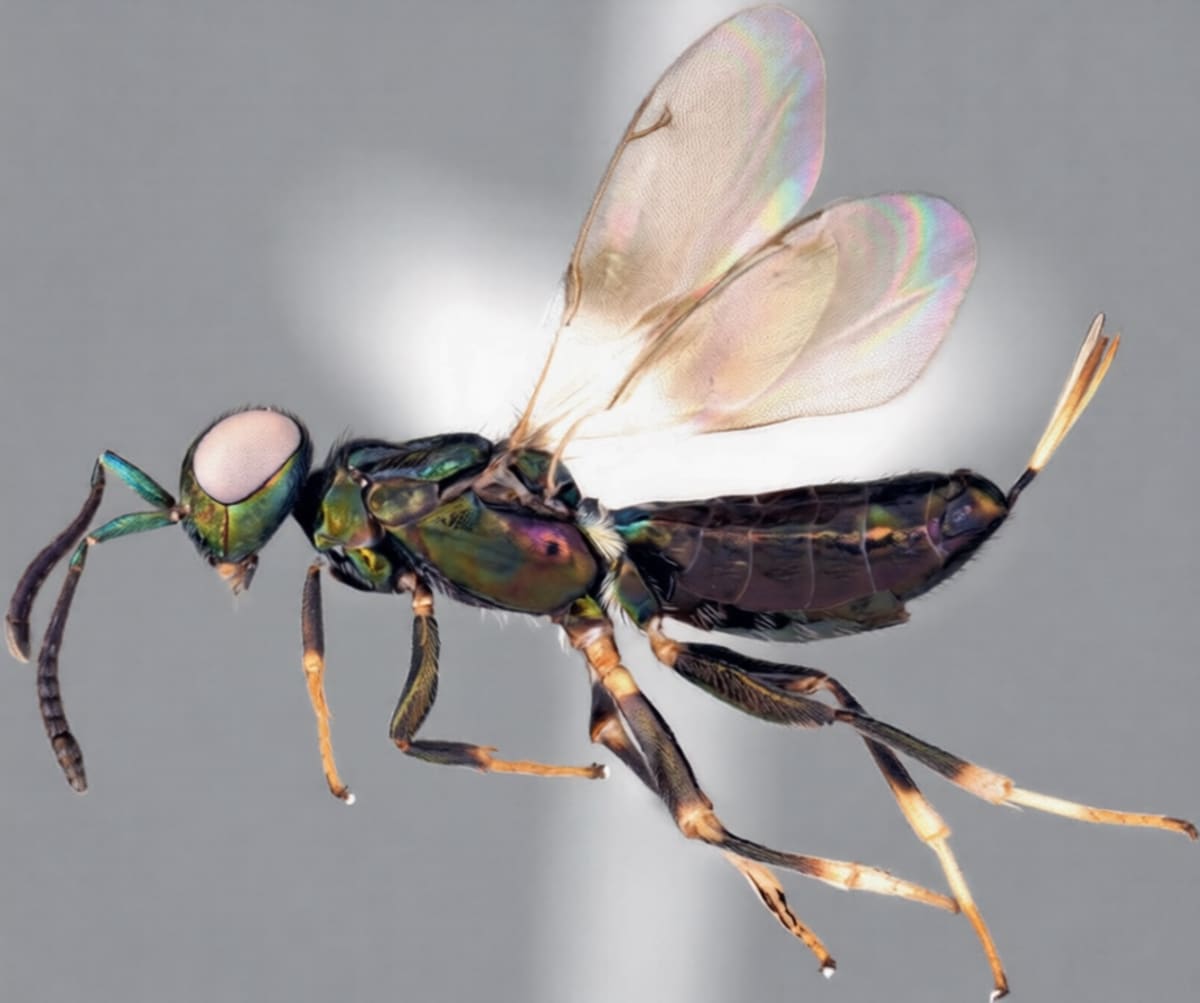
Twitter Photos Lead to First Japan Wasp Discovery
Amateur bug enthusiasts posting shimmering wasp photos on Twitter helped scientists discover a species never before recorded in Japan. The social media posts also allowed researchers to describe the male of this rare parasitoid wasp species for the first time.
When two Japanese wasp lovers shared photos and videos of an iridescent insect on Twitter, they had no idea they were documenting scientific history.
The striking images, posted between 2018 and 2021, caught the eye of Taisuke Kawano, a wasp expert at Kyushu University Museum. What he saw amazed him: footage of a species never before recorded in Japan.
The video showed a female wasp laying eggs on the hard casing of praying mantis eggs. Kawano reached out to the amateur observers, who sent him specimens to study. The citizen scientists became co-authors on the research paper published in June.
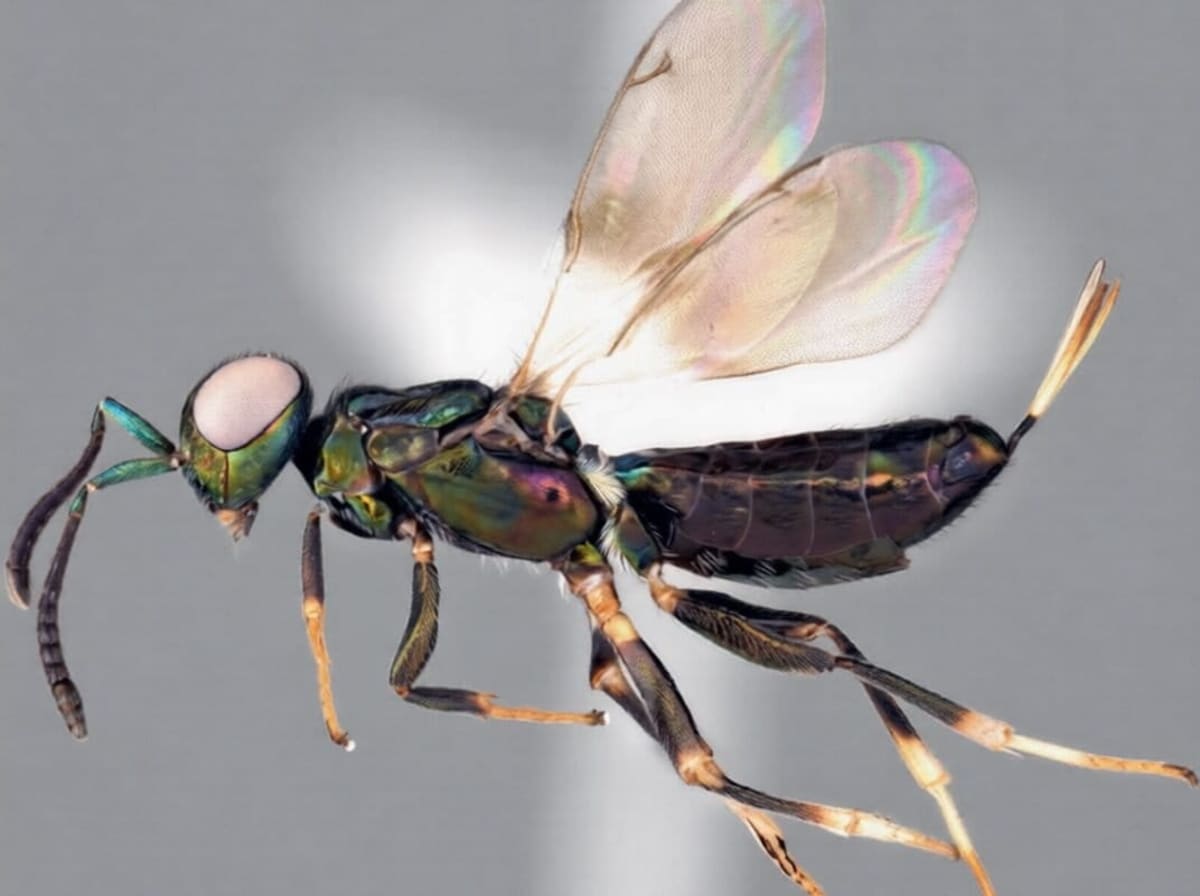
Kawano and his team identified the wasp as Eupelmus curvator, a parasitoid species whose larvae feed on mantis eggs as they grow. Until now, scientists only knew this wasp existed in China.
The discovery delivered a double breakthrough. Researchers were able to describe the male of the species for the first time in scientific literature. Previously, only females had been documented.
Inside one mantis egg case, the team found 77 wasps and just a few surviving mantis babies. The wasp was also recorded for the first time targeting the narrow-winged mantis species.
Why This Inspires
This discovery shows how everyday people with smartphones can contribute to scientific breakthroughs. Scientists estimate up to a million parasitoid wasp species exist, most still unknown to science.
Social media is opening new doors for biodiversity research. Kawano says it excels at detecting unusual behaviors and species in unexpected places, giving researchers valuable starting points they might otherwise miss.
The approach has limits, though. Photos and videos can only tell researchers so much, especially with tiny insects. Physical specimens remain essential for accurate identification and formal species descriptions.
Michael Ohl, a wasp expert at Berlin's Natural History Museum, agrees digital observations should complement traditional fieldwork rather than replace it. The greatest strength lies in helping scientists identify promising leads worth investigating further.
For now, five known Eupelmus wasp species parasitize mantis eggs, but many more likely remain hidden in nature, waiting for curious eyes to spot them and share what they see.
More Images



Based on reporting by Mongabay
This story was written by BrightWire based on verified news reports.
Spread the positivity!
Share this good news with someone who needs it