Two Space Telescopes Capture Dying Star's Spectacular Show
The Hubble and Euclid space telescopes teamed up to photograph the Cat's Eye Nebula in stunning detail, revealing a star's beautiful final chapter. The images show glowing rings of blue, orange, and red gas expanding into space 4,300 light-years from Earth.
A dying star is putting on one of the universe's most beautiful shows, and two powerful telescopes just captured it in breathtaking detail.
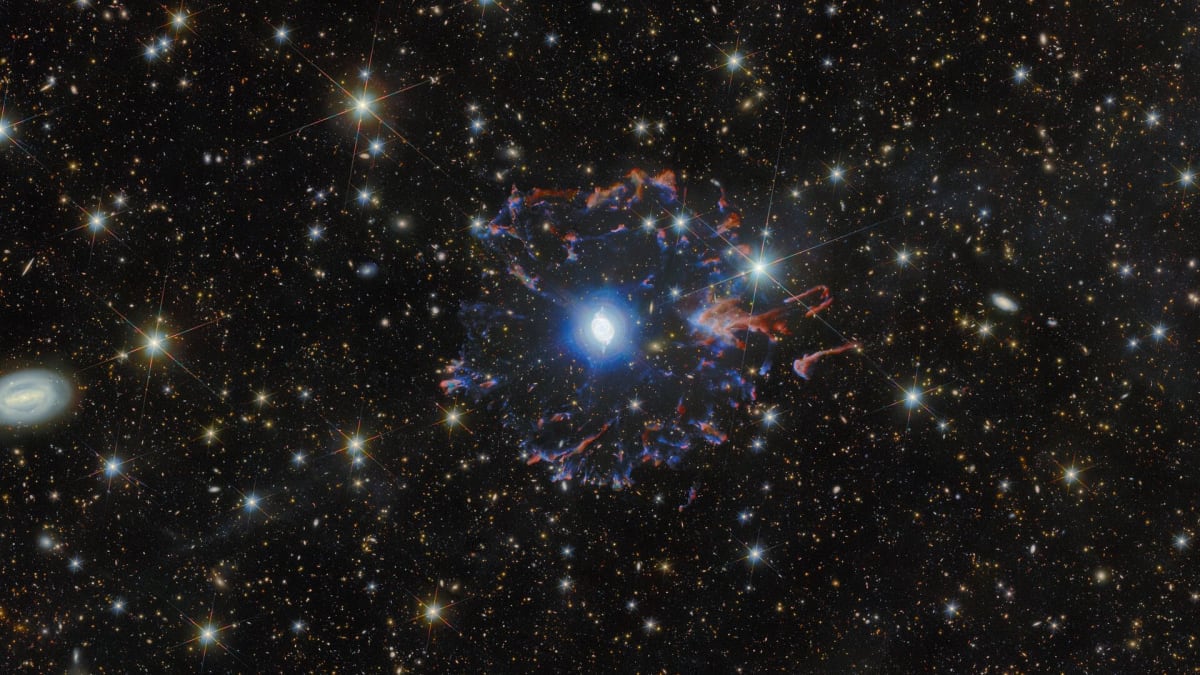
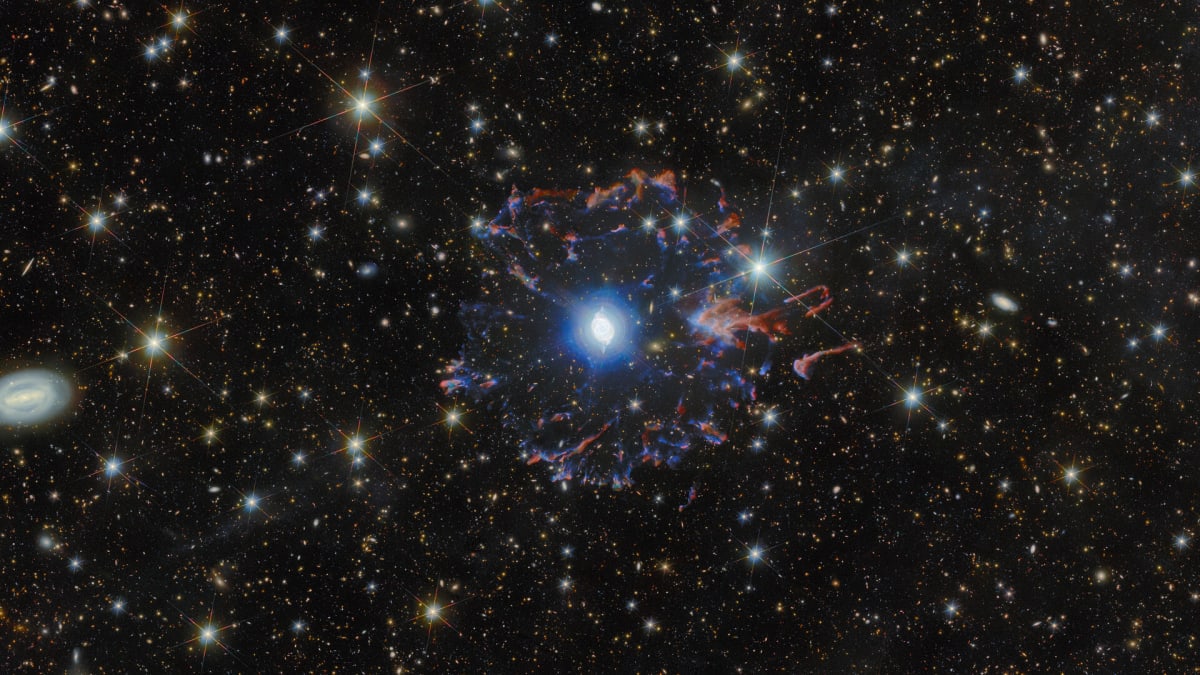
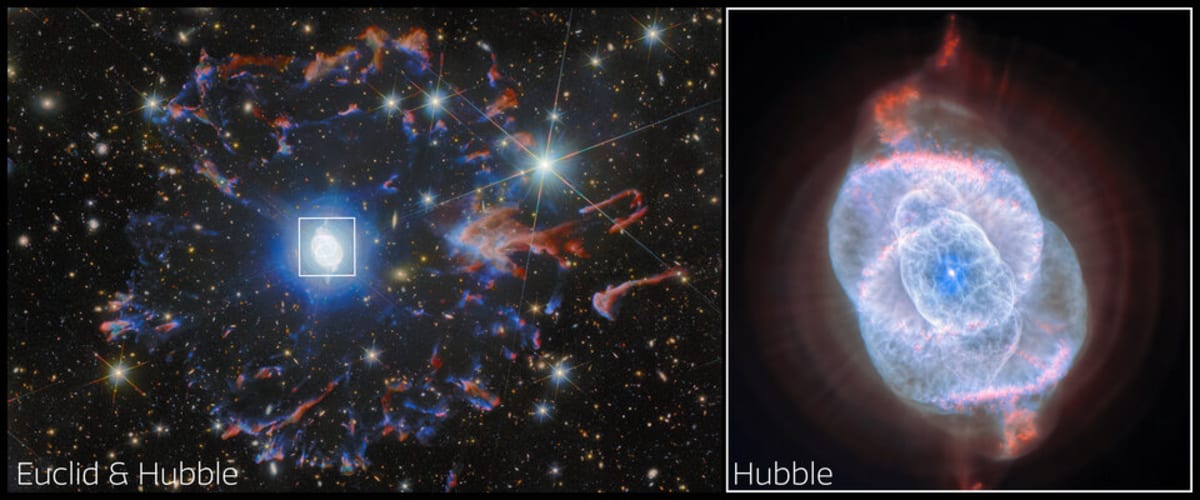
The Cat's Eye Nebula, located 4,300 light-years away in the constellation Draco, glows with intricate rings of blue, orange, and red gas racing outward into space. NASA's Hubble Space Telescope and the European Space Agency's Euclid telescope combined their powers to photograph this cosmic spectacle, revealing details scientists have never seen before.
The nebula formed when a medium-sized star reached the end of its life and gently shed its outer layers into space. Unlike massive stars that explode in violent supernovas, this star went out peacefully, creating delicate shells and bubbles of glowing gas that astronomers call a planetary nebula.
Each bubble and ring tells part of the star's story. The patterns serve as a "fossil record" showing exactly when the dying star released bursts of material into space. Hubble captured the bright central region in stunning clarity, revealing white bubbles, blue loops, and pink jets of gas shooting from the top and bottom.
Euclid's wide-angle view pulled back to show wispy arcs and delicate filaments farther out, along with thousands of distant galaxies dotting the background. These faint outer structures were likely expelled during an earlier stage of the star's death, before it created the main nebula we see today.
The Bright Side
While death might sound gloomy, stellar endings like this one enrich the universe with the building blocks for new stars and planets. The gas expanding from this nebula will eventually mix with cosmic clouds, becoming raw material for future solar systems.
The collaboration between these two telescopes shows how different perspectives reveal the complete picture. Hubble zooms in on fine details while Euclid captures the grand landscape, creating an almost cinematic view of stellar transformation.
Together, these images remind us that even endings can be beautiful. The Cat's Eye Nebula will continue glowing for thousands of years, a lasting testament to one star's graceful exit from the cosmic stage.
More Images
Based on reporting by Live Science
This story was written by BrightWire based on verified news reports.
Spread the positivity!
Share this good news with someone who needs it