Two Space Telescopes Capture Stunning Cat's Eye Nebula
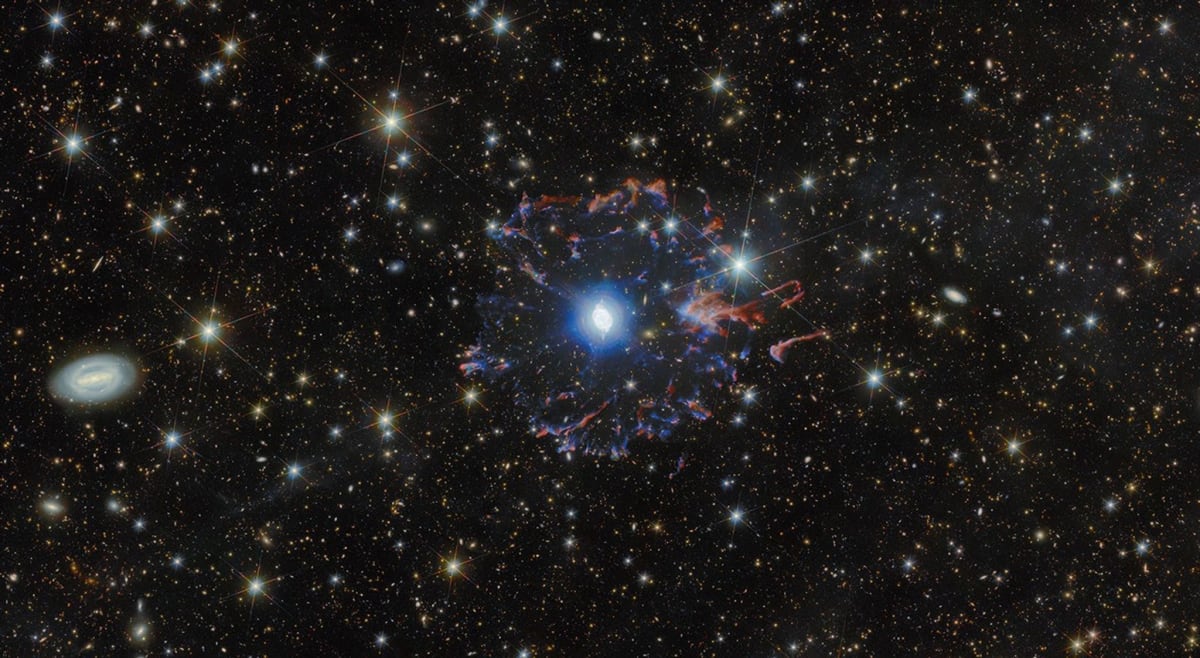
NASA's Hubble and Europe's Euclid telescopes joined forces to photograph one of space's most beautiful sights: a dying star wrapped in colorful, intricate layers 4,400 light-years away. The combined image reveals new details about the Cat's Eye Nebula that neither telescope could capture alone.
Scientists just unveiled a breathtaking new portrait of a star's final act, and it's reminding us that even endings can be beautiful.
On March 3, 2026, two of humanity's most powerful space telescopes worked together to photograph the Cat's Eye Nebula, a stunning cloud of gas and dust created by a dying star. The collaboration between NASA's Hubble Space Telescope and the European Space Agency's Euclid mission produced an image that showcases details neither instrument could achieve on its own.
The Cat's Eye Nebula, officially named NGC 6543, sits 4,400 light-years from Earth in the constellation Draco. For decades, astronomers have been fascinated by its elaborate, multilayered structure that resembles concentric rings of colorful cosmic shells.
What makes this image special is the teamwork. Hubble excels at capturing fine details and vibrant colors in the nebula's center, while Euclid's wide-field vision reveals the fainter outer structures that extend far beyond what Hubble can see. Together, they're painting the most complete picture yet of this celestial masterpiece.
Planetary nebulas like the Cat's Eye form when stars similar to our Sun run out of fuel and shed their outer layers into space. The result is a glowing cosmic sculpture that can last tens of thousands of years before fading. Each nebula tells a unique story about its star's final chapter.
Why This Inspires
This collaboration shows what's possible when we combine our tools and perspectives. Just as these two telescopes revealed hidden beauty by working together, humanity continues to unlock the universe's secrets through international cooperation in space.
The image also offers a glimpse into our own cosmic future. In about five billion years, our Sun will create its own planetary nebula, transforming into a work of art visible across the galaxy.
For now, we get to witness these celestial light shows and marvel at how nature turns endings into something extraordinarily beautiful.
More Images

Based on reporting by NASA
This story was written by BrightWire based on verified news reports.
Spread the positivity!
Share this good news with someone who needs it