Two Teens Win Gold in Beach Rowing After Just 2 Weeks
Jacob Haley and Millie Brooks learned beach sprint rowing at a training camp in April, then won the national championship 14 days later. Their surprising success shows how this fast-paced beach sport is drawing young athletes away from traditional rowing.
Two weeks after learning a completely new sport, two New Zealand teenagers stood on the podium with gold medals around their necks.
Jacob Haley, 16, and Millie Brooks, 18, attended their first beach sprints rowing camp at Orewa Beach in April 2026. Neither had ever raced in surf conditions or navigated a slalom course in a boat.
Fourteen days later, they won the Under-18 mixed doubles at the 2026 New Zealand Beach Sprint Championships. Both had hoped just to make the semi-finals.
For Millie, the timing couldn't have been better. She'd missed selection for the Under-19 flatwater squad and felt the sting of rejection. A conversation between parents led her to try something completely different at the beach.
"It was amazing, I had so much fun and it was much less stressful than normal flatwater rowing," she says. She'd already won gold in the Women's Under-18 quad at the Maadi Regatta, but the pressure of traditional rowing had worn on her.
Jacob came to beach sprints almost by accident. He saw a flyer, thought it sounded fun, and noticed nationals would happen just two weeks after the camp ended.
The two-day training camp packed in everything: beach starts and finishes, slalom skills, surf tactics, boat transitions, and safety. World champions Emma Twigg and Matt Dunham taught the fundamentals themselves.
"It was extremely motivating to be taught by the best of the best," Jacob says. "They explained everything clearly and supported us the whole way."
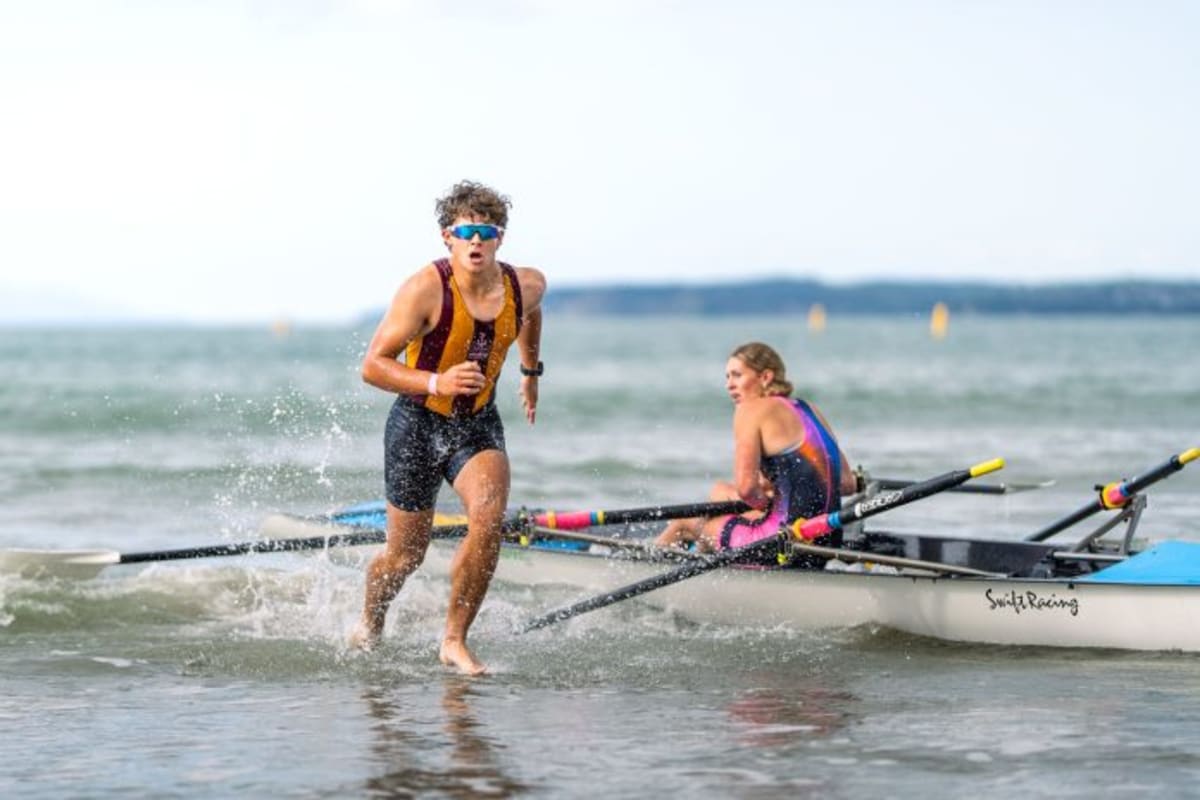
Beach sprint rowing looks nothing like its flatwater cousin. Athletes sprint down the sand, dive into a boat, weave through buoys, and race back to shore. The whole thing takes just two and a half to three and a half minutes.
David Vallance, director of Beach Sprints New Zealand, compares it to T20 cricket or rugby sevens: compressed, faster, and designed for spectators. Add music and a beachside atmosphere, and it feels more like a festival than a competition.
The Ripple Effect
What surprised Vallance most wasn't Jacob and Millie's gold medal. It was the response from young rowers across New Zealand.
More than 30 teenagers traveled to the camp from around the country. About 80 percent of them entered nationals afterward.
"Because of the variables such as surf conditions where a wave can change the outcome of a race, it removes some of the pressure to execute every stroke perfectly," Vallance explains. The casual atmosphere stays the same whether it's at a World Championship or a club regatta.
With beach sprints making its Olympic debut at Los Angeles 2028, the timing matters for New Zealand's young rowers. Jacob and Millie are already spreading the word to their teammates.
Now these two champions are showing others that sometimes the biggest wins come from taking a chance on something new.
More Images

Based on reporting by Google News - New Zealand Success
This story was written by BrightWire based on verified news reports.
Spread the positivity!
Share this good news with someone who needs it