Typhoons Prevent Extreme Droughts in Vulnerable Regions
Scientists discovered that typhoons are secret drought fighters, with their rainfall preventing severe water shortages across vulnerable regions worldwide. The groundbreaking study reveals what happens when we imagine a world without these powerful storms.
Typhoons might have just earned a surprising new reputation as climate heroes.
Researchers at Pohang University of Science and Technology in South Korea ran a fascinating experiment. They used 40 years of global data to compare our world with a simulated version where typhoons never dropped a single raindrop.
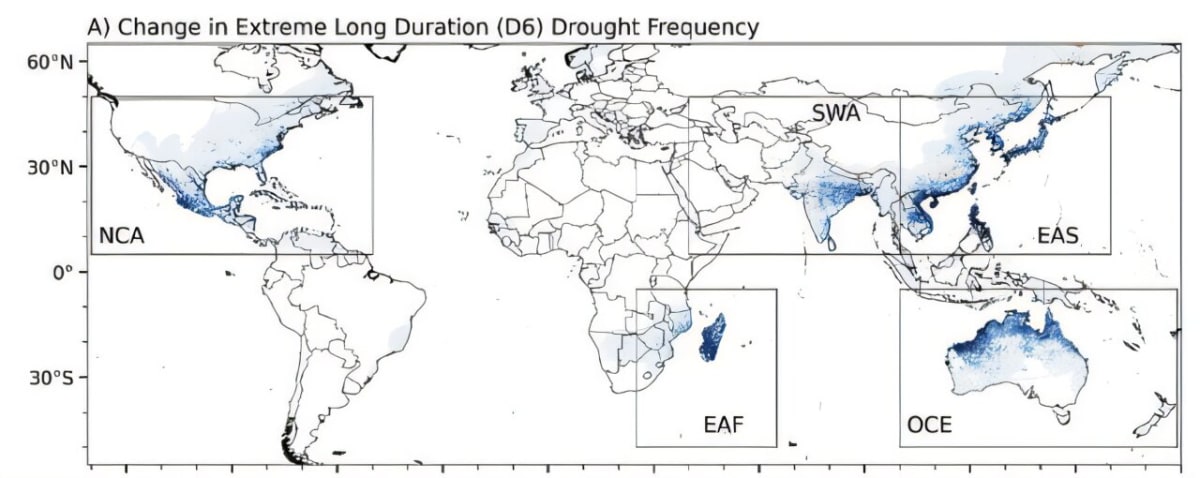
The results were startling. Without typhoon rainfall, soil moisture plummeted across the globe, triggering significantly worse droughts in regions that depend on these storms more than anyone realized.
Professor Jonghun Kam and his team published their findings in Geophysical Research Letters. Their work answers a question that sounds simple but had never been properly studied: what would drought patterns look like if typhoons disappeared?
The impact varies dramatically depending on where you live. In arid and semi-arid regions like parts of Oceania, the moisture from typhoons vanished within just one year. Without these storms, these areas would face extreme drought conditions.
Humid regions like East Asia showed more resilience. Even without typhoon rainfall, soil moisture didn't completely disappear, though conditions still worsened noticeably.
This research flips our usual thinking about typhoons on its head. While we typically focus on their destructive flooding and wind damage, these powerful storms play a vital role in maintaining the water cycle and delaying droughts.
The timing couldn't be more important. As climate change shifts typhoon paths and frequencies, some regions may face droughts far more severe than current predictions suggest.
The Bright Side
This discovery opens new doors for water management strategies. Cities and agricultural regions can now plan more effectively by understanding how dependent they are on typhoon rainfall for their water supply.
The research also highlights an unexpected benefit of natural weather patterns that often get labeled as purely destructive. Those same storms that make headlines for damage are simultaneously preventing water crises in vulnerable areas.
Professor Kam emphasized that this study represents a major shift in perspective. Scientists now recognize they need climate models that can accurately simulate both typhoons and droughts together, not as separate phenomena.
The findings matter for everything from farming to urban water supply to disaster preparedness. Regions that lose typhoon rainfall due to changing storm patterns will need backup plans for maintaining their water resources.
Understanding typhoons as drought fighters gives us a more complete picture of how Earth's water systems actually work.
More Images




Based on reporting by Phys.org
This story was written by BrightWire based on verified news reports.
Spread the positivity!
Share this good news with someone who needs it