UAB Scientists Find New Hope for Deadly Thyroid Cancer
Researchers at the University of Alabama at Birmingham have discovered a promising new way to treat an aggressive thyroid cancer that currently gives patients just a 10% chance of surviving 10 years. The breakthrough targets a specific channel in cancer cells while leaving healthy tissue untouched.
Scientists at the University of Alabama at Birmingham just opened a door that could save lives for patients facing one of cancer's toughest fights.
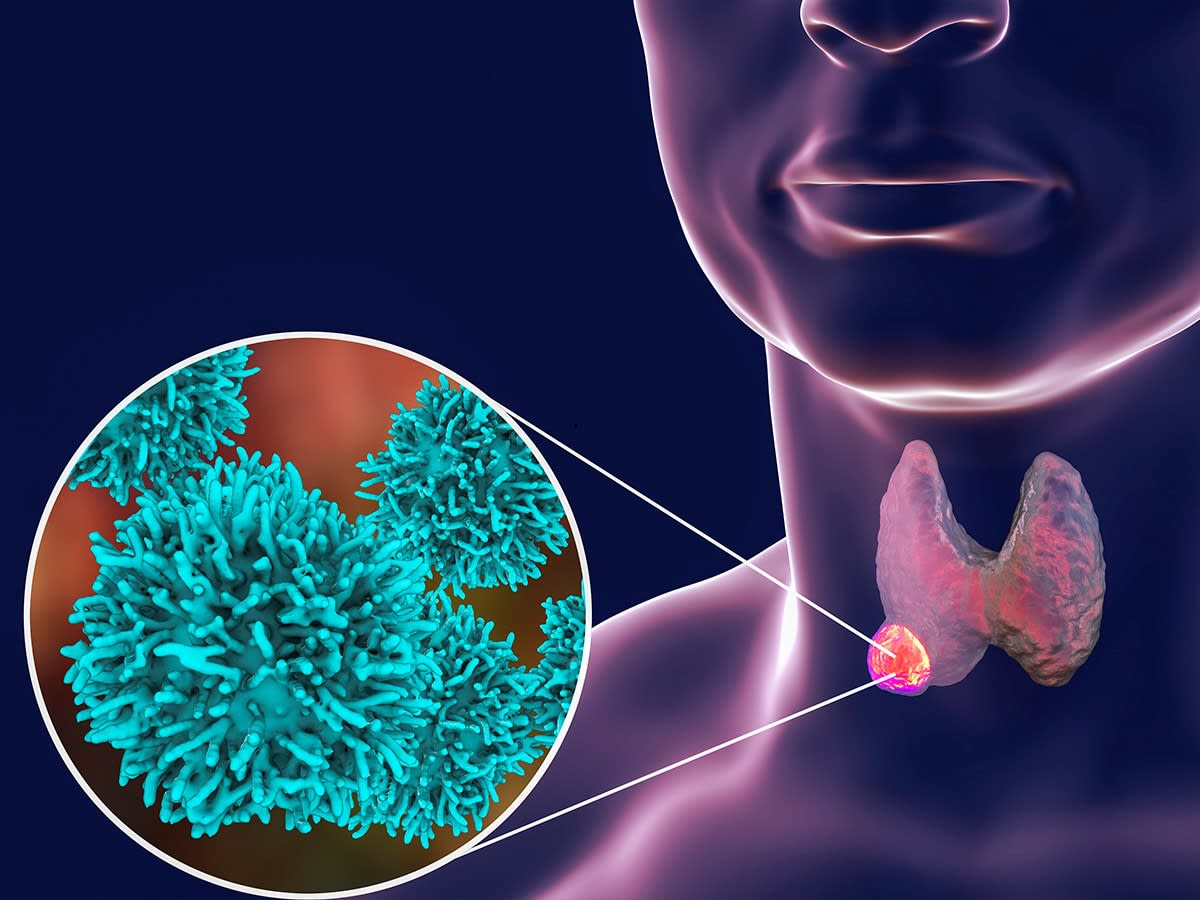
The team discovered a potential new treatment for metastatic medullary thyroid cancer, a rare and aggressive cancer that spreads quickly and resists standard treatments. Once this cancer moves beyond the thyroid, patients face devastating odds with only a 10% chance of surviving 10 years.
Professor Sadanandan Velu leads the research alongside colleague Renata Jaskula-Sztul and doctoral student Piyasuda Pukkanasut. Their approach targets something called Nav1.7, a voltage-gated sodium channel that appears only in aggressive cancer cells, not in healthy thyroid tissue.
This specificity matters enormously. By blocking Nav1.7, the treatment could stop cancer cells from migrating and invading surrounding tissue without harming normal cells.
Right now, patients with advanced medullary thyroid cancer rely on drugs called tyrosine kinase inhibitors. These medications come with brutal side effects and often stop working as tumors develop resistance.
Nav1.7 blockers work differently. Instead of attacking cells directly like current treatments, they prevent cancer cells from moving and spreading by controlling sodium ion transport.
The Bright Side
The research is still in early stages, but the implications reach far beyond the laboratory. Liver metastasis causes most deaths in medullary thyroid cancer patients, and this new approach could directly address that threat.
Because Nav1.7 blockers specifically target cell movement rather than destroying cells outright, researchers expect fewer severe side effects compared to current options. Patients could potentially receive treatment that works without the debilitating reactions that plague existing therapies.
The team confirmed through studies using cancer cell lines and actual patient specimens that Nav1.7 appears uniquely in aggressive medullary thyroid cancer. That selectivity transforms it from just another protein into an ideal target for new drugs.
For Velu, the work connects directly to human lives. "We would like to improve the survival rate for patients facing this disease, and that is what excites us most about the potential of this work," he said.
When fully developed, Nav1.7 blockers could become the first targeted treatment specifically designed to stop metastatic medullary thyroid cancer from spreading. For patients currently facing limited options and poor outcomes, this research represents genuine hope where little existed before.
Based on reporting by Google News - New Treatment
This story was written by BrightWire based on verified news reports.
Spread the positivity!
Share this good news with someone who needs it