UC San Diego Flat Antennas Replace Bulky Satellite Dishes
Engineers just solved satellite internet's biggest bottleneck with rooftop panels that work together like one giant antenna. The breakthrough could make high-speed satellite connectivity cheaper and available to millions more people.
Connecting to satellites from Earth has relied on the same clunky technology for decades, but engineers at UC San Diego just changed that with flat panels you could install on any rooftop.
While satellites themselves have become remarkably advanced, the ground stations connecting them to Earth still use large mechanical dishes that can only track one satellite at a time. These dishes must physically rotate to follow satellites racing across the sky at 17,000 miles per hour, creating delays and bottlenecks that limit how much data can flow between space and Earth.
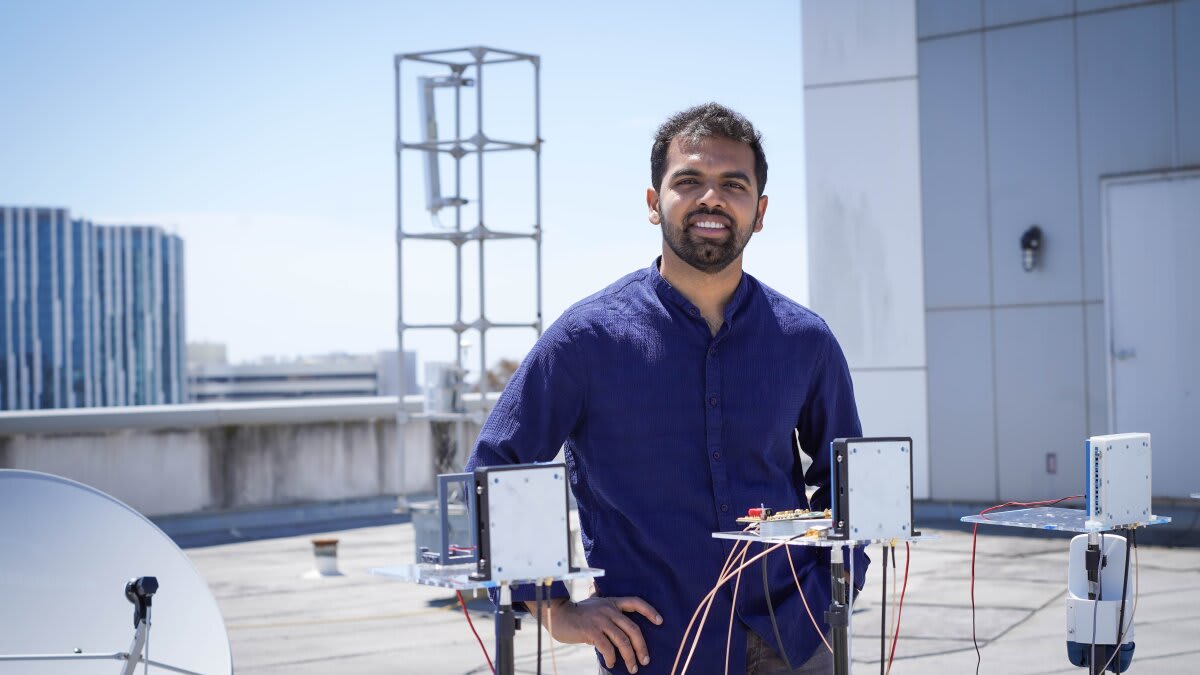
The new system, called ArrayLink, replaces those bulky dishes with networks of laptop-sized flat antennas spread across rooftops and buildings. Up to 16 of these small panels work together as one coordinated system, matching the power of traditional dishes without any moving parts.
"The fundamental bottleneck in scaling satellite connectivity today is not in space; it is on the ground," says Dinesh Bharadia, who led the research presented at IEEE INFOCOM 2026. His team discovered that spacing the panels far apart unlocks an unexpected bonus: multiple data streams can flow simultaneously between one satellite and the ground station.
This matters far beyond just faster internet. Satellite systems quietly power GPS navigation, weather forecasting, financial transactions, emergency response, aviation, shipping, remote healthcare, and Earth observation. As tens of thousands of new satellites join the thousands already in orbit, ground stations have struggled to keep up.
The Ripple Effect
The real game changer is how accessible this technology could become. Any building owner or business could install these panels and help relay satellite data back to the internet. That crowdsourced approach could rapidly expand satellite coverage to rural areas, developing regions, and emergency zones that traditional ground stations would never reach.
Traditional high-gain phased arrays powerful enough to replace satellite dishes would require tens of thousands of antenna elements, making them too expensive for widespread use. ArrayLink sidesteps that problem by using many smaller, commercially available panels that cost far less.
The system also eliminates those awkward transition gaps when dishes rotate between satellites. Electronic steering happens instantly, keeping connections active and data flowing without interruption. What used to take up to a minute now happens in milliseconds.
Beyond cost and speed, the distributed design brings resilience. If one panel fails or faces interference, the others keep working. The system adapts in real time, routing around problems that would shut down a traditional dish.
For remote communities, disaster zones, and underserved regions worldwide, this breakthrough could finally deliver the reliable high-speed connectivity that single dishes and ground stations could never economically provide.
More Images


Based on reporting by New Atlas
This story was written by BrightWire based on verified news reports.
Spread the positivity!
Share this good news with someone who needs it