UK Lab Tests Tech That Could Bring Driverless Trains
A virtual train laboratory in England is perfecting the safety systems that will make automated railways a reality. Engineers are testing everything from automatic braking to digital signals in a simulation facility before the technology reaches passengers.
Inside a facility in Derby, England, engineers are testing the future of rail travel without a single train on the tracks.
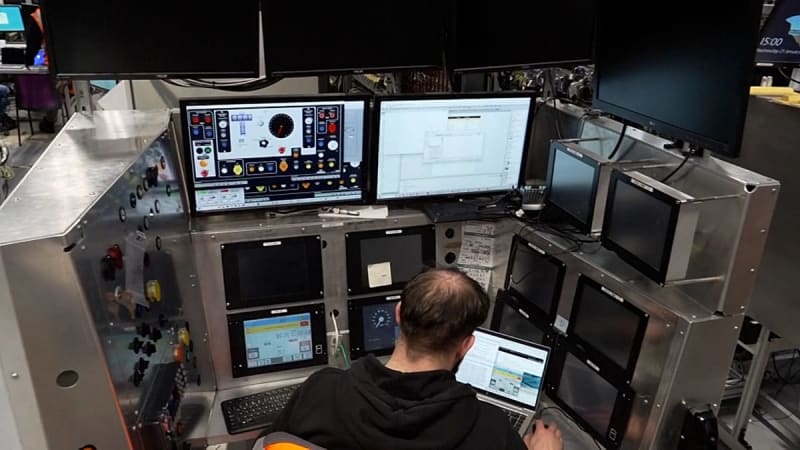
The Train Zero laboratory at railway manufacturer Alstom recreates entire passenger trains in virtual form. Using racks of hardware and software, the team simulates how every system on board behaves in real world conditions before the technology ever carries passengers.
"Although this isn't a real train, you can actually come in here and feel that you're actually stood on a train," said David Cox, head of train control at Alstom. Engineers can hear door chimes, see passenger information displays update, and watch how dozens of subsystems communicate with each other through more than five miles of virtual cabling.
The lab is currently testing the Aventra train platform, which serves London's Elizabeth Line and several regional networks across England. But the real breakthrough work focuses on the European Train Control System, a digital signaling technology that could enable fully automated trains.
ETCS replaces traditional trackside signals with live data sent directly to the train's onboard computer. Small trackers on the rails tell the system where the next station is, when to start braking, and how many doors to open. The train processes this information continuously and can trigger functions like automatic braking and door release without driver input.
"It's important because in terms of the future of the railway, it is something that maybe a lot of projects will go towards," said Ibtihaj Yousaf, a simulation engineer at Alstom. "But because it's such a safety critical system, we have to test it to make sure we're catching all the issues before they're on the train or on the tracks."
The testing rigs combine real hardware like buttons, relays and displays with virtual systems that mimic a train in motion. Engineers can simulate faults and validate complex changes in this controlled environment. They test how the Train Control and Management System acts as the brain of the train, coordinating announcements when doors open, adjusting power when brakes apply, and ensuring every subsystem communicates properly.
The facility also validates older safety systems still used across the UK, including the Automatic Warning System and Train Protection and Warning System. These prevent trains from passing red signals or exceeding speed limits.
Why This Inspires
This quiet work in a Derby laboratory represents a massive leap toward safer, more efficient public transportation. By catching software glitches and system failures in simulation, engineers are building the foundation for trains that respond faster than human reflexes allow. The technology being perfected here could eventually reduce accidents, increase train frequency, and make rail travel more accessible to millions of people who depend on it daily.
The future of transportation is being debugged today, one virtual mile at a time.
More Images


Based on reporting by Euronews
This story was written by BrightWire based on verified news reports.
Spread the positivity!
Share this good news with someone who needs it