Ultrasound Breakthrough Lets Scientists Talk to Brain Cells
Scientists discovered a way to communicate with neurons using gentle sound waves, opening new paths for treating brain diseases without surgery. The technique safely changed how brain cells signal each other while keeping them completely healthy.
Scientists just found a way to have a conversation with your brain cells using nothing but focused sound waves.
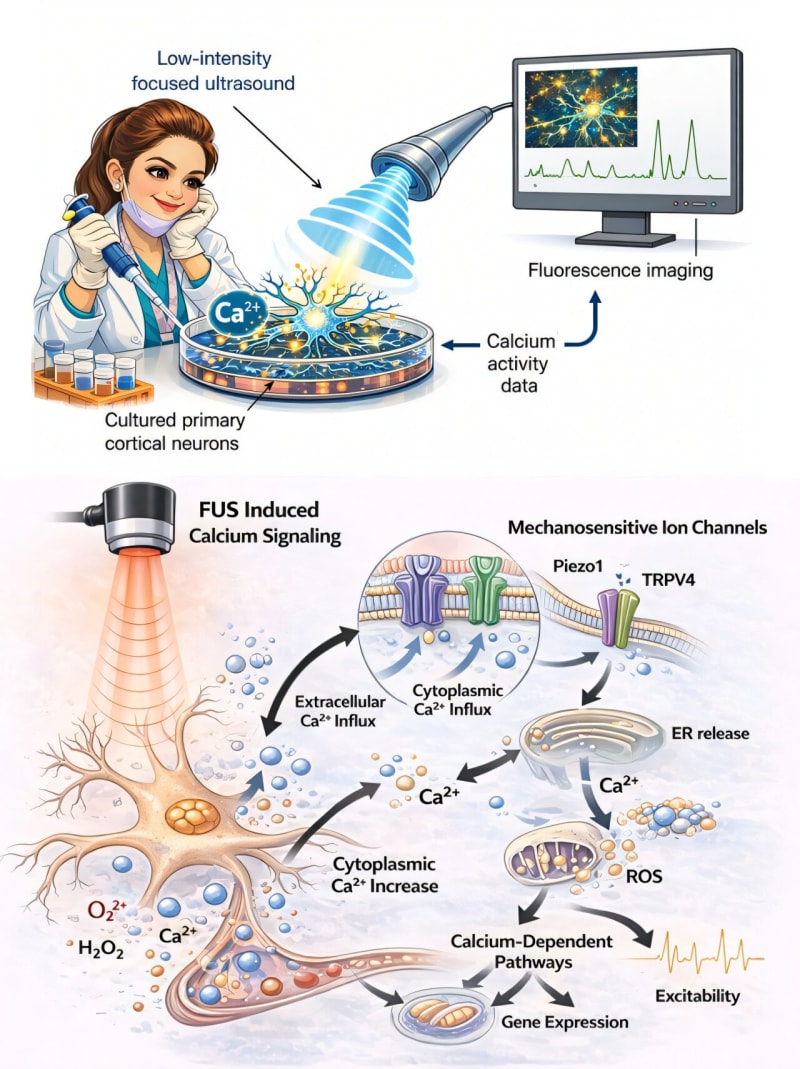
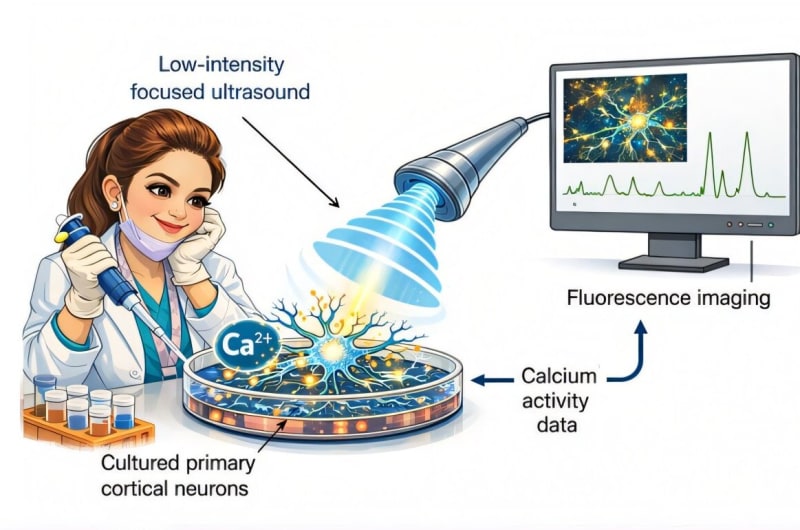
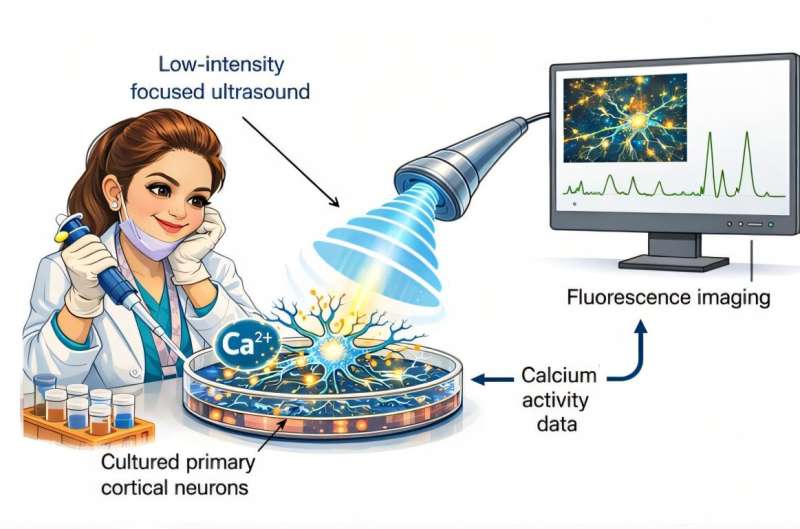
Researchers at the National Institute of Mental Health in the Czech Republic discovered that low-intensity ultrasound can safely adjust how neurons communicate with each other. When they aimed precisely calibrated ultrasonic pulses at brain cells, calcium signals began rising and falling in gentle waves.
Dr. Iqra Bano, who led the study, remembers watching it happen for the first time on screen. The neurons were responding not to drugs or electrical signals, but to concentrated sound energy that couldn't even be heard by human ears.
Calcium acts like a text messaging system inside brain cells. When calcium signaling gets disrupted, neurons struggle to survive, connect, and work properly. Diseases like Parkinson's happen partly because this messaging system breaks down.
The team wanted to know if they could fix faulty signals without invasive surgery or medication. They turned to focused ultrasound, the same technology doctors use for imaging, but at much lower intensities designed to modify cells rather than destroy tissue.
Using live-cell imaging, the researchers tracked what happened inside primary cortical neurons when exposed to these gentle ultrasound pulses. The results were remarkable: neurons responded with regulated, repeatable changes in their calcium signaling, all while staying completely healthy.
The cells didn't die. Their shape didn't change. They simply adjusted their communication patterns in response to the sound waves.
The Ripple Effect
This discovery matters because calcium signaling controls everything from neuron survival to memory formation to releasing the chemicals that let brain cells talk to each other. Nearly every brain disease involves disruptions to these systems.
If scientists can adjust calcium-dependent signaling without cutting into the skull, they could potentially restore balance in malfunctioning brain circuits. No implants, no electrodes, no permanent hardware, just sound energy communicating with biology.
The technique offers something current treatments can't: precision without penetration. Deep brain stimulation helps Parkinson's patients but requires surgery to implant electrodes. Medications work but affect the whole brain, causing side effects. Focused ultrasound could target specific brain regions without breaking the skin.
Dr. Bano's research is part of a larger European Union project working to restore motor function in Parkinson's patients using noninvasive techniques. Her team is now combining ultrasound with nanotechnology and specialized compounds to develop neuroprotective strategies.
The study, published in Neurochemical Research, is still early stage. The experiments happened in lab dishes, not living brains, and clinical use remains years away. But every medical breakthrough starts with a simple observation that points the way forward.
Progress sometimes announces itself not with a bang, but with a whisper, like a calcium wave rising inside a single neuron in response to sound we cannot hear.
More Images

Based on reporting by Medical Xpress
This story was written by BrightWire based on verified news reports.
Spread the positivity!
Share this good news with someone who needs it