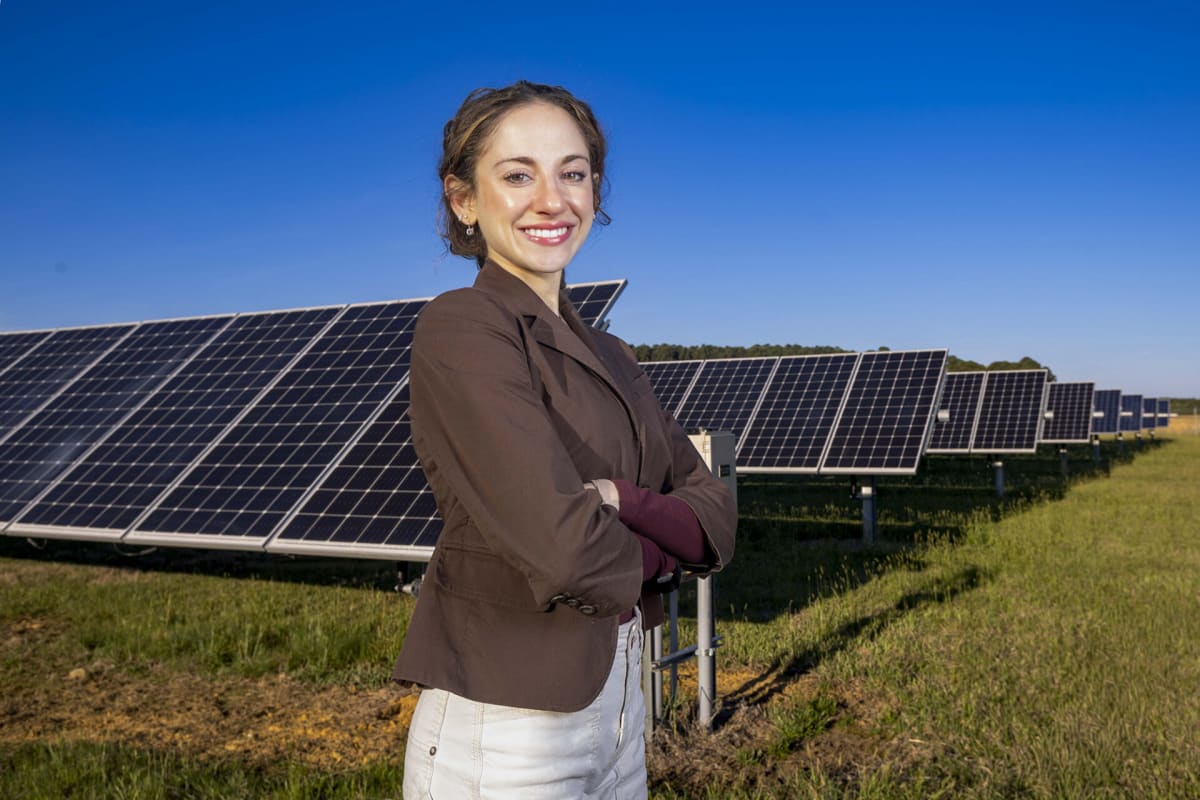
UNC Student Creates Insurance Fix for Clean Energy Grid
A UNC student who started as a marine biology hopeful is now designing insurance solutions to make renewable energy more reliable and attractive to investors. Her work could help stabilize Texas's power grid during wind energy droughts.
Victoria Farella walked into her first environmental science class thinking she'd spend her career protecting oceans, but one lunch invitation changed everything.
The UNC Chapel Hill senior now tackles a puzzle most people never consider: how to make clean energy investments feel safe when the wind stops blowing. Her solution involves insurance contracts that protect power companies during energy droughts, those inevitable periods when renewable sources dip and electricity prices skyrocket.
Farella's journey started in 2022 when her professor invited her to intern with the UNC Cleantech Summit, the largest university-run clean technology convention in the country. Surrounded by entrepreneurs and scientists all chasing the same clean energy dream, she realized climate solutions need every perspective, not just biologists.
She said yes to everything. An internship at a battery startup in 2023 taught her that the real challenge wasn't just technology but the people willing to risk everything to bring new ideas to life.
That curiosity led her to risk management and eventually to Texas's power grid. The state generates nearly 23% of America's electricity from renewables, but when Winter Storm Uri hit in 2021, prices exploded from $30 to $9,000 per megawatt hour. Investors noticed.
The Bright Side
Farella's framework offers two solutions that make renewable investments less scary. Insurance contracts kick in during energy droughts to cover lost revenue, or companies can bundle multiple energy sources together to smooth out the gaps.
The approach keeps long-term power purchase agreements stable, which means banks feel confident financing projects before they're built. When investors trust the system, clean energy expands faster.
Her research also challenges a common fear about the energy transition. Workers in fossil fuel industries worry their skills will become obsolete, but Farella sees the opposite playing out.
The technical expertise developed in traditional energy sectors will be critical for running renewable systems. She emphasizes this shift requires measured policy, understanding, and empathy, not overnight transformation.
Communities adapting to renewable energy will face new challenges, but with the right financial protections in place, they can make the transition work. Piece by piece, energy freedom becomes possible when the risks feel manageable.
Farella's work with the UNC Institute for Risk Management and Insurance Innovation proves that sometimes the biggest climate solutions come from the most unexpected places. A scuba-diving freshman who loved marine biology now protects power grids by making spreadsheets less scary.
Clean energy just got a little more reliable, one insurance policy at a time.
More Images
Based on reporting by Google: clean energy investment
This story was written by BrightWire based on verified news reports.
Spread the positivity!
Share this good news with someone who needs it