Underwater Habitat Opens 56 Feet Deep Off Florida Coast
A UK startup just launched the first privately funded underwater living chamber in US waters in over 40 years. Scientists can now apply to spend five days at the bottom of the ocean conducting research.
Living 56 feet underwater in a tube sounds like science fiction, but it just became reality off the coast of Florida.
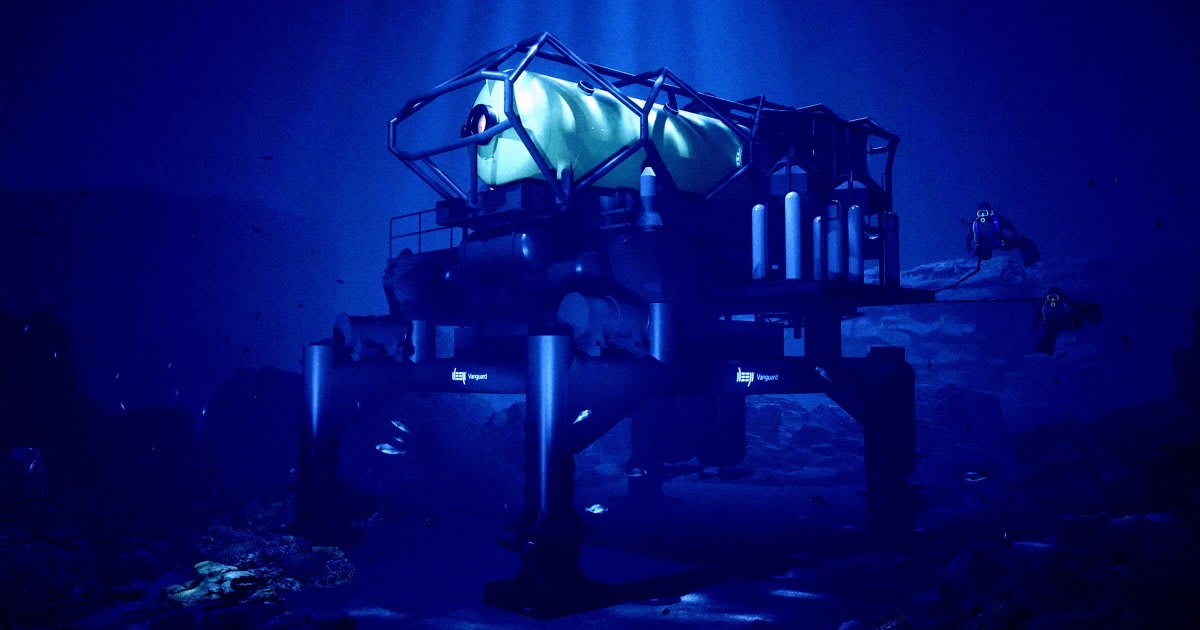
DEEP, an ocean engineering company founded in 2021, recently activated its "Vanguard" habitat at Tennessee Reef. The underwater chamber marks the first privately funded habitat installed in US waters in decades, reopening possibilities for ocean research that seemed closed for a generation.
The Vanguard isn't luxury living. Think camper van meets science lab, all packed into a 35-by-8-foot tube anchored to the seabed.
The habitat includes four bunks, a small kitchen, a bathroom that doubles as a science lab, and a moon pool for diving. A support buoy on the surface handles the essentials: oxygen, electricity, and communication with the world above.
What makes this different from earlier underwater habitats is the approach. Previous structures required lifting and lowering crews with every shift change. The Vanguard stays put, allowing researchers to live and work continuously at depth.
"It's been over 40 years since we've had an undersea habitat built for humans and launched," says Dawn Kernagis, DEEP's director of scientific research. "We're really building on the shoulders of giants who've done this research."
The Ripple Effect
DEEP is targeting two critical research areas: reef restoration and human-machine collaboration. By staying underwater for extended periods, scientists can monitor coral recovery in real time and test new technologies without the interruptions of surface-based diving.
The company is accepting research proposals from teams of two scientists willing to spend five days underwater. The catch? A mandatory two-week training period first. DEEP is sweetening the deal with financial awards up to $50,000 for selected projects.
This matters because ocean research has struggled with a fundamental limitation. Surface-based diving restricts observation time and creates gaps in data collection. Continuous underwater residence could revolutionize how scientists study reef ecosystems and test conservation strategies.
The timing couldn't be better. Coral reefs worldwide face mounting pressure from climate change, and researchers need every advantage to develop effective restoration techniques.
Whether enough scientists will brave the depths remains to be seen, but DEEP is betting that some fearless oceanographers are ready to make waves in marine research.
More Images
Based on reporting by Futurism
This story was written by BrightWire based on verified news reports.
Spread the positivity!
Share this good news with someone who needs it