Underwater Turbines Market to Hit $8B by 2035
A breakthrough technology that generates clean electricity from rivers and ocean currents without building dams is set to triple in market value over the next decade. Hydrokinetic energy devices are quietly transforming how the world powers itself with water.
Imagine generating electricity from a river without building a single dam or disrupting a single fish migration route. That future is already happening, and it's about to get much bigger.
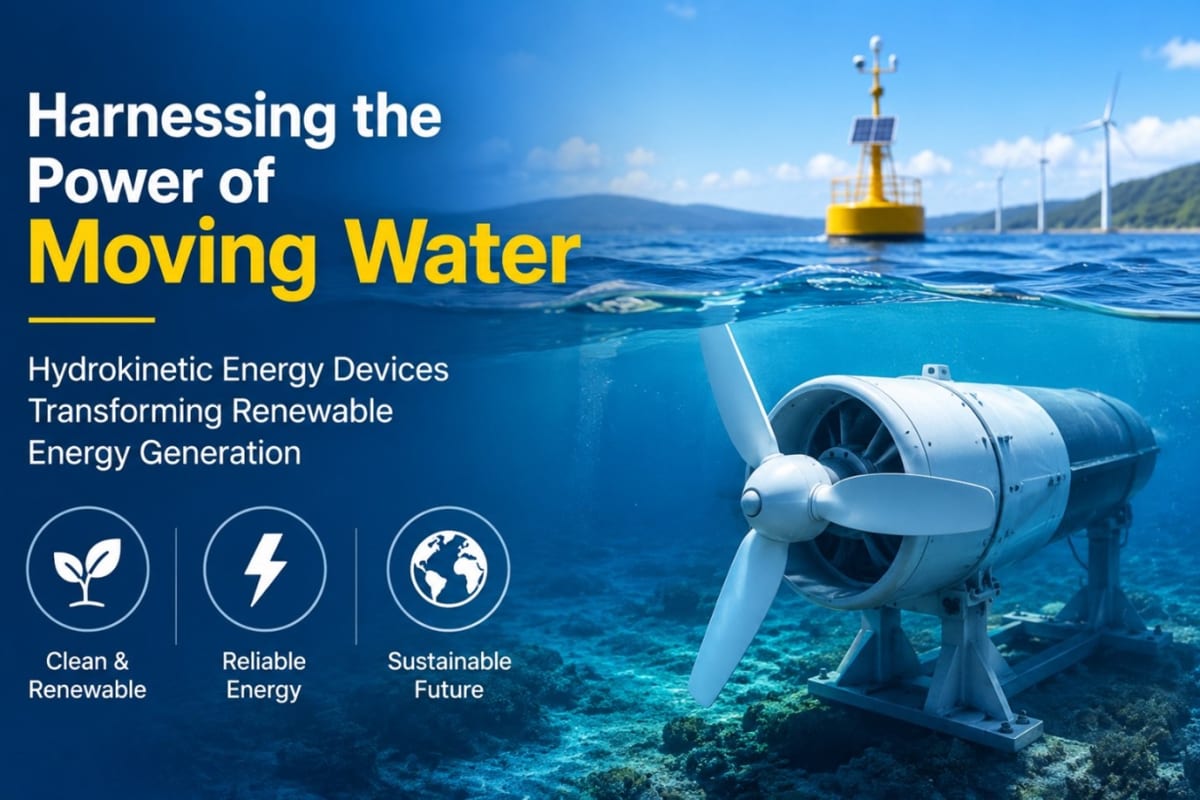
Hydrokinetic energy devices work like underwater wind turbines, capturing power from naturally flowing water in rivers, tides, and ocean currents. The global market for these systems was valued at $2.51 billion in 2025 and is projected to reach $8.11 billion by 2035, according to market research firm Spherical Insights & Consulting.
Unlike traditional hydropower plants that require massive dams and reservoirs, these innovative devices simply sit in moving water and convert its kinetic energy into electricity. They cause minimal disruption to ecosystems while producing zero emissions.
The technology comes in several forms. River current turbines harness flowing streams, tidal energy systems capture the predictable rhythm of ocean tides, and floating platforms generate power from ocean currents. All operate continuously whenever water is moving, unlike solar and wind energy that depends on weather conditions.
Governments worldwide are taking notice. Countries implementing aggressive climate goals are funding pilot programs and commercial deployments to tap into previously unused water resources. Remote coastal communities can now access reliable electricity without connecting to distant power grids.
The technology's reliability gives it a crucial advantage over other renewables. Ocean tides follow predictable patterns, allowing energy planners to forecast power generation with remarkable accuracy. This predictability makes hydrokinetic systems especially valuable for stabilizing electrical grids.
Modern turbine designs have overcome early challenges with improved durability and corrosion resistance. Today's devices require less maintenance and operate efficiently in harsh marine environments. Advances in materials and engineering are driving costs down while performance climbs.
The Ripple Effect
The expansion of hydrokinetic energy creates opportunities far beyond clean electricity. Remote villages gain access to reliable power for the first time, eliminating dependence on expensive diesel generators. Industrial facilities at ports and offshore platforms can generate their own electricity locally.
Military and defense operations benefit from underwater energy systems that support remote surveillance equipment. Research stations in isolated locations can operate continuously without fuel resupply missions. Each deployment proves the technology works in real-world conditions.
The market's projected growth reflects increasing confidence from investors and policymakers. As turbine technology improves and installation costs decrease, hydrokinetic energy becomes competitive with traditional power sources. Countries with extensive coastlines and major rivers hold enormous untapped potential.
The race to decarbonize global energy systems is discovering that some of the best solutions have been flowing past us all along.
Based on reporting by Google: clean energy investment
This story was written by BrightWire based on verified news reports.
Spread the positivity!
Share this good news with someone who needs it