US and EU Partner to Secure Critical Minerals Supply
The United States and European Union just signed a historic agreement to work together on securing the minerals needed for everything from smartphones to electric cars. The partnership aims to reduce dependence on any single country and strengthen supply chains for both economies.
In a move that could reshape global trade, the US and EU signed a partnership agreement Friday to coordinate their access to critical minerals that power modern life.
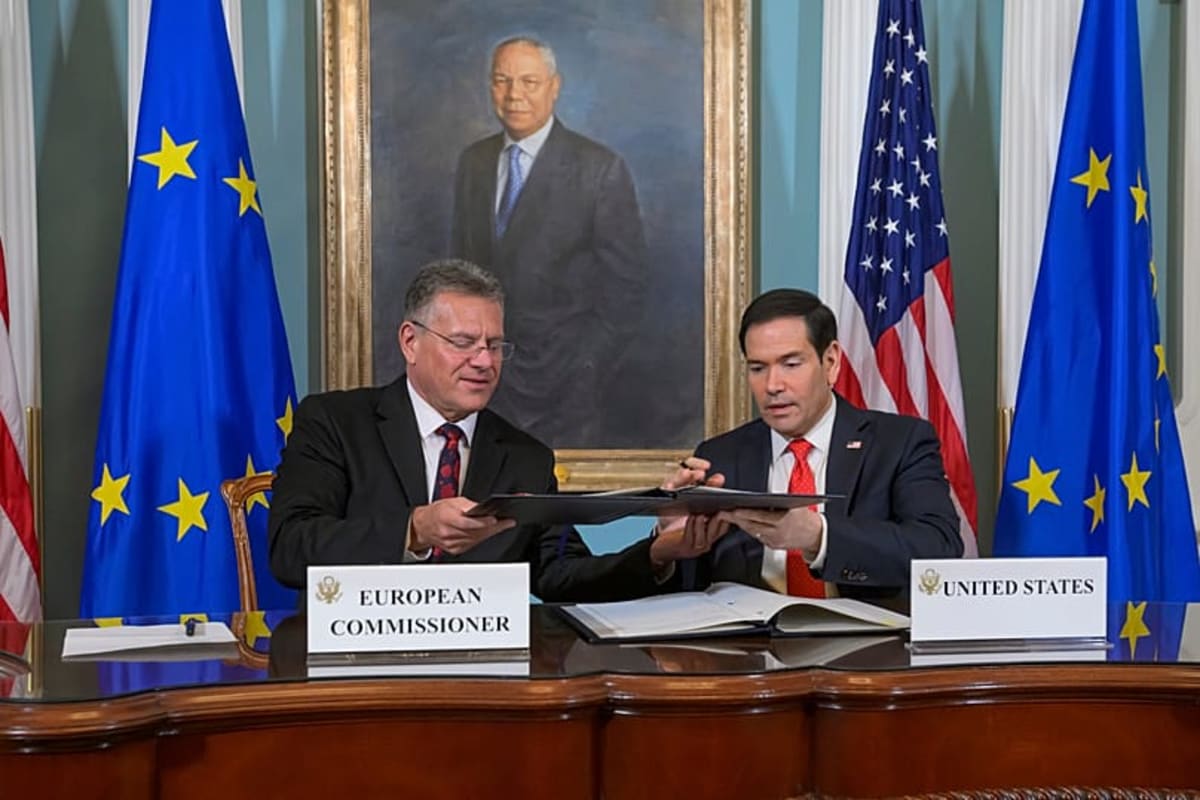
Secretary of State Marco Rubio and EU Trade Commissioner Maroš Šefčovič sealed the deal at the State Department in Washington. The minerals covered in the agreement are essential for making semiconductors, electric vehicle batteries, defense systems, and countless everyday electronics.
"We need diversity in our supply chains," Rubio said at the signing. The current system, where one or two countries control most of these resources, creates unacceptable risks for national security and economic stability.
The partnership tackles a problem both regions have faced for years. When tensions rise, countries that dominate mineral supplies can restrict exports, leaving industries scrambling and prices soaring.
Under the new agreement, the US and EU will coordinate their stockpiles of critical minerals and align their standards to make trade easier across the Western world. They'll also invest together in research to find new sources and alternatives.
Šefčovič emphasized the speed this cooperation will bring. "We will be delivering on our goals much faster than before," he said. "We will be growing stronger together in this very important area."
The Ripple Effect
This partnership represents more than just two governments signing paperwork. It's part of a broader shift toward building resilient supply chains that won't leave industries vulnerable to disruption.
The US has already launched similar initiatives with Mexico, Japan, and Australia. Each partnership adds another link in a network designed to ensure stable access to the materials that keep modern economies running.
For consumers, more diverse supply chains could mean steadier prices and better availability for everything from phones to solar panels. For workers, it could mean new mining and processing jobs in allied countries instead of concentration in single regions.
The agreement also shows how economic security is becoming a shared priority. When countries work together to ensure stable access to essential resources, everyone benefits from the reduced risk.
Two major economies just chose cooperation over competition, building a foundation for more stable, secure supply chains that serve their people better.
More Images
Based on reporting by Euronews
This story was written by BrightWire based on verified news reports.
Spread the positivity!
Share this good news with someone who needs it