U.S. and Mexico Save Fisherman 680 Miles at Sea
When a fisherman suffered critical injuries 680 miles off Mexico's coast, U.S. Air Force pararescuemen jumped from a plane into the open ocean to save his life. The daring rescue showcased how American and Mexican forces work together to protect lives across shared waters.
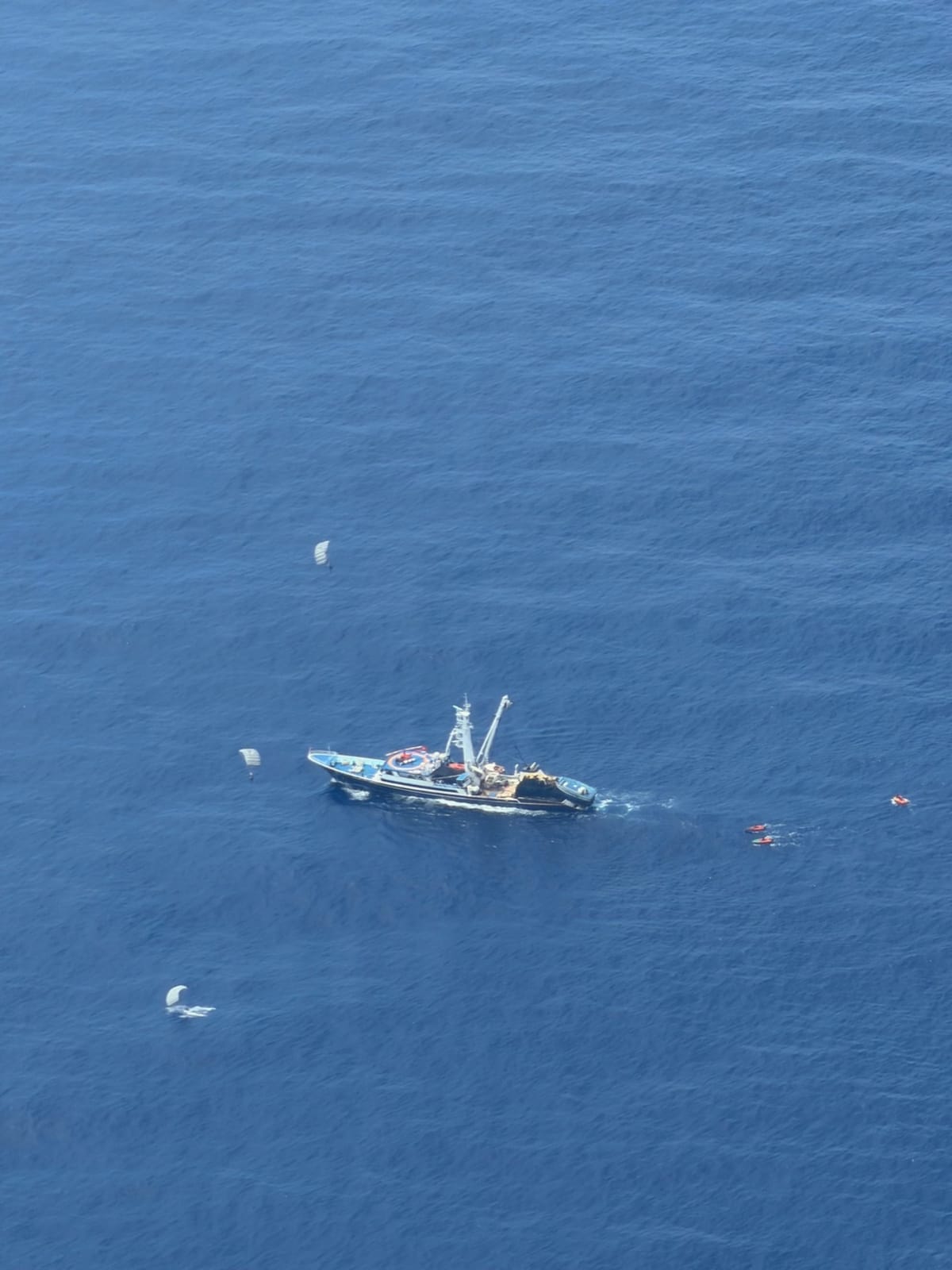
Four U.S. Air Force pararescuemen leaped from an aircraft into the Pacific Ocean, swimming to a fishing vessel where a critically injured man desperately needed help. The fisherman was stranded 680 nautical miles from Cabo San Lucas, far beyond the reach of conventional rescue.
The rescue began when the U.S. Coast Guard called for specialized long-range medical evacuation support. Within hours, the Air Force Rescue Coordination Center at Tyndall Air Force Base in Florida coordinated with Mexico's naval forces and launched the 129th Rescue Wing from California.
The HC-130J Combat King II aircraft carried the pararescuemen across the vast distance. In a precision operation, the team parachuted into open ocean and swam to the fishing vessel Franz, bringing medical supplies to stabilize the critically injured mariner.
The pararescuemen provided life-saving care and stayed with the patient as the vessel traveled toward Isla Socorro, a Mexican naval station. The next day, a second U.S. aircraft landed on the island to complete the medical transfer to Mexican authorities, who transported the fisherman to higher-level care.
The Ripple Effect
This rescue demonstrates how neighboring nations can achieve extraordinary outcomes when they work together. The seamless coordination between U.S. and Mexican forces shows that international partnerships save lives when distance and time create impossible challenges for any single country.
Lt. Gen. Luke Ahmann, commander of Continental U.S. NORAD Region and First Air Force, praised the flawless execution. "Our bilateral training and shared focus on humanitarian assistance ensure that we stand ready to deliver life-saving support wherever and whenever it is needed," he said.
The operation required complex coordination across multiple agencies and countries. Air Force rescue controllers, Coast Guard dispatchers, and Mexican naval authorities communicated continuously to ensure the fisherman received care within the critical window.
Gen. Gregory Guillot, commander of U.S. Northern Command, highlighted the mission's significance. "Operations of this complexity highlight the deep operational trust and interoperability we continue to build together," he noted.
When lives hang in the balance hundreds of miles from shore, partnerships built on trust and shared training make miracles possible.
Based on reporting by Google: rescue saves
This story was written by BrightWire based on verified news reports.
Spread the positivity!
Share this good news with someone who needs it