US Creates 15-Year Plan to Lower Power Bills for Families
The federal government just announced a groundbreaking solution to soaring electricity costs caused by data centers. Tech giants will now commit to 15-year contracts, ensuring they pay for power upgrades instead of everyday families.
📺 Watch the full story above
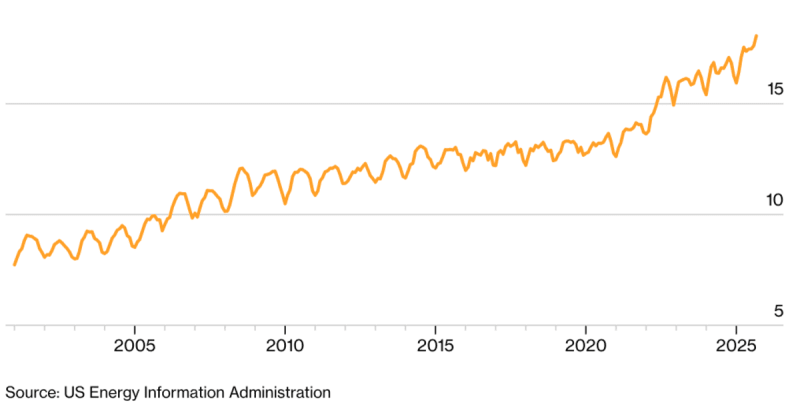
American families have watched their electricity bills climb to record highs, with residential prices jumping 10.5 percent in just eight months. The culprit? Data centers powering artificial intelligence are demanding massive amounts of electricity without committing to long-term use, leaving utility companies and regular customers holding the bag.
Here's what's been happening. Data center developers want gigawatts of power today but refuse to promise they'll need it tomorrow. Utility companies build expensive new power plants expecting steady demand, but when those commitments evaporate, someone has to pay for the unused capacity. That someone is you.
The problem has gotten so bad that data centers are responsible for $23 billion in increased capacity costs in one region alone. Meanwhile, average electricity prices hit a record 18.07 cents per kilowatt hour, the biggest jump in over a year.
Now the federal government is stepping in with a solution that puts families first. The new plan targets PJM, the nation's largest grid operator serving states from the mid-Atlantic to the Midwest. Tech companies will bid on 15-year contracts for new electricity generation, and they'll pay for that power whether they use it or not.
This approach follows successful models already working elsewhere. Ohio implemented a similar rule requiring data centers to pay for at least 85 percent of the upgrades they request. Ireland now requires new data centers to secure their own electricity supply, with 80 percent coming from renewable sources.
The Bright Side
The 15-year commitment changes everything for everyday ratepayers. Instead of utilities gambling on whether tech giants will actually use the power they're demanding, companies like Microsoft, Google, Amazon and Meta will be locked into paying for upgrades over time. This creates stable, predictable revenue for power generators and protects families from bearing the financial risk of unused capacity.
The plan also addresses a growing concern about fairness. Tech billionaires have been pressuring utilities for special discount rates, effectively shifting costs onto ordinary people. Now these companies will pay their fair share upfront, preventing the "massive wealth transfer" from regular families to some of the world's wealthiest corporations.
Communities across America have been pushing back against new data centers in their neighborhoods precisely because of these cost concerns. This new framework gives local officials a tool to ensure economic development doesn't come at the expense of their residents' wallets.
The timing matters too. With affordability becoming a top concern for American families, this policy puts people before profits. It recognizes that while artificial intelligence may be the future, it shouldn't be built on the backs of families struggling to pay their utility bills.
When tech companies commit to long-term contracts, everyone wins: families get stable rates, utilities get predictable revenue, and innovation continues without burdening everyday Americans.
More Images

Based on reporting by CleanTechnica
This story was written by BrightWire based on verified news reports.
Spread the positivity!
Share this good news with someone who needs it