U.S. Human Land Development Drops as Nature Reclaims Space
After decades of expansion, human development of U.S. land is declining while forests and wild areas recover. NASA satellites captured 35 years of change showing nature's remarkable comeback across nearly one-third of America.
America's wild spaces are making a comeback, and satellites have captured the remarkable transformation happening beneath our feet.
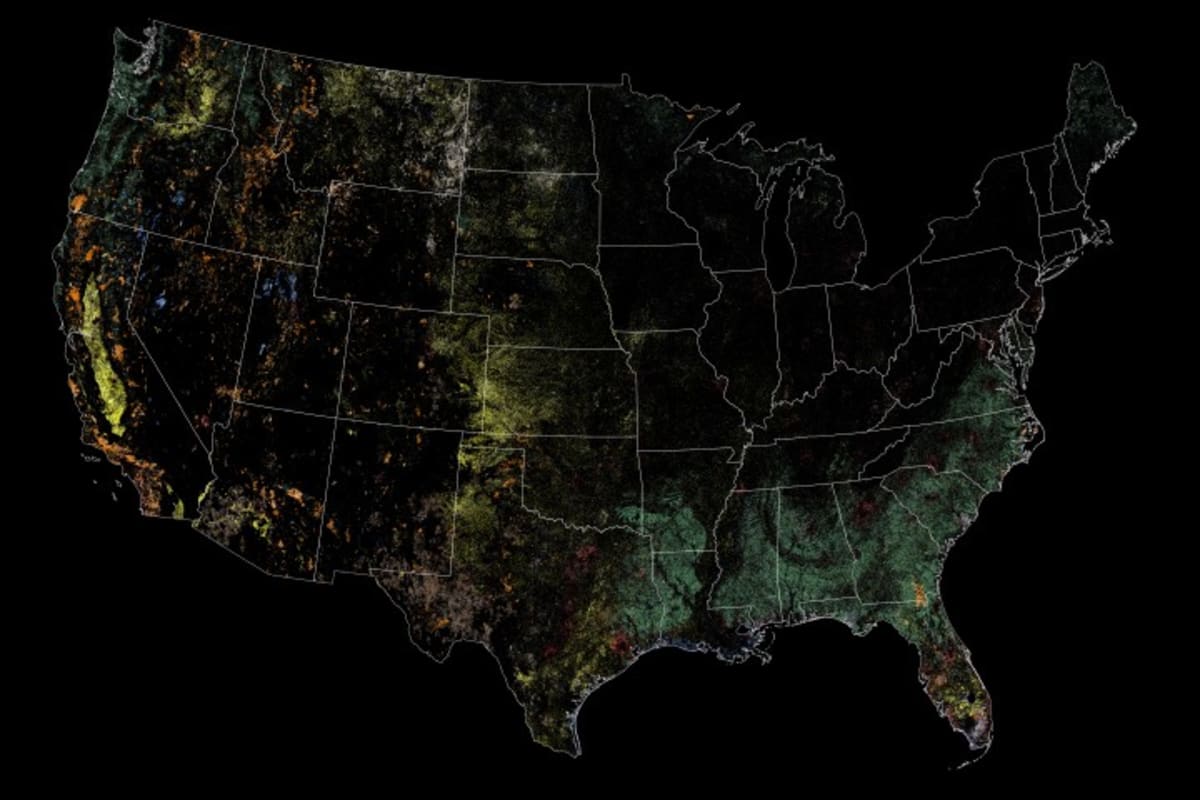
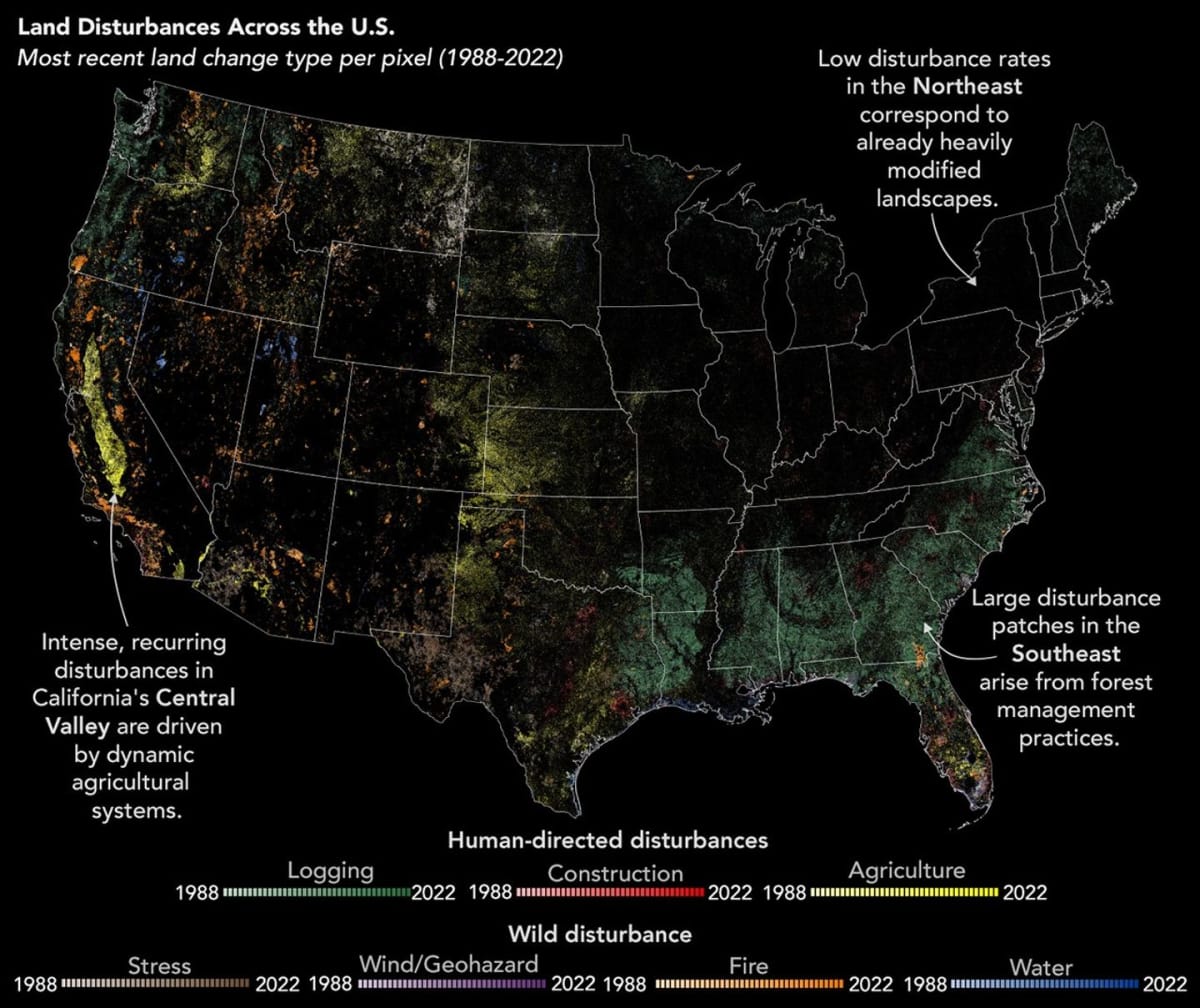
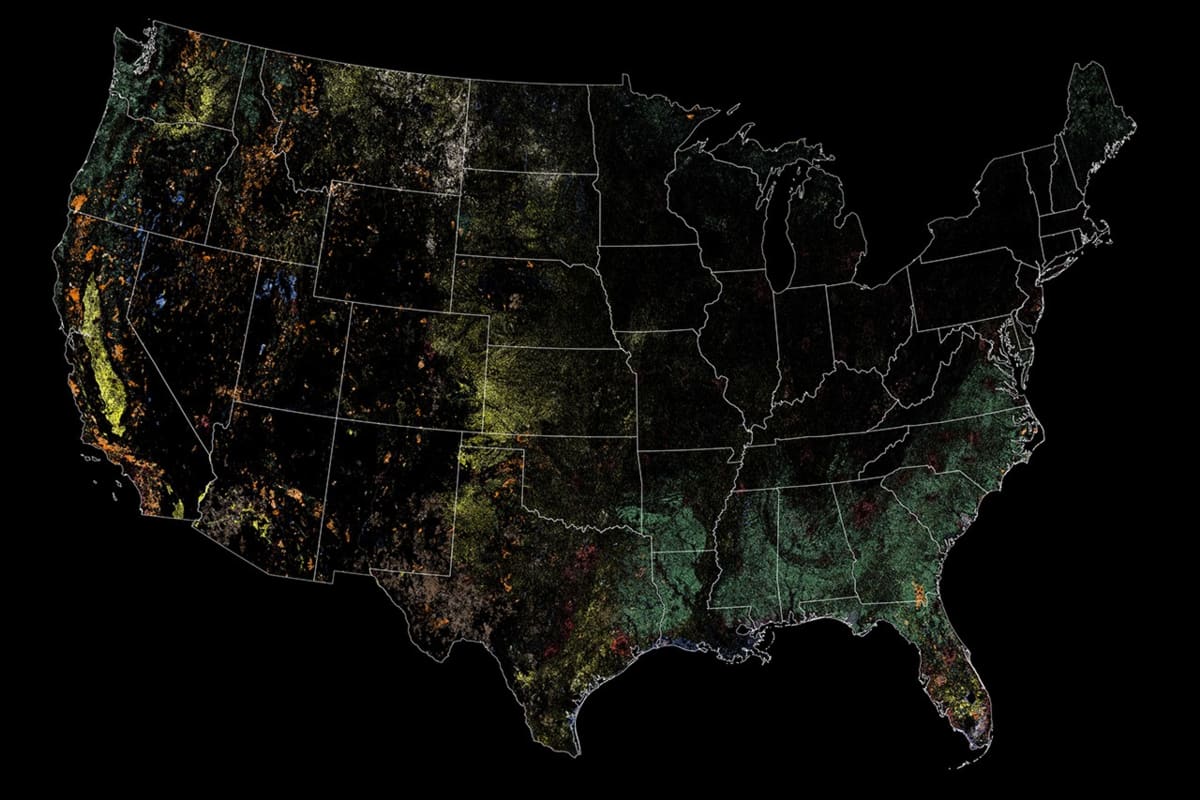
NASA-funded researchers analyzed 35 years of satellite data and discovered something unexpected: human-driven land disturbances like logging, construction, and agricultural expansion have been steadily declining across the continental United States. At the same time, natural landscapes are recovering in ways we haven't seen in generations.
Between 1988 and 2022, humans cleared or developed over 446,000 square miles of American land. That's larger than Texas and California combined, reflecting decades of growth and expansion.
But here's the encouraging news: that trend is reversing. The research, published in Nature Geoscience, shows human-directed disturbances are now decreasing as conservation efforts take hold and development slows in key areas.
The satellite images tell a powerful story of resilience. Forests that burned decades ago in places like California's Eldorado National Forest have slowly reforested. Natural areas once targeted for development are being preserved instead.
The Bright Side
This shift gives communities valuable time to prepare smarter strategies for living alongside nature. When we understand landscape changes, we can build more resilient communities that work with natural systems rather than against them.
Robert Emberson from NASA's Disasters program points out that this knowledge transforms how we plan. Regions expecting wildfires can now strategically perform prescribed burns, clear brush around homes, and use fire-resistant building materials before disaster strikes.
The research also revealed that 18 percent of U.S. land experienced at least one disturbance during the study period. When counting repeated disturbances, nearly one-third of America's continental landscape has been touched by change.
Wild disturbances like wildfires and hurricanes still transformed more than 165,000 square miles. These natural events remind us that adaptation and preparation matter more than ever.
But the bigger picture shows progress: as human pressure on undeveloped land decreases, nature demonstrates its incredible ability to recover and regenerate.
This isn't just about preserving pretty views or protecting wildlife habitats, though those matter tremendously. It's about recognizing that giving nature space to thrive creates healthier, more resilient landscapes for everyone.
Communities across America now have decades of data to guide smarter decisions about where and how to grow.
More Images

Based on reporting by NASA
This story was written by BrightWire based on verified news reports.
Spread the positivity!
Share this good news with someone who needs it