US Irrigation Prevents 363 Times More Emissions Than It Makes
New research reveals that American irrigation stops vastly more greenhouse gas emissions than it creates by helping farmers grow more food on less land. Without irrigation, replacing lost crops would release 6.86 gigatons of emissions.
Watering crops across America might be one of the smartest climate moves we're already making, and we barely knew it.
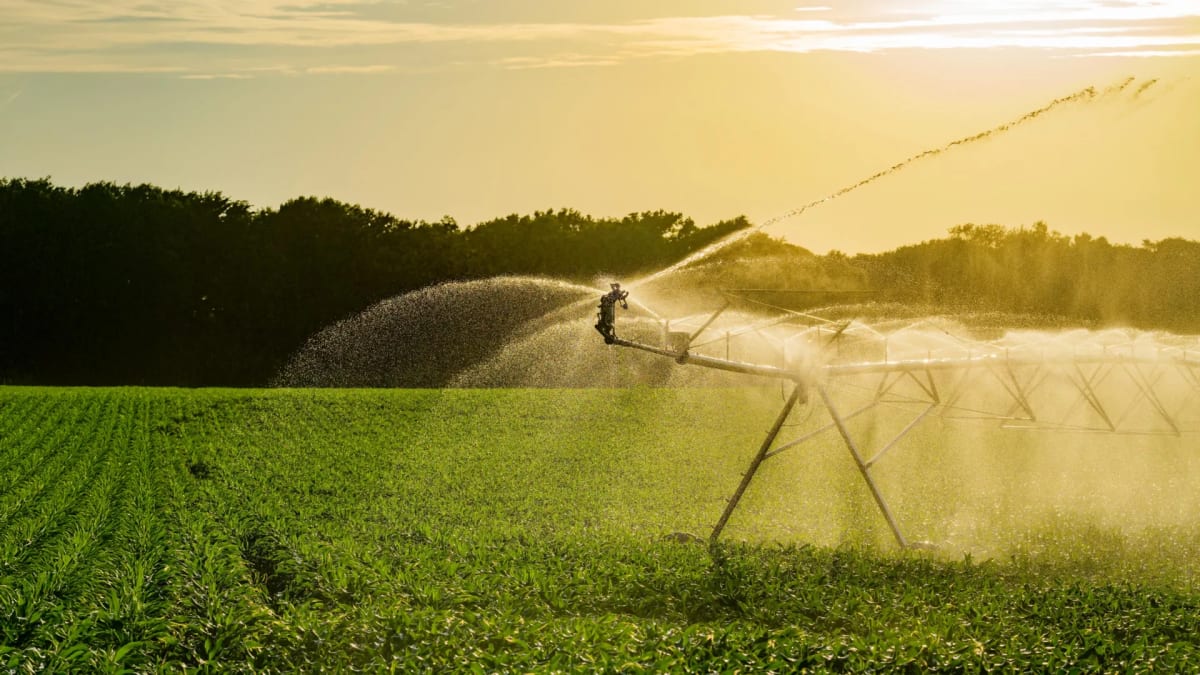
Colorado State University researchers discovered that U.S. irrigation prevents 363 times more greenhouse gas emissions than it produces. The reason is simple but powerful: irrigation helps farmers grow more food on the same amount of land, which means less natural landscape needs to be converted into farmland.
Lead author Avery Driscoll, who conducted the research as a Ph.D. student, found that if irrigation suddenly disappeared across the United States, farmers would need to expand into natural areas to maintain food production. That land conversion would release an estimated 6.86 gigatons of greenhouse gases, equivalent to more than all U.S. emissions in 2024.
The math is striking. Those avoided emissions equal about 363 years of what irrigation currently produces annually through pumping water and other activities.
Natural ecosystems like forests and grasslands store enormous amounts of carbon in their vegetation and soils. When these landscapes get plowed under for farming, much of that stored carbon escapes into the atmosphere. Agricultural land use already accounts for nearly one quarter of global greenhouse gas emissions, making this finding particularly important.
The largest source of irrigation emissions comes from the energy needed to move water. Pumps run on farms and between river basins, and when they rely on fossil fuels, they produce emissions. But Driscoll points out this problem has a straightforward solution: electrification.
Replacing fossil fuel-powered pumps with electric equipment could dramatically lower irrigation emissions, especially as power grids adopt cleaner energy sources. The researchers suggest policymakers could offer incentives for farmers to make the switch when designing climate-friendly agriculture programs.
To reach their conclusions, the team first measured how much irrigation improves crop yields across individual U.S. counties using agricultural survey data and machine learning. Then they used a global economic model to simulate what would happen if all American crops suddenly depended only on rainfall, considering trade patterns and which crops can grow in different regions.
The researchers mapped where additional farmland would be needed, then calculated emissions based on how much carbon is stored in the landscapes that would be converted.
Why This Inspires
This research flips the script on how we think about irrigation and climate. Instead of viewing it as just another source of emissions, we can see it as a climate solution that's already working at massive scale.
The study shows that smart farming practices can protect both food security and the planet at the same time. Better yet, the remaining emissions from irrigation have clear, achievable solutions through pump electrification and clean energy adoption.
"This comprehensive approach lets us identify local opportunities to reduce emissions while also maximizing benefits associated with increasing productivity," said Driscoll, now a postdoctoral researcher at Purdue University. "Ideally, this is a win-win for addressing local emissions and also harnessing the global benefits of irrigation."
Sometimes the best climate solutions are the ones we're already using, just waiting to be recognized and improved.
Based on reporting by Science Daily
This story was written by BrightWire based on verified news reports.
Spread the positivity!
Share this good news with someone who needs it