U.S. Solar Companies Partner on 28% Efficiency Panels
Two American solar companies are teaming up to manufacture groundbreaking hybrid solar panels that generate 30% more power than traditional ones, using entirely U.S.-sourced materials. The partnership plans to produce 3 gigawatts of next-generation solar technology over five years, creating a competitive edge that goes beyond tax incentives.
American solar innovation just took a giant leap forward with technology that squeezes more electricity from the same rooftop space.
California-based Caelux and solar manufacturer Solx announced a partnership to mass-produce hybrid solar panels that operate at 28% efficiency. That's a meaningful jump from standard silicon panels, translating to 30% more power in the same footprint.
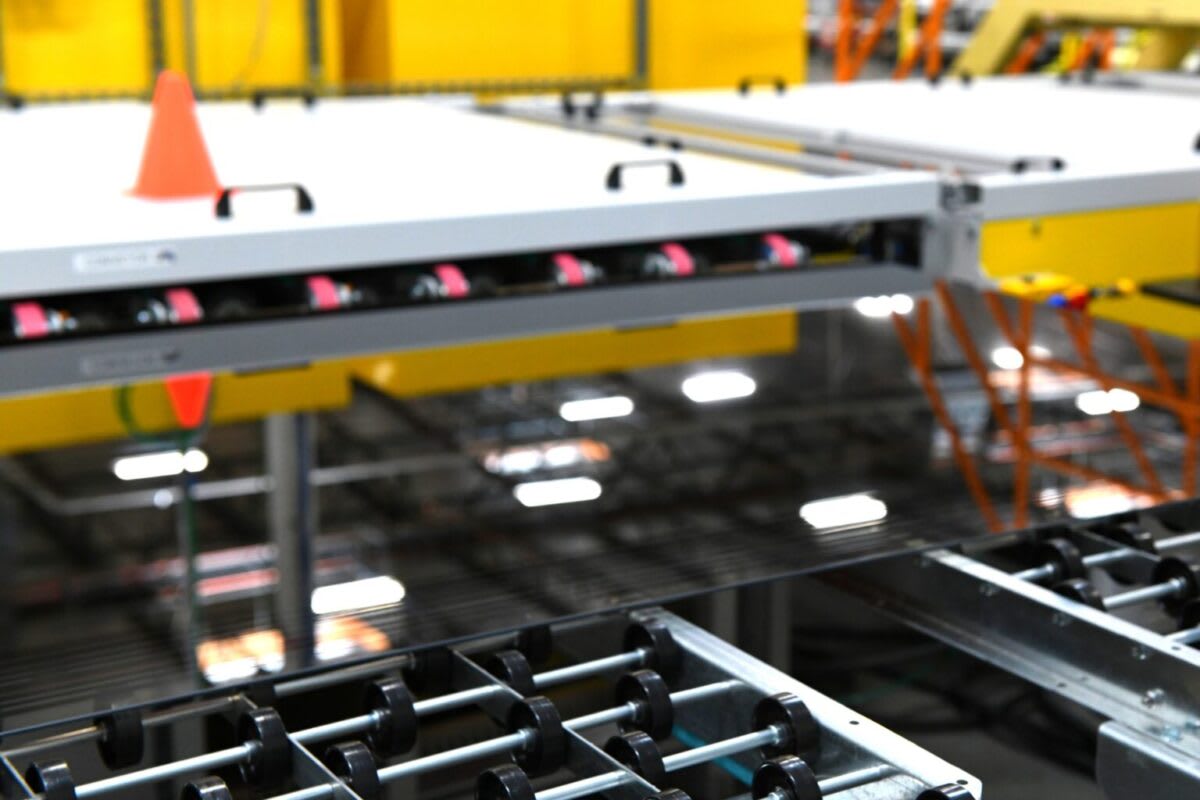
The secret lies in Caelux's Active Glass, a perovskite layer that replaces conventional solar glass and captures wavelengths of light that regular panels miss. Instead of letting that energy go to waste, the glass converts it into electricity alongside the silicon cells below.
Solx will manufacture these Aurora hybrid modules at its new factory in Aguadilla, Puerto Rico, with a capacity of 1 gigawatt annually. The cells come from Georgia-based Suniva, while Origami Solar provides American-made steel frames, creating an entirely domestic supply chain.
"We're really thinking beyond tax credit generation," says John Holmes, co-founder and CEO of Solx. "We're built to win after the sunset of tax credits."
The companies plan to produce 3 gigawatts of hybrid modules over five years, with commercial volumes expected by 2027. Early production panels are already scheduled for deployment at a U.S. project later this year.
The Ripple Effect
This partnership arrives as American solar manufacturing experiences a renaissance. Suniva recently announced a $350 million factory in South Carolina with 4.5 gigawatt capacity, while other perovskite innovators are opening demonstration facilities across the country.
The durability challenge that has plagued perovskite technology appears solved. Caelux CEO Scott Graybeal says his team achieved breakthroughs over the past 18 months that allow the glass to match traditional module warranties, ensuring the innovative top layer won't quit before the silicon cells beneath it.
The timing matters beyond markets and incentives. As climate solutions require faster deployment of renewable energy, panels that generate more power from less space help solar installations pencil out in locations where room is tight, from urban rooftops to land-constrained developments.
Holmes emphasizes that Caelux already operates production at meaningful scale, not as a research lab transitioning to manufacturing. The partnership brings together two companies ready to deliver on the promise of next-generation solar technology today.
American ingenuity is proving that the future of solar power can be both more efficient and homegrown.
More Images
Based on reporting by PV Magazine
This story was written by BrightWire based on verified news reports.
Spread the positivity!
Share this good news with someone who needs it