US Startup's Battery Breakthrough Powers Next-Gen EVs
A Massachusetts company is racing toward mass production of solid-state batteries that could transform electric vehicles and drones with longer range and better safety. The technology replaces volatile liquid with stable materials, backed by $1.1 billion in funding from major automakers.
📺 Watch the full story above
After years of research, the wait for safer, longer-lasting electric vehicle batteries is almost over.
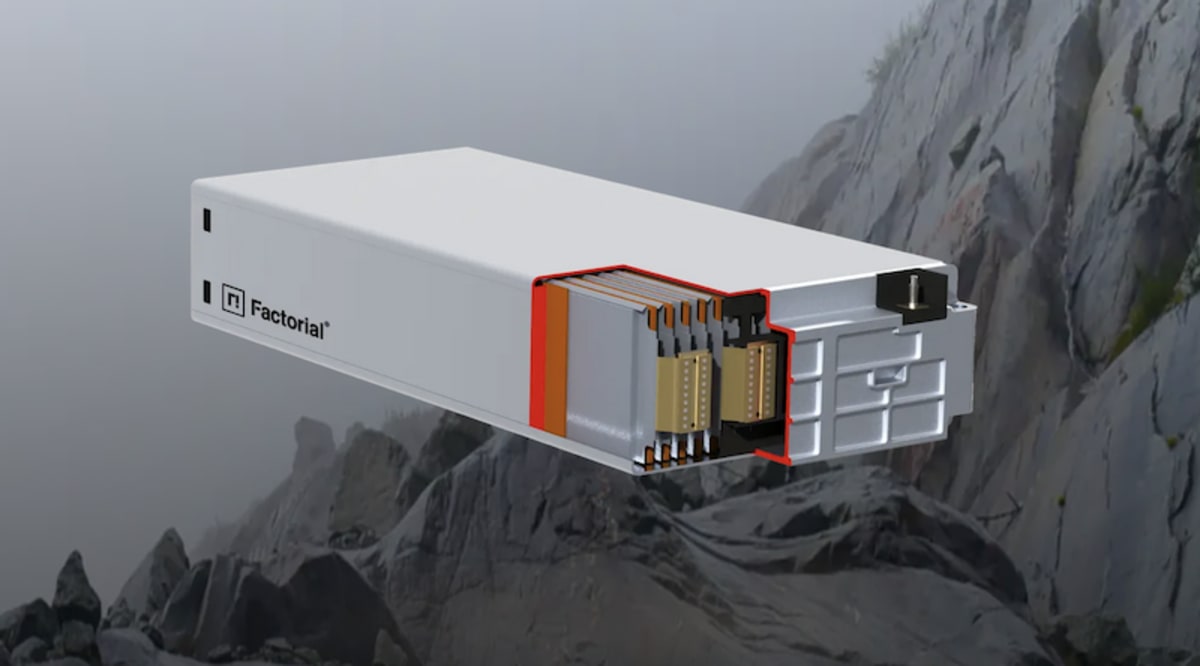
Factorial Energy, a Massachusetts startup, announced it's heading toward a Nasdaq listing this year with $1.1 billion in backing from Mercedes-Benz, Stellantis, Hyundai, and Kia. The company's solid-state battery technology replaces the flammable liquid found in current EV batteries with more stable materials that pack more power into less weight.
The breakthrough matters because today's lithium-ion batteries remain one of the biggest obstacles to widespread EV adoption. Drivers worry about range, charging time, and occasional fire risks from damaged batteries.
Factorial's design addresses all three concerns. The solid-state batteries weigh less, hold more energy, and perform safely across extreme temperatures from desert heat to Arctic cold.
Mercedes and Stellantis led a $200 million investment round in 2022, betting that Factorial could crack the manufacturing puzzle that has stumped larger competitors. Now the company is expanding beyond passenger cars into military drones and robotics, where lightweight power sources become mission critical.
In March, Factorial secured additional funding from IQT, a national security investment firm, plus battery manufacturers in South Korea. The defense sector sees particular promise in drones that could fly longer missions without recharging.
Dr. Siyu Huang, Factorial's co-founder and CEO, believes solid-state technology will leapfrog conventional batteries rather than just improve them incrementally. His team partnered with Philenergy, a Korean manufacturing specialist with plants in Hungary and the US, to scale up production quickly.
The collaboration solves a problem that has plagued battery innovation for decades. Scientists can create amazing prototypes in labs, but building millions of units affordably remains the real challenge.
The Ripple Effect
Factorial's progress signals a broader shift in clean transportation. When one company moves closer to commercializing advanced batteries, it pressures competitors to accelerate their own timelines and validates the entire industry's direction.
Major automakers wouldn't invest hundreds of millions in a startup unless they saw production within reach. Their backing gives smaller manufacturers confidence to retool factories and supply chains for the next generation of EVs.
The defense applications create an unexpected benefit too. Military funding often speeds technology development that eventually reaches everyday consumers, just as GPS and the internet did decades ago.
If Factorial's Nasdaq listing closes by mid-year as planned, the company will gain both capital and visibility to attract more partners. That means more factories, more jobs, and more electric vehicles with batteries that drivers actually trust.
The road from lab breakthrough to your local car dealership runs through moments like this one, where patient research meets serious investment and manufacturing expertise. Factorial just put all three together, bringing the solid-state battery future several years closer to your garage.
Based on reporting by Google News - Electric Vehicle
This story was written by BrightWire based on verified news reports.
Spread the positivity!
Share this good news with someone who needs it