US States Lead Solar Boom After Federal Pullback
When Washington stepped back from renewable energy support in 2025, states across America didn't wait for permission to move forward. From coast to coast, local governments are now driving the solar revolution that's powering data centers and protecting communities from rising energy costs.
While federal renewable energy policy hit the brakes in 2025, America's solar industry found an unexpected gear shift. State and local governments are now leading one of the largest clean energy buildouts in US history, proving that progress doesn't always need to come from Washington.
The "One Big Beautiful Bill" act withdrew federal support for renewable energy last year, creating what many feared would be a death spiral for solar. Instead, it triggered something remarkable: states stepped up to fill the void with their own bold policies and ambitious targets.
Sachu Constantine, executive director of Vote Solar, has watched this transformation unfold from the front lines. His organization works with state governments nationwide to advance solar deployment, and he's witnessed an unprecedented surge in local action over the past year.
States are tackling challenges the federal government left behind. They're addressing affordability for families struggling with energy bills, improving grid reliability during extreme weather, and building resilience into communities that need it most. The timing couldn't be better as America's data center boom demands massive amounts of new electricity.
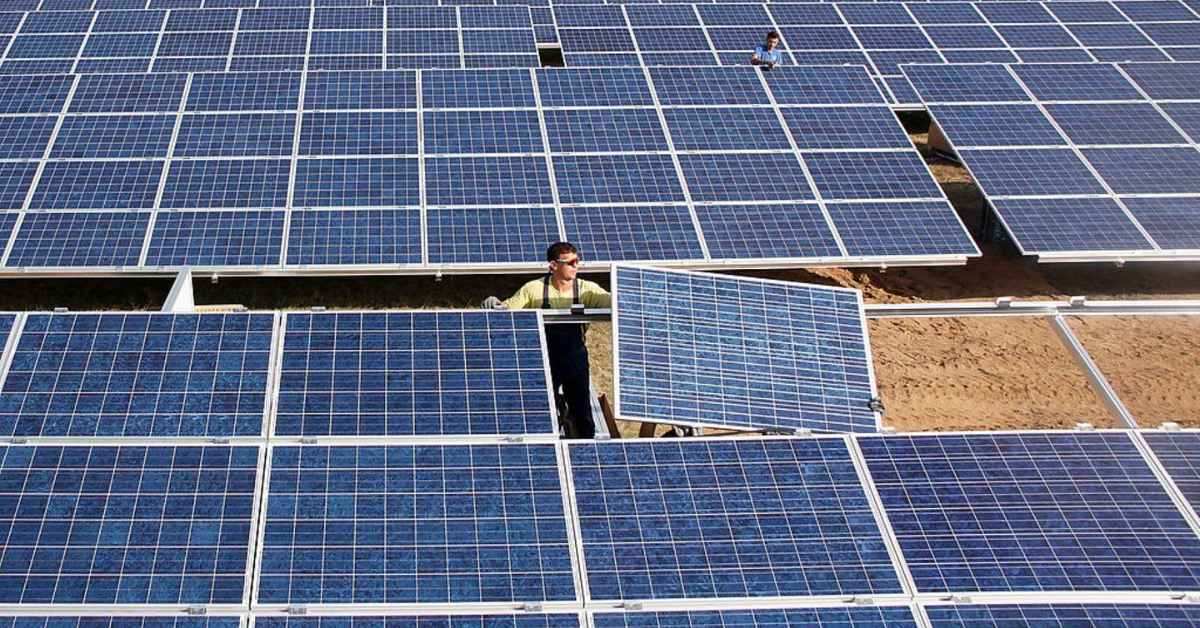
California, New York, and Illinois are leading with gigawatt-scale solar projects that rival anything built during peak federal support years. TerraForm Power just acquired a 1.56 gigawatt solar project in Illinois, while Younan Company is developing an 880 megawatt solar-plus-storage plant in California. These aren't small pilot programs but industrial-scale energy infrastructure.
The state-led approach is creating innovative solutions tailored to local needs. Coastal states are pairing solar with offshore wind, while southwestern states are maximizing their abundant sunshine with storage systems that provide power after sunset. Midwestern states are integrating solar into agricultural landscapes, creating dual-use farms that generate both food and electricity.
What makes this movement powerful is its diversity. Red states and blue states alike are embracing solar for different reasons that all lead to the same outcome. Some prioritize energy independence, others focus on job creation, and many see economic opportunity in becoming clean energy leaders. The result is a nationwide buildout happening outside partisan gridlock.
The Ripple Effect
This state-level solar surge is reshaping America's entire energy landscape in ways that reach far beyond electricity generation. Local solar projects are creating manufacturing jobs, training programs for workers transitioning from other industries, and opportunities for small businesses to participate in the clean energy economy.
Communities that were left behind by previous energy transitions are finding new life. Former coal towns are becoming solar installation hubs, leveraging their experience with energy infrastructure. Rural areas are generating new tax revenue from solar farms without sacrificing their agricultural heritage.
The competition between states is driving innovation faster than federal programs ever did. When one state finds a better way to streamline permitting or connect solar to the grid, neighboring states adapt and improve the model. This laboratory of democracy is testing dozens of approaches simultaneously, accelerating the learning curve for everyone.
Vote Solar and similar advocacy organizations are connecting these dots, sharing best practices across state lines and helping smaller states learn from pioneers. Constantine's team has helped shape policies in over 30 states, creating a network of clean energy leadership that's resilient precisely because it's decentralized.
The data center industry's explosive growth is finding its energy answer in state-level solar partnerships. Tech companies are working directly with state governments to secure clean power for their facilities, bypassing federal policy entirely. These deals are measured in hundreds of megawatts and represent long-term commitments to local economies.
Perhaps most encouraging is how this state-led transition is making solar energy more accessible to everyday Americans. State programs are reducing installation costs for homeowners, expanding community solar that serves renters and apartment dwellers, and ensuring that low-income families can participate in the clean energy savings.
The federal policy void that seemed like a crisis in 2025 has revealed something important about American innovation: when barriers appear at one level, solutions emerge at another.
Based on reporting by Google News - Clean Energy
This story was written by BrightWire based on verified news reports.
Spread the positivity!
Share this good news with someone who needs it