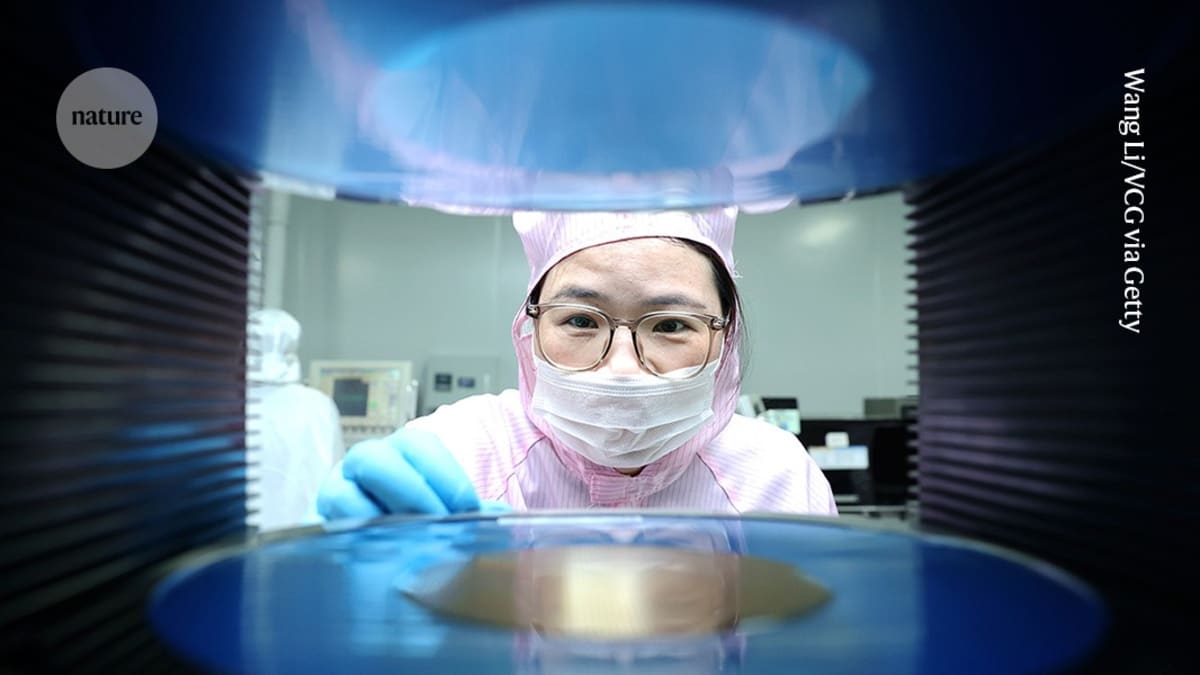
US Tech Limits Push Chinese Firms to Boost Science Output
Chinese companies blocked from US technology doubled down on scientific research instead, publishing more papers and creating innovation through unexpected paths. A new study reveals how restrictions sparked an unintended surge in scientific advancement.
When the US government started blocking Chinese companies from accessing American technology in 2018, something unexpected happened. Instead of slowing down, these firms turned to scientific research and accelerated their innovation.
A new study published in Science examined what happened after Chinese companies were placed on the US Entity List, which prevents them from licensing certain materials and collaborating on joint research projects. The findings surprised researchers.
Sanctioned Chinese firms produced 72% more patents citing scientific publications compared to similar companies that weren't restricted. They also published 85% more papers in Web of Science and 33% more in China's largest academic database than their unrestricted peers.
The research team analyzed data from 2010 to 2022, comparing sanctioned companies with non-sanctioned firms of similar size, industry, and location. They wanted to ensure they were measuring the real impact of restrictions, not just general trends.
During this period, all Chinese companies increased their engagement with science. Patents granted by China's patent office that cited at least one scientific paper jumped from 5,225 in 2010 to 94,441 in 2022, an 18-fold increase.
But sanctioned companies went even further. When they lost access to proprietary US technology, they invested more heavily in fundamental scientific research to find alternative pathways to innovation.
The Bright Side
The findings reveal an important lesson about resilience and adaptation. When one door closed, these companies opened another by deepening their connection to scientific knowledge and public research.
Dinsha Mistree, a political economist at Stanford University, notes that the study shows how technology controls can produce unexpected outcomes. "These Chinese companies seem to double down on innovation when they are sanctioned," he explains.
Cong Cao, who researches innovation policy at the University of Nottingham Ningbo China, calls these the "unintended consequences" of export controls. The restrictions aimed to limit technological advancement but may have instead pushed companies toward more fundamental scientific work.
The study used rigorous methods and comprehensive data sources, making it one of the most reliable analyses of how sanctions affect innovation. Researchers examined millions of patents and scientific publications to track these shifts.
While debate continues about technology policies and national security, the research demonstrates something universal: human ingenuity finds a way forward, even when faced with significant barriers.
More Images




Based on reporting by Nature News
This story was written by BrightWire based on verified news reports.
Spread the positivity!
Share this good news with someone who needs it