US Wind and Solar Hit 26% of Electricity Despite Setbacks
Wind and solar power now provide more than one in every four kilowatt-hours used across America, even as policy challenges try to slow their momentum. The clean energy surge shows no signs of stopping.
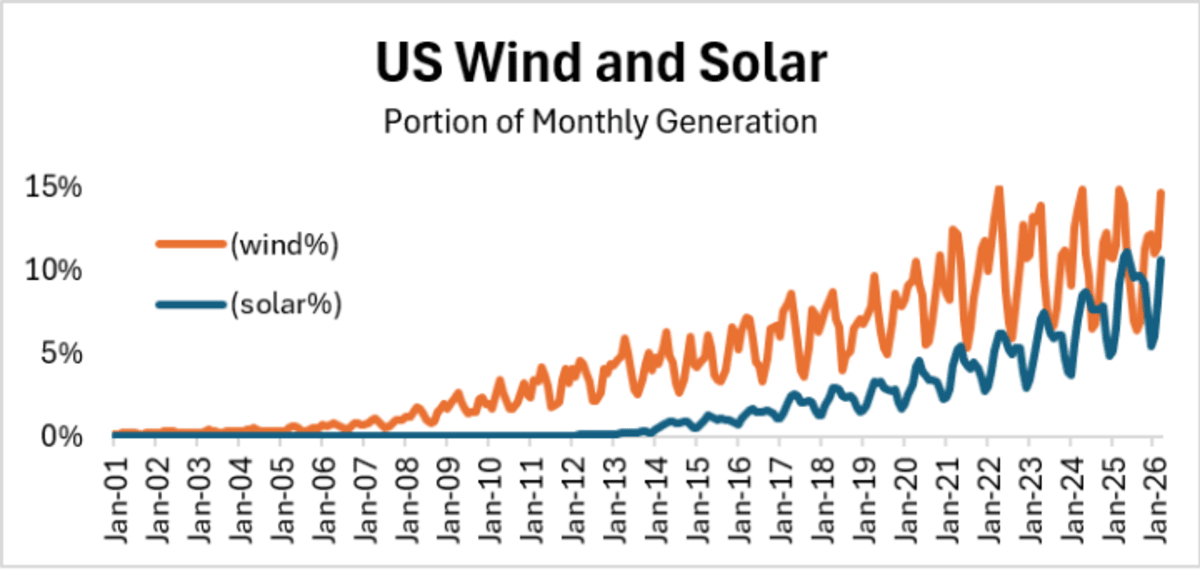
In April 2026, wind and solar together delivered 26% of all electricity used in American homes, businesses, and communities. That's more than double their share from just nine years ago, and the growth continues to accelerate despite efforts to pump the brakes.
The numbers tell a remarkable story. Solar and wind accounted for 96% of new electrical capacity added in the first three months of this year. Solar alone has been the largest source of new generating capacity for 28 straight months.
The journey to this milestone started small. Wind and solar combined first broke 1% of monthly electricity generation in 2007. They passed 5% in 2013, then 10% in 2017. By 2022, they'd blown past 20%.
Even the lowest monthly total for wind and solar in 2025 hit nearly 16% of US electricity. Solar generation in early 2026 jumped more than 20% compared to the same period last year.
This progress comes during what clean energy advocates call tough times. The current administration has worked to slow renewable energy development, buying back offshore wind leases for $1.8 billion to prevent their development. Meanwhile, $850 million in funding is keeping more than a dozen coal plants running that were scheduled to close.
But the economics keep driving clean energy forward. Solar panels and wind turbines can be built quickly. Their operating costs beat fossil fuels. They don't pollute the air communities breathe.
The Bright Side
The momentum behind wind and solar reveals something powerful about market forces and technology. When solutions work better and cost less, they keep advancing even when facing headwinds. Communities across the country are getting cleaner air and more stable electricity prices as the transition continues.
Every percentage point increase means fewer harmful emissions, lower energy bills over time, and thousands of jobs installing and maintaining these systems. The shoulder seasons of spring and fall now regularly see wind and solar providing even higher percentages of total electricity as generation peaks while demand stays moderate.
One in four kilowatt-hours from the sun and wind is just the beginning of what's possible.
More Images

Based on reporting by Google News - Wind Energy
This story was written by BrightWire based on verified news reports.
Spread the positivity!
Share this good news with someone who needs it